


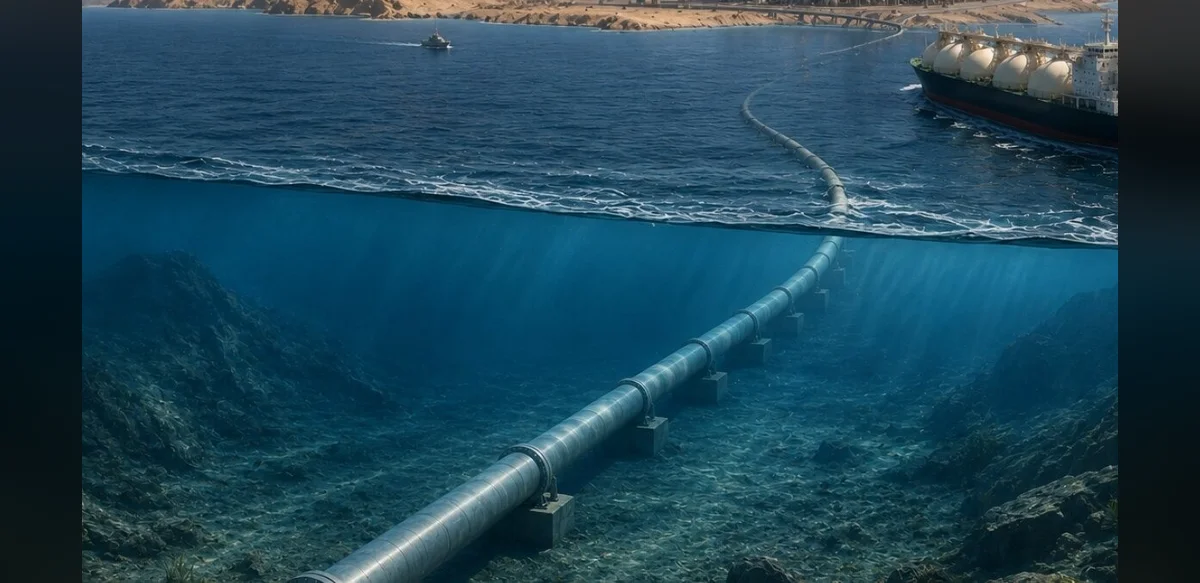
A planned deep-sea gas pipeline nearly 2,000 kilometres long across the Arabian Sea is presented as a potential solution to India’s energy supply concerns linked to tensions in West Asia.
The Oman-Gujarat Deep-Sea Gas Pipeline, with an estimated cost of about Rs 40,000 crore, would carry natural gas straight from Oman to India’s western coast via one of the deepest underwater routes considered. If completed, it could establish a direct energy link between the Gulf and India and lessen reliance on shipping paths through the Strait of Hormuz, a key global maritime passage.
The concept dates back to the early 1990s, but earlier versions stalled due to technological, financial and commercial issues. Renewed focus comes as India seeks stable long-term energy sources amid ongoing regional tensions.
India depends heavily on imported energy, including most of its crude oil and a large share of its natural gas, much of it arriving as LNG from the Gulf via the Strait of Hormuz. Disruptions on this route can quickly affect global prices and supply.
Recent regional tensions have underscored risks of depending on one sea corridor, prompting interest in alternatives for steadier supplies.
A pipeline would deliver gas directly without liquefaction, tanker transport and regasification steps required for LNG. Proponents say it could improve reliability and limit exposure to maritime disruptions.
The project, also called the Middle East-India Deepwater Pipeline, would link Oman to Gujarat underwater. Its notable aspect is depth, with sections planned more than 3,000 metres below sea level, demanding advanced engineering.
It would operate under long-term contracts, aiding India’s source diversification and giving Oman a steady export outlet. Transport costs are estimated at $2-2.25 per MMBtu, subject to final financing and construction details.
Multiple studies over three decades examined the route, yet high costs and technical limits prevented progress. Recent offshore engineering advances and energy security priorities have revived discussions.
The promoting consortium has finished technical and financial studies plus seabed surveys. State firms such as GAIL and Indian Oil have reviewed parts of the plan.
Key obstacles remain, starting with engineering at around 3,000 metres depth, where pressure, seabed conditions and access complicate building and repairs.

