


Ayurveda may offer support for frequent urination once the underlying cause is identified. The condition involves passing urine more often than usual, particularly when it disrupts sleep or daily activities. Typical triggers include urinary tract infections, high intake of tea or coffee, excessive fluids, blood sugar issues, pregnancy, stress, overactive bladder, and prostate changes in men. Ayurveda links it to disruptions in Apana Vata, Pitta, Agni, and urinary channels. Symptoms such as burning, fever, blood in urine, or pain require prompt medical attention.
Frequent urination refers to a shift from an individual’s normal pattern rather than a set count of visits. One person might urinate often after increased water intake, while another experiences urgency with little output. Ayurveda considers factors like urinary channels, digestion, heat balance, and the nervous system. A traditional guideline advises against suppressing natural urges, as repeated holding can aggravate Vata and heighten bladder sensitivity.
No universal number defines frequency; concern arises with urgency, weak control, sleep disturbance, burning, or incomplete emptying. Daytime issues often relate to fluids, caffeine, stress, or Pitta heat, while nighttime occurrences may stem from late fluid intake or bladder irritation. In men, weak flow warrants prostate evaluation. Symptoms can be short-term due to weather, travel, or extra fluids, but persistent cases need further assessment.
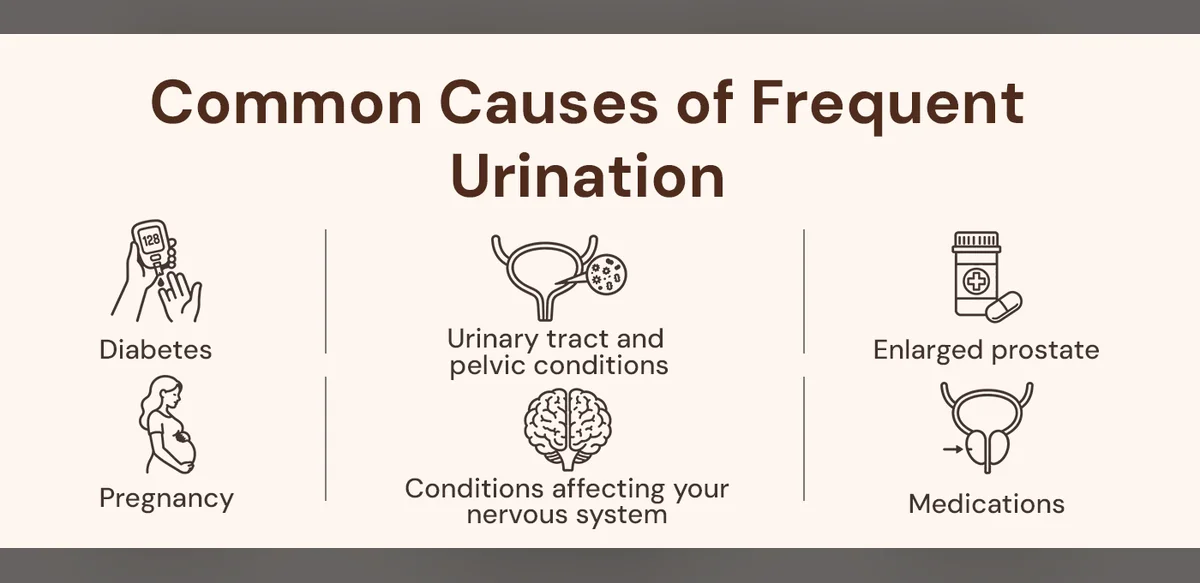
Common causes include urinary tract infections that produce urgency, lower abdominal pain, cloudy urine, or fever. Excess caffeine or fluids can disturb Vata and Pitta, leading to restlessness. Diabetes-related frequency often accompanies thirst or fatigue and requires testing. Pregnancy or hormonal shifts may contribute in women, while stress can make the nervous system trigger repeated urges. Ayurveda views the issue through impaired Apana Vata affecting pelvic functions, weak Agni allowing residue to block channels, excess Pitta causing burning, and imbalances in urinary pathways. The goal focuses on restoring tone, flow, and comfort without forceful suppression.

