


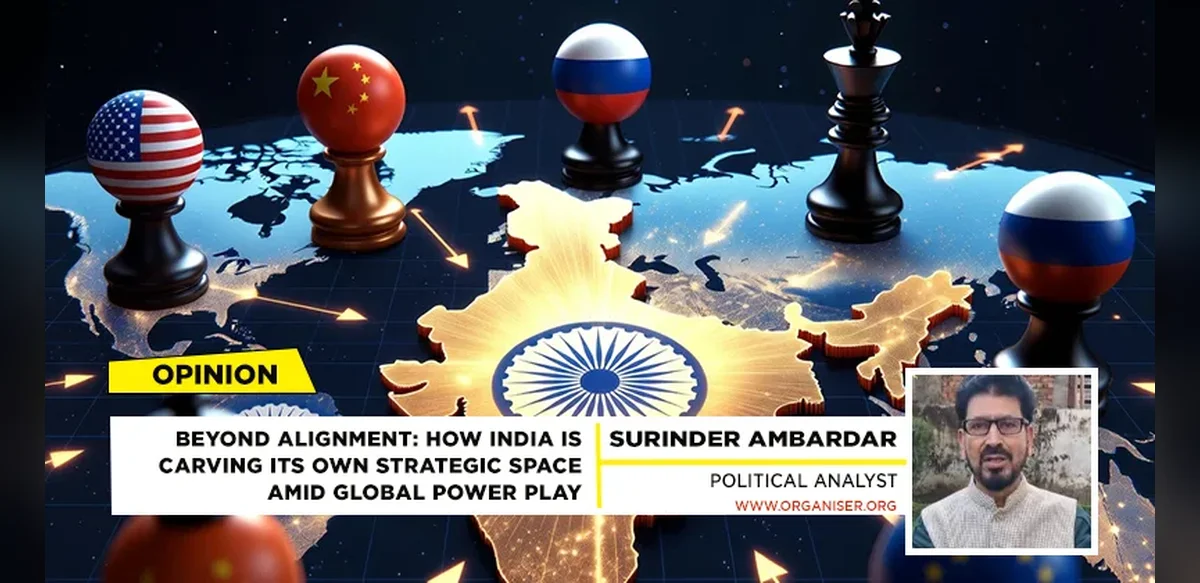
The modern world shows a striking contradiction in international politics. Just as globalisation promised greater connection, the global system has grown more divided, wary, and selective. Trade is often used as a tool of pressure, supply chains serve geopolitical aims, technology transfers face national security limits, and sovereignty reflects power imbalances. The era of smooth interdependence has given way to strategic caution.
States now face a core challenge: how to stay economically linked without becoming strategically exposed. Traditional categories of alliance or neutrality fail to capture current behaviour. Instead, nations pursue calibrated autonomy, seeking cooperation without dependence or loss of control.
India’s foreign policy fits this broader shift. While the Cold War featured military blocs and fixed ideologies, today’s order centres on economic competition, technology rivalry, and supply chain adjustments. Recent visits by the Prime Minister to the United Arab Emirates, the Netherlands, Sweden, Norway, and Italy reflect efforts to build resilience rather than routine diplomacy.
These trips address access to energy supplies, semiconductor networks, technology ties, infrastructure funding, sea lanes, and stable supply chains. Geopolitical competition has moved from territory to economic positioning.
India’s approach continues its long-standing preference for strategic autonomy. Yet autonomy now demands practical capabilities, varied partnerships, and economic strength. Without these, independence remains largely symbolic.
The UAE engagement shows this pattern clearly. Once focused on migration and remittances, ties now include a deal for about 30 million barrels of strategic oil reserves and long-term LNG and LPG contracts. These steps aim to protect against energy shocks, as seen in the Russia-Ukraine conflict. UAE infrastructure investments in India further support development goals.
Success depends on effective implementation. Past hurdles have included regulatory delays and procedural issues. Diplomatic plans require matching administrative follow-through.
The Netherlands link highlights another priority: technological cooperation as part of India’s repositioning.

