


Reproductive agency, defined as the ability to choose whether, when, and how to have children, forms a key part of women’s empowerment. It is frequently overlooked in measures focused on income, schooling, movement, or political involvement.
India’s population shift, shown in the latest National Family Health Survey (NFHS-6, 2023–24), points to gradual health improvements alongside a deeper change in reproductive decision-making. Contraception, once viewed mainly as a tool for limiting population size, now appears more as an indicator of women’s control over reproduction.
India began official family planning efforts in 1952, becoming the first nation to do so, yet women have shouldered most of the associated duties.
NFHS-6 findings on currently married women aged 15–49 reveal patterns in contraceptive use across cities and villages, compared with NFHS-5 results.
Early marriage remains common. Across the country, 20.1 percent of women aged 20–24 married before turning 18, with the rural rate at 23.3 percent, similar to the prior survey. For men aged 25–29, 15.9 percent married before age 21. These patterns represent both legal shortcomings and health concerns.
Women who marry young often face a longer period of potential childbearing. Limited access to contraception, lower health awareness, or reduced family influence can lead to closely spaced pregnancies and higher risks for mothers and children. Survey data show 6.7 percent of women aged 15–19 were already mothers or pregnant, rising to 7.9 percent in rural areas.
From a health perspective, early marriage creates lasting effects. Younger brides tend to know fewer contraceptive choices, face greater difficulty in discussing their use, and experience more frequent pregnancies. Health burdens such as anemia and delivery complications fall heavily on this group. Policy discussions on birth rates often miss the link to early unions.
Urban women generally marry later, finish more education, and encounter wider contraceptive choices. Rural women encounter earlier marriages, lower decision-making power, and health services that favor permanent methods.
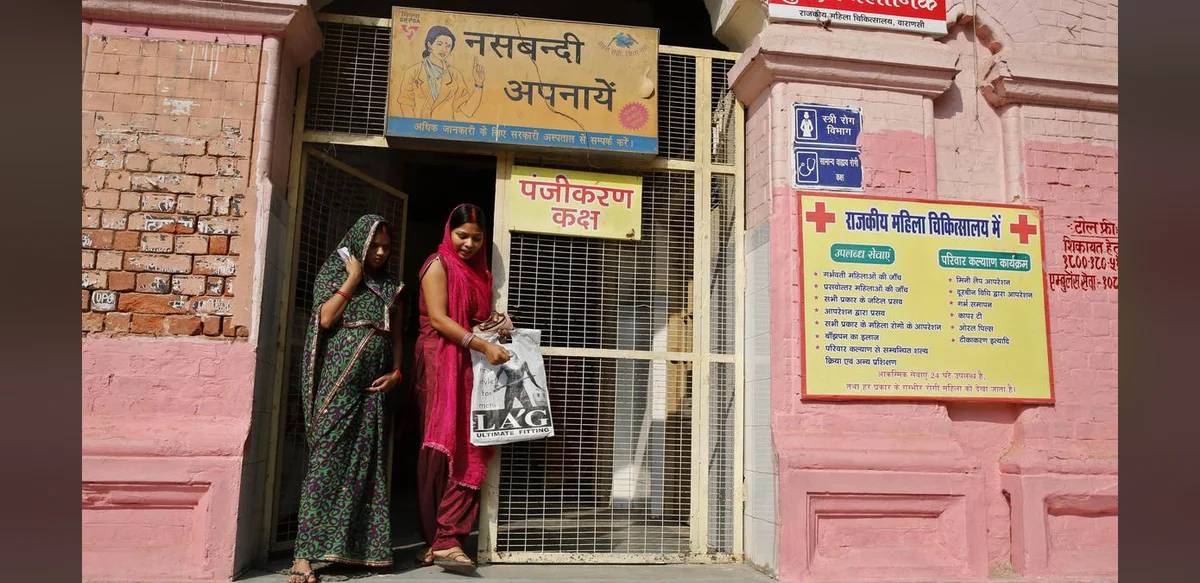
Female sterilization accounts for 36.5 percent of contraceptive use nationally and reaches 38.1 percent in rural zones, while male sterilization stands at 0.5 percent. This imbalance stems from program priorities and unequal gender roles.
The latest survey records a small drop in female sterilization from 37.9 percent in NFHS-5 to 36.5 percent, a rise in traditional methods from 10.3 percent to 16.4 percent, and a slight fall in modern reversible methods from 56.4 percent to 52.7 percent. These shifts indicate some movement away from sterilization, yet often toward less supported approaches rather than reliable reversible options.

