


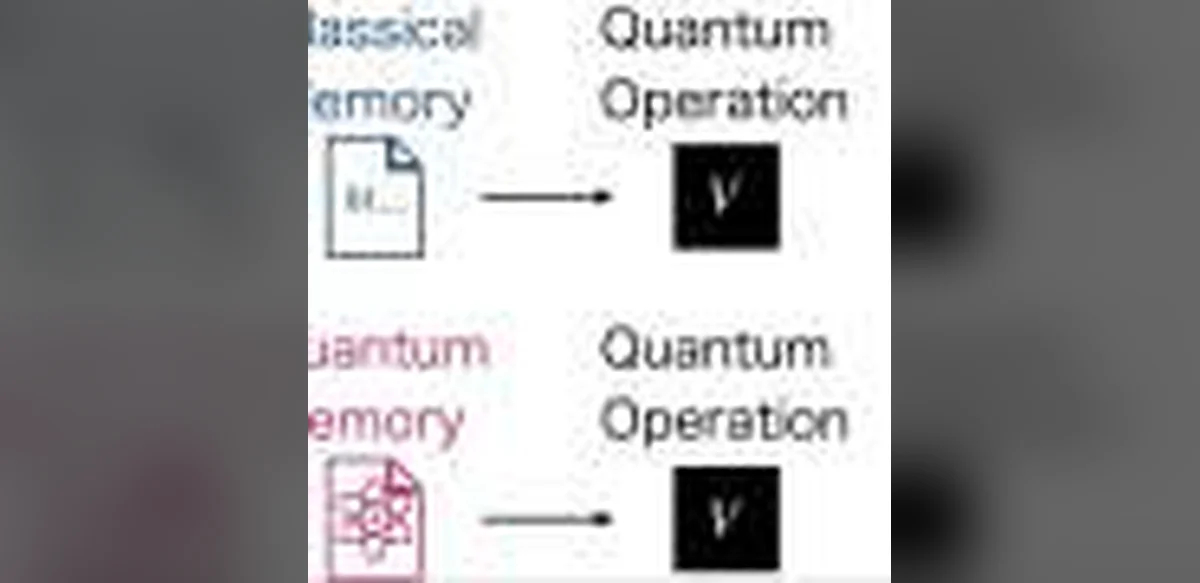
Quantum memories that store and retrieve information using quantum effects can exceed classical systems on certain tasks. Researchers at the University of Tokyo demonstrated that these memories also handle operations difficult or impossible for classical systems, such as storing and retrieving isometry channels. These channels map a smaller quantum system onto a larger one while preserving information.
In Physical Review Letters, the team showed quantum approaches significantly surpass classical ones for this purpose. The study was prompted by the question of when quantum memory is truly advantageous over extracting classical data first. For unitary operations, classical strategies were already optimal, but isometry channels offered a broader test case.
The classical method estimates the unknown operation through repeated probes and stores the result as classical data for later reconstruction. The quantum method stores the operation directly as a program state without full identification. Researchers first calculated the best possible classical performance, finding it limited by the standard quantum limit. They then compared it to a quantum strategy using port-based teleportation.
The quantum approach achieved a quadratic improvement in the number of uses of the unknown operation. This provides a clear case where quantum memory outperforms classical memory for storing and retrieving unknown quantum operations. The method may extend to other quantum tasks as well.

