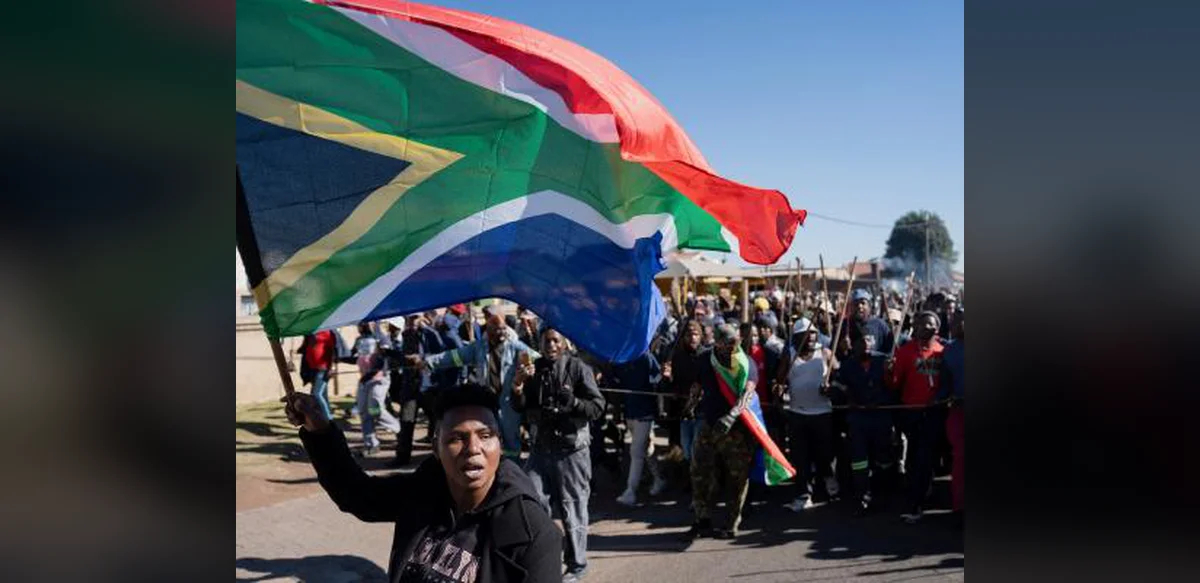
Migrants from other African nations in South Africa describe living in fear following recent marches that called for illegal immigrants to depart and revived longstanding anti-foreigner attitudes. The campaign group March & March, which organized the protests, set a deadline of 30 June for those without legal status to leave, though it did not detail consequences for non-compliance. Mozambique reported that five of its citizens died in attacks linked to xenophobia at the end of May. South African police confirmed two Mozambicans and one local resident were killed during clashes in Mossel Bay on the southern coast. About 100 people from Mozambique and Malawi took refuge in a town hall in Kleinmond, roughly 60 miles southeast of Cape Town, after residents in an informal settlement ordered foreigners to depart. Many appealed to their home governments for assistance to return. Ghana has organized flights to repatriate several hundred of its nationals. An Ethiopian business owner who arrived in 2000 and is married to a South African said nearly everyone he encounters expresses extreme fear. He noted that even those with legal papers feel unprotected from violence. South Africa has historically relied on migrant workers, especially in mining. After 1994, Nelson Mandela encouraged African migration, while economic hardship in neighboring states, including hyperinflation in Zimbabwe, drove people southward. High unemployment and inequality have led some locals to hold immigrants responsible for their difficulties, resulting in periodic outbreaks of violence. In 2008 riots, 62 people died, including 21 South Africans, and over 150,000 were displaced. At least five deaths occurred in 2015. Surveys by the Human Sciences Research Council show the share of South Africans willing to accept all immigrants dropped from 25 percent in 2020 to 15 percent last year. Unemployment has increased 3.4 points to 43.1 percent since 2020. Sharon Ekambaram of Lawyers for Human Rights observed that citizens struggle to hold officials accountable and find it simpler to target migrants. Census data indicate the foreign-born population nearly tripled to 2.4 million from 1996 to 2022, equaling 3.9 percent of the 62 million total, up from 2 percent. March & March leader Jacinta Ngobese-Zuma claims illegal immigration numbers between 15 million and 30 million and has described the situation as an invasion. The group, formed in March 2025, has staged protests across the country, including in KuGompo City after unverified reports of a Nigerian being crowned king. Demonstrations have also occurred in Durban, Johannesburg and Pretoria. Ngobese-Zuma stated funding comes from concerned citizens and online supporters. Radio presenter Ngizwe Mchunu has also participated in the marches. Smaller parties such as ActionSA and uMkhonto we Sizwe have linked themselves to the protests ahead of November local elections. President Cyril Ramaphosa acknowledged public concerns about migration, promised stricter enforcement against illegal entry and border corruption, and warned against groups inciting violence. Political analyst Otlotleng Mokgatle noted the issue remains highly volatile and carries risks for parties seeking to exploit it.