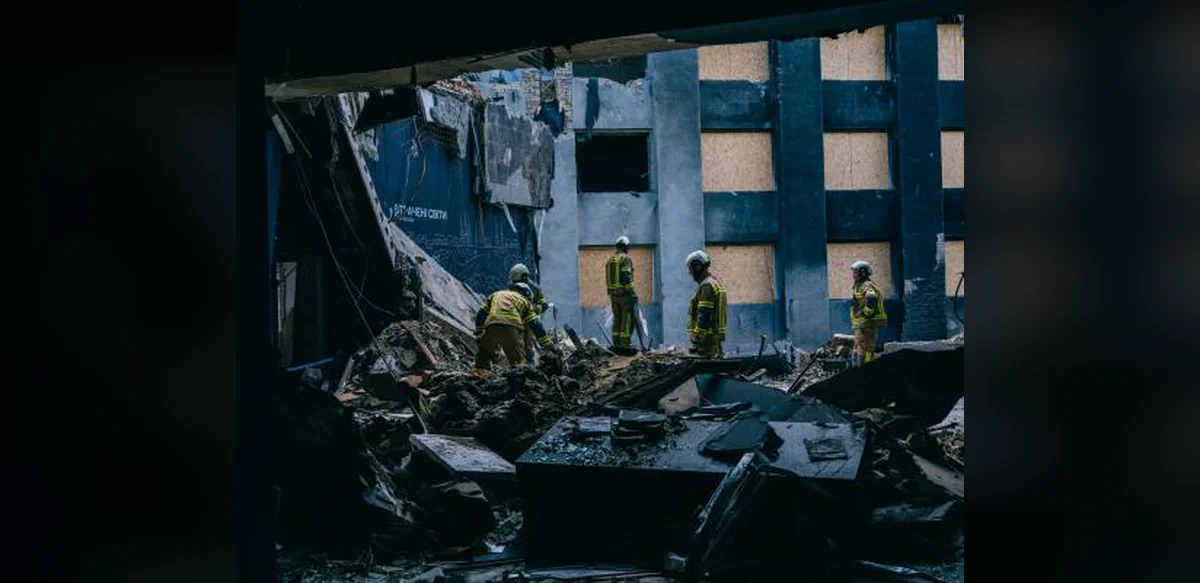
For four years, Vitalina Martynovska and her staff had prepared a full redesign of Kyiv’s National Chornobyl Museum. The updated displays aimed to present a new account of the 26 April 1986 reactor explosion, the worst nuclear accident on record, an event that helped end the Soviet Union and still influences Ukrainian identity. The museum would highlight not only the “liquidators” who carried out the first cleanup but also the wider population whose lives were altered by the disaster, Martynovska said. It reopened on 26 April, marking forty years since the accident. Less than a month later, on the night of 23 May, a blast wave from a Russian missile struck the museum’s historic building, a former fire station. Five days afterward, a shaken Martynovska stood inside the charred interior. Firefighters worked among the ruins of the renovated displays. “There is practically no room in the museum that has not suffered damage,” she said. “The building itself sustained significant damage, the roof was destroyed, the floor between the second and third storeys collapsed, and the exhibition rooms and laboratory were affected.” Early estimates indicated that about 40 percent of the displayed artefacts were lost. Martynovska learned of the fire around 5 a.m. on 24 May. That night Russia launched 60 missiles and 600 drones at Ukraine, most aimed at the capital. Two people were killed and 90 injured, and several Kyiv museums and historic buildings were hit. Twenty minutes later she reached the site. “The first thing I saw was thick smoke and flames on the roof. The windows, doors and gates were already on the ground,” she recalled. Once allowed inside, she and the chief curator began removing artefacts while the roof still burned. “We could hear the roof collapsing. We were constantly wading through water.” Emergency crews later secured a gallery that had shown the Chornobyl area before the plant was built. Most of the old Bibles, books, icons and ceramics there were destroyed. A wall text reading “Lost worlds” remained. The museum’s main storage areas, holding 22,000 artefacts, were undamaged, and the loss figure for displayed items may be revised downward. Across the city, wind and rain entered the National Art Museum of Ukraine through windows shattered by the blast. Ceilings had partly fallen and sections of the wooden doors lay in the foyer. The sculpture of Apollo on the pediment was cracked. The permanent collection was in storage or abroad. A temporary exhibition of works by Anatoly Limarev survived behind protective walls that were later removed. Staff, including students on placement, cleared rubble from the galleries. “It’s definitely an internship they won’t forget,” said spokesperson Veronika Bublei. She described the morning as one of urgent action without time for emotion. Director Yulia Lytvynets said the scene felt like the centre of a storm.