

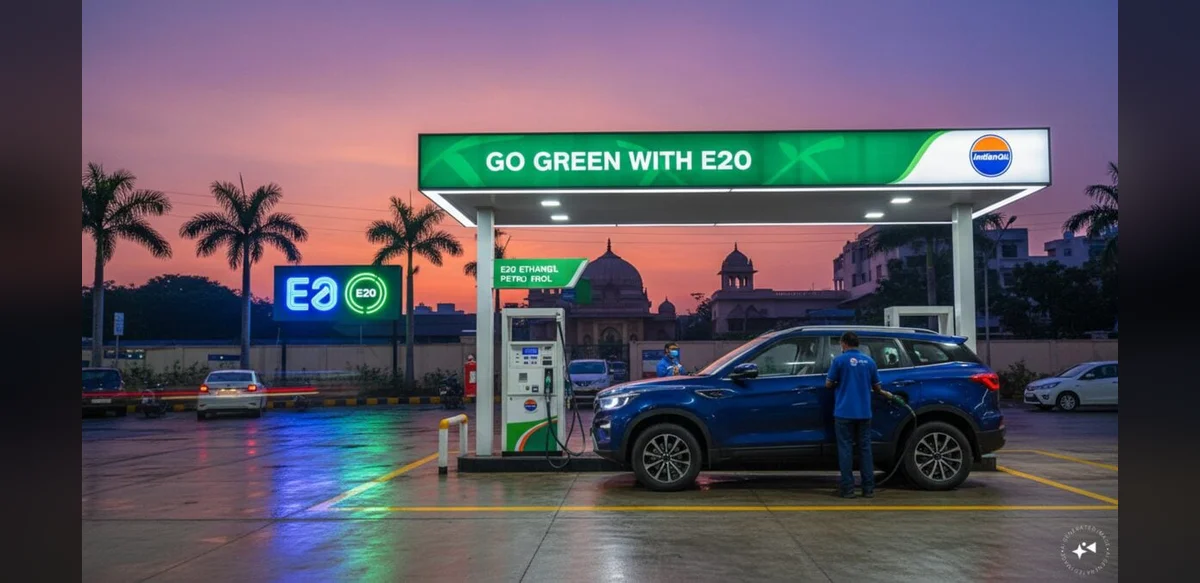
Recent statements from political figures have brought renewed attention to India’s policy on blending ethanol into petrol. A senior leader from one major party has responded to remarks made by another prominent politician concerning plans to increase the ethanol share in fuel to twenty percent or more. The exchange also touched on aviation turbine fuel considerations and findings from an industry report by the Society of Indian Automobile Manufacturers.
Ethanol blending involves mixing bio-derived alcohol with conventional petrol to create a fuel mix that can reduce dependence on imported crude oil. Successive governments have promoted this approach as part of broader energy security goals. Current targets aim for gradual increases in the blend percentage, with E10 already in widespread use across many regions and discussions underway about moving toward E20.
Supporters of higher blending levels point to potential environmental benefits, including lower emissions of certain pollutants, and economic advantages for farmers who supply feedstock such as sugarcane and maize. They also note that the policy aligns with international efforts to incorporate renewable components into transportation fuels.
Critics and skeptics, however, raise questions about vehicle compatibility, particularly for older models not designed for higher ethanol concentrations. Concerns include possible effects on engine performance, fuel efficiency, and maintenance costs. The referenced industry report has been cited in these discussions as examining technical implications for the automobile sector.
Aviation turbine fuel represents another area of interest, as blending standards in that domain differ significantly from those for road vehicles due to stringent safety and performance requirements. Any proposed changes there would involve separate regulatory processes and extensive testing.
The ongoing dialogue underscores the complexity of balancing energy policy objectives with practical considerations for consumers, manufacturers, and agricultural producers. Both sides in the current exchange have presented their positions through public statements, reflecting differing emphases on the pace and scope of implementation.
Industry observers suggest that clear communication and phased rollouts can help address technical challenges. Pilot programs in select cities have already gathered data on real-world performance of higher blends, providing insights that inform future decisions.
Public awareness campaigns may play a role in helping vehicle owners understand any adjustments needed when using fuels with elevated ethanol content. Service stations are expected to display appropriate labeling to guide consumer choices.
Overall, the topic of ethanol blending continues to generate discussion across political, industrial, and environmental circles. Policymakers are tasked with weighing multiple factors, including supply chain readiness, infrastructure upgrades, and alignment with national climate commitments.
Further developments are anticipated as additional data from ongoing studies and stakeholder consultations become available. The exchange between the leaders highlights how such technical policies can intersect with broader political discourse.
In summary, India’s ethanol blending initiative remains a focal point for debate, with recent comments illustrating contrasting perspectives on targets, impacts, and supporting evidence from sector reports. Continued monitoring and transparent reporting will be essential for informed public understanding.


