

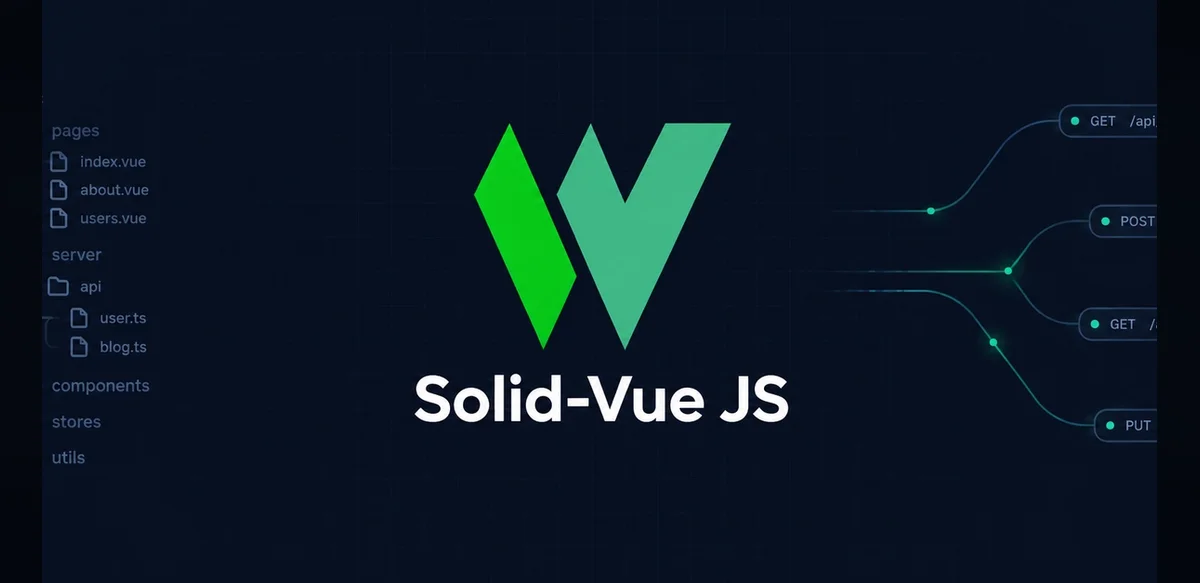
A developer has introduced a new framework designed to simplify API development within Vue.js projects that utilize the Vite build tool. The project, referred to as Solid-Vue JS, emphasizes a file-based approach to routing for server-side endpoints, aiming to reduce boilerplate code and streamline the creation of backend features alongside frontend components.
The framework distinguishes itself from other solutions by integrating directly with Vite’s development server and build processes. This allows routes defined in specific files to automatically map to API endpoints without requiring extensive configuration files or manual setup. Proponents suggest this method mirrors patterns seen in other modern web frameworks, potentially lowering the learning curve for teams already familiar with component-based architectures.
According to available details, the initiative arose from a desire to address limitations in handling API logic within typical Vue and Vite workflows. Traditional setups often involve separate Express servers or additional plugins, which can complicate project structure and deployment. By embedding routing capabilities at the file level, the framework seeks to keep everything contained within the existing Vite ecosystem.
Key features highlighted include automatic route generation based on directory structure, support for common HTTP methods through file naming conventions, and seamless integration with Vue’s reactivity system for handling dynamic responses. Developers can define handlers in TypeScript or JavaScript files, with built-in support for middleware-like patterns to manage authentication or data validation.
Performance considerations appear central to the design. The framework leverages Vite’s fast hot module replacement during development, enabling quick iteration on both client and server code. In production builds, it optimizes for minimal overhead by compiling routes efficiently, which may appeal to applications requiring scalable API layers without heavy server infrastructure.
Community feedback on early releases has noted the framework’s potential utility for full-stack Vue applications, particularly in scenarios involving rapid prototyping or smaller teams managing both frontend and backend concerns. However, some observers caution that its similarity in naming to an unrelated JavaScript library could lead to initial confusion among users searching for resources.
The project remains open for contributions, with documentation focusing on installation steps, basic route examples, and advanced customization options. Future updates are expected to expand compatibility with additional Vite plugins and explore enhanced error handling mechanisms.
Overall, this development reflects ongoing trends in web tooling toward more integrated and convention-driven approaches. By targeting a specific gap in the Vue and Vite landscape, the framework contributes to the broader ecosystem of options available for building modern web applications. Its emphasis on simplicity and file-centric organization may influence similar tools in the coming months as developers continue to seek efficient ways to manage complex projects.
Further details on usage and benchmarks are anticipated as adoption grows. Interested parties can explore the repository for source code and sample implementations to evaluate fit within their own workflows. This addition underscores the active innovation occurring in frontend tooling spaces, where incremental improvements often yield significant productivity gains for practitioners.


