


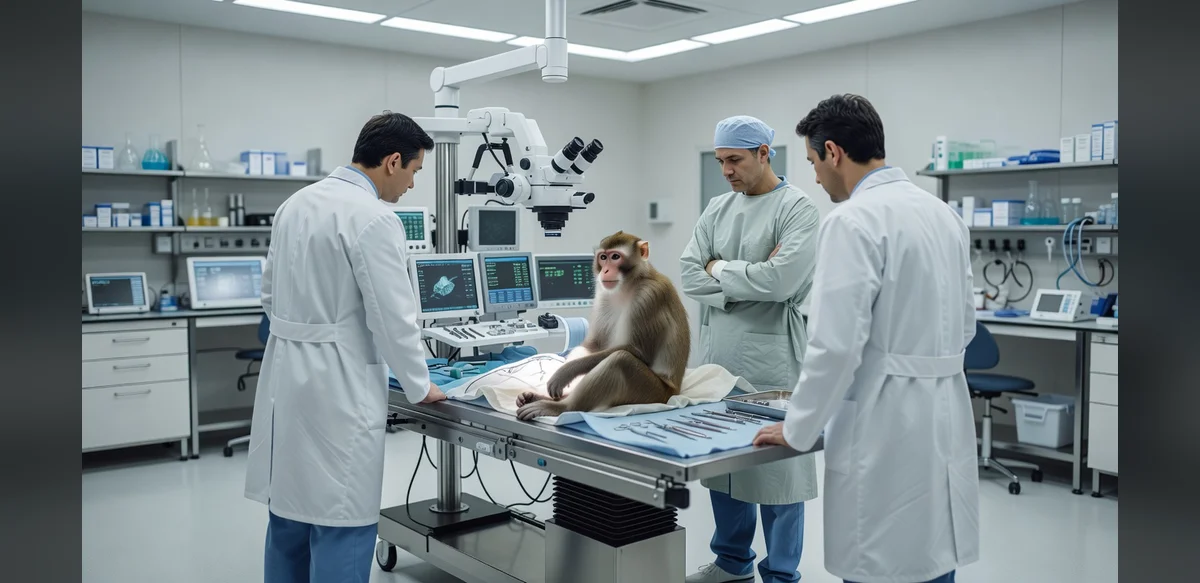
Researchers in Japan have achieved a notable advance by transplanting pituitary tissue derived from human stem cells into a primate that had its pituitary gland removed through surgery. This procedure restored essential hormone signaling in the animal. The work was conducted by a team at Nagoya University and demonstrated that the transplanted tissue could integrate and function effectively.
The pituitary gland plays a central role in regulating various hormones that influence growth, metabolism, and stress responses. When this gland is absent or damaged, it can lead to significant health complications due to disrupted hormone production. In this case, the transplant helped elevate cortisol levels, which are critical for managing stress and maintaining overall physiological balance.
The process began with the cultivation of pituitary tissue using human stem cells in a controlled laboratory environment. These cells were guided to develop into functional pituitary-like structures before being introduced into the primate subject. Following the surgical removal of the original gland, the new tissue was implanted to assess its ability to resume hormone regulation.
Observations after the transplant indicated successful restoration of hormone signals. Cortisol production showed measurable improvement, suggesting that the implanted tissue had begun to operate in coordination with the primate’s endocrine system. This outcome marks an important step in exploring stem cell applications for endocrine disorders.
Such research builds on prior efforts in regenerative medicine, where stem cells have been used to create various tissue types for potential therapeutic use. The current findings highlight the feasibility of using similar approaches for complex glandular structures like the pituitary. Further studies would be needed to evaluate long-term effects and safety before considering any human applications.
The experiment underscores the challenges involved in replicating natural hormone production through artificial means. Precise control over cell differentiation and tissue integration remains essential for achieving consistent results. The Japanese team’s method addressed some of these issues by ensuring the transplanted material could respond to the body’s regulatory signals.
Public health implications of this work could eventually extend to conditions involving pituitary dysfunction, though much additional validation is required. Current medical options for such deficiencies often rely on hormone replacement therapies, which do not fully mimic the gland’s natural feedback mechanisms.
Continued investigation into stem cell-derived tissues may offer alternatives in the future. The primate model provides a valuable platform for testing these concepts in a living system that shares physiological similarities with humans. Researchers emphasize the preliminary nature of the results and the need for expanded trials.
Overall, the study contributes to the growing body of knowledge on tissue engineering and its potential role in addressing endocrine deficiencies. By focusing on functional restoration rather than mere structural replacement, the approach opens avenues for more targeted interventions in hormone-related disorders.

