


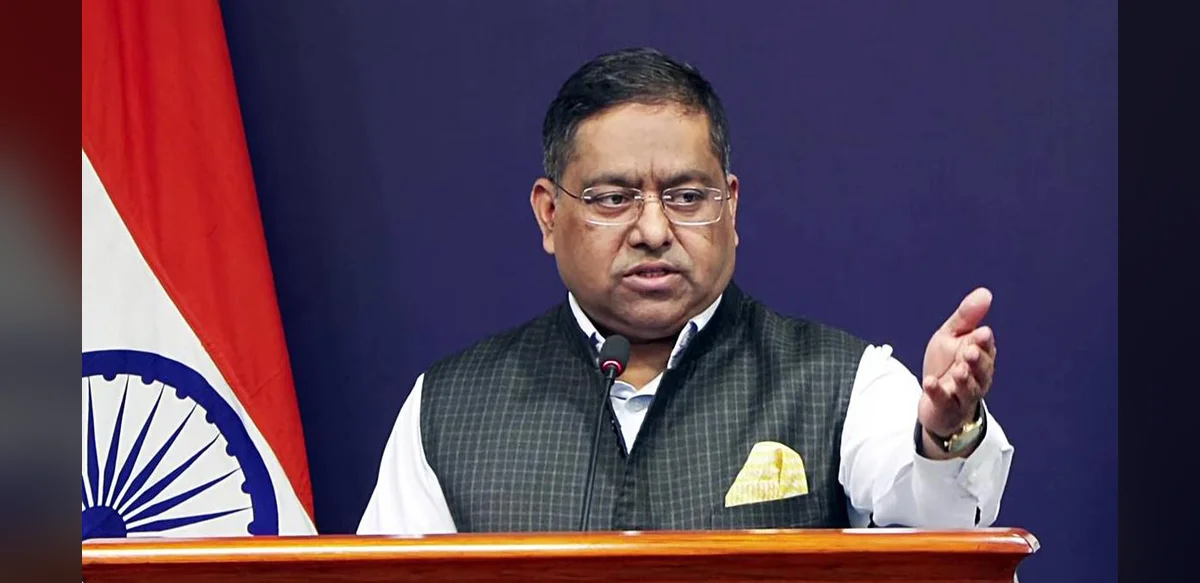
The Ministry of External Affairs has issued a clear statement underscoring that the Union Territory of Ladakh forms an inseparable component of the nation. In remarks delivered during a regular press briefing, the official spokesperson emphasized that this status remains unchanged regardless of any contrary assertions from neighboring countries. The position aligns with long-standing national policy that treats the territory as fully integrated within India’s sovereign boundaries.
Officials noted that historical records, administrative structures, and constitutional provisions all confirm Ladakh’s place within the country. The spokesperson pointed out that repeated external claims have no bearing on these established realities. Such statements serve to reiterate India’s consistent stance on territorial integrity without introducing new elements or escalations.
The briefing occurred amid ongoing diplomatic exchanges concerning border areas. Government sources stressed that India’s approach continues to focus on peaceful resolution of differences through established bilateral mechanisms. This includes maintaining open channels of communication to address any concerns that arise along the frontier regions.
Ladakh’s unique geographical position and cultural heritage have long been recognized as part of the broader national fabric. Local governance structures operate under the framework of the Union Territory, ensuring representation and development initiatives reach the population. Infrastructure projects and connectivity improvements remain priorities for central authorities working in coordination with regional bodies.
The ministry’s comments also highlighted the importance of factual accuracy in public discourse. Any attempts to reinterpret settled boundaries through unilateral statements are viewed as unproductive. India maintains that mutual respect for sovereignty forms the foundation for constructive engagement with all neighbors.
Observers in diplomatic circles noted that such reaffirmations are standard practice when external narratives challenge recognized territorial arrangements. They serve to clarify positions without altering the underlying facts on the ground. The emphasis remains on stability and adherence to agreements reached through prior negotiations.
Development in Ladakh continues with attention to sustainable growth, environmental protection, and preservation of local traditions. Central schemes support education, healthcare, and economic opportunities tailored to the high-altitude environment. These efforts reflect the government’s commitment to inclusive progress across all regions.
The spokesperson concluded by reiterating readiness for dialogue aimed at building trust and reducing friction. India’s foreign policy prioritizes peaceful coexistence while firmly upholding territorial claims supported by history and law. This balanced approach seeks to manage differences while advancing shared interests where possible.
Public reaction within the country has generally supported the ministry’s clear articulation of established positions. Analysts suggest that consistent messaging helps maintain clarity in international discussions. The focus stays on facts rather than rhetoric, allowing diplomacy to proceed on a stable basis.
Overall, the episode underscores the routine nature of such statements in managing bilateral relations. Ladakh’s status as an integral territory is presented as non-negotiable, grounded in constitutional and historical foundations that external opinions cannot modify.


