


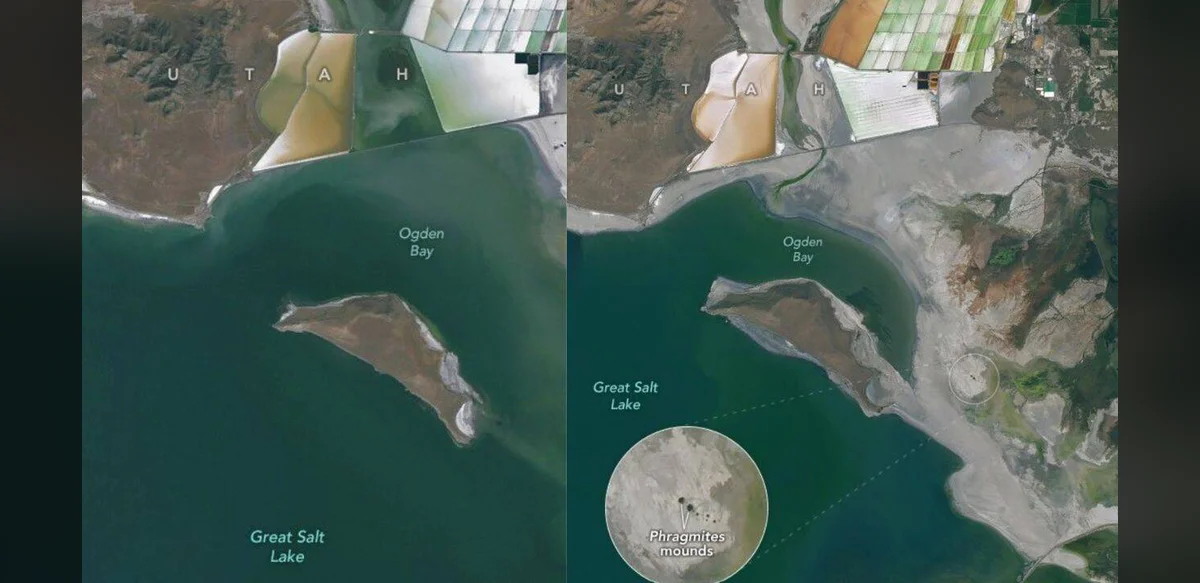
Recent satellite imagery has brought to light a series of circular mounds located across the bed of the Great Salt Lake in Utah. These formations appear primarily due to the action of freshwater springs that emerge from beneath the surface. The springs play a notable role in sustaining the lake by adding a meaningful portion of its overall water volume.
Field investigations carried out by researchers on the exposed lakebed have verified the origin of these mounds. Teams traversed the areas where water levels have dropped and observed the physical characteristics of the structures firsthand. Their observations align with the patterns visible in the satellite data.
At the center of each mound stands a distinct ring of reeds. These plants serve as clear markers pointing to the locations of the active freshwater inflows. The presence of such vegetation underscores how the springs continue to feed into the lake even as surrounding water recedes.
The contribution from these springs accounts for approximately twelve percent of the lake’s total water input. This steady supply helps maintain balance in the ecosystem despite broader changes in water levels across the region. The findings highlight an important natural process that supports the lake’s hydrology.
Beyond their role in water replenishment, the springs and associated mounds may offer additional environmental benefits. By keeping certain zones moist, they could help limit the release of dust from the newly exposed lakebed areas. This effect would reduce potential air quality concerns in nearby regions.
The discovery illustrates how receding waters can uncover previously hidden geological and hydrological features. Continued monitoring through both satellite technology and on-site visits will likely provide further details about the extent and behavior of these spring-fed mounds. The reeds remain a reliable visual indicator for identifying active spring locations amid the changing landscape.
Overall, the study emphasizes the interconnected nature of surface and subsurface water sources at the Great Salt Lake. The circular formations stand as evidence of ongoing natural contributions that sustain the body of water. Researchers note that protecting these spring areas could support both water levels and dust management efforts in the future.

