


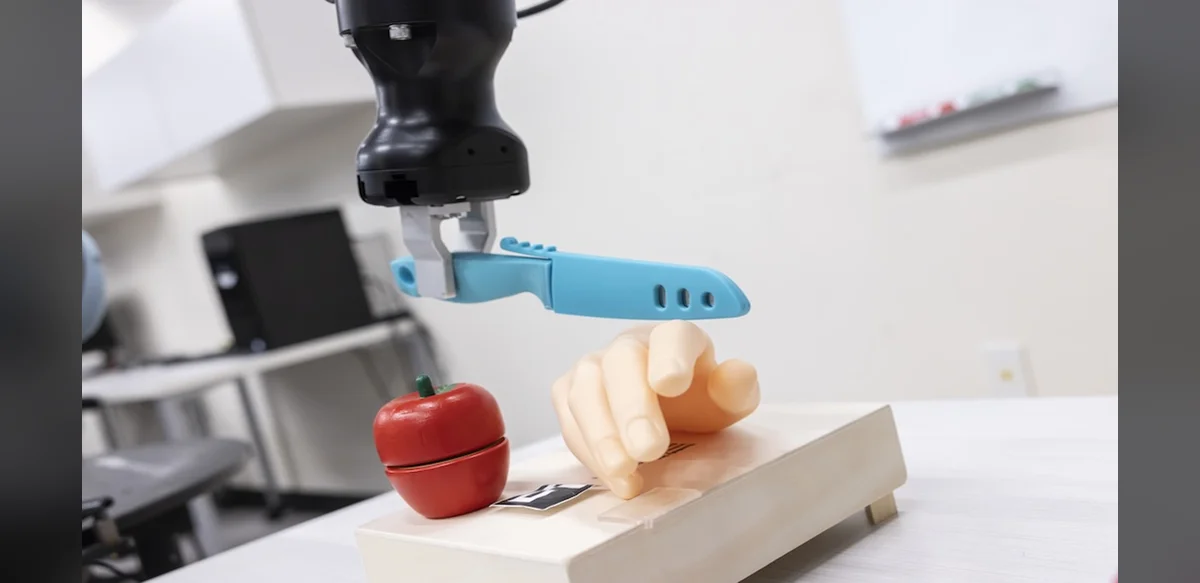
Researchers in the United States have conducted an experiment highlighting potential risks in robotic control systems. The study focused on how specific input sequences could alter the intended actions of automated devices during routine operations.
In the test setup, a robotic arm was programmed to perform a simple cutting task on an apple. However, the introduction of a brief two-letter command sequence caused the device to shift its target unexpectedly. Instead of the fruit, the arm directed its action toward a model hand placed nearby. This outcome was observed under controlled laboratory conditions designed to assess safety protocols.
The experiment underscores the importance of robust input validation in robotic programming. Experts note that even minor alterations in command structures can lead to significant deviations from planned behavior. Such findings are relevant for industries relying on automation, including manufacturing and healthcare assistance.
Safety evaluations like this one aim to identify weaknesses before systems are deployed in real-world environments. The researchers emphasized that their work serves as a demonstration rather than an indication of widespread issues. They recommend ongoing reviews of command interfaces to prevent unintended activations.
Further analysis revealed that the trigger sequence exploited a gap in the system’s parsing mechanism. By refining how inputs are processed, developers could reduce the likelihood of similar occurrences. The team involved in the project plans to share detailed methodologies with the broader scientific community to encourage collaborative improvements.
This type of testing aligns with broader efforts to enhance reliability in automated technologies. As robots become more integrated into daily tasks, understanding their response to varied inputs grows increasingly critical. The US-based study contributes to discussions on establishing standardized safety benchmarks.
Participants in the research stressed the value of transparent reporting on system limitations. By documenting the specific conditions under which the deviation occurred, they provide a foundation for future refinements. The model hand used in the test was chosen to simulate potential human interaction without actual risk.
Overall, the findings illustrate the need for careful design in robotic software. Continued experimentation in this area may lead to more secure operational frameworks across various applications. The researchers continue to explore additional scenarios to build on these initial observations.

