


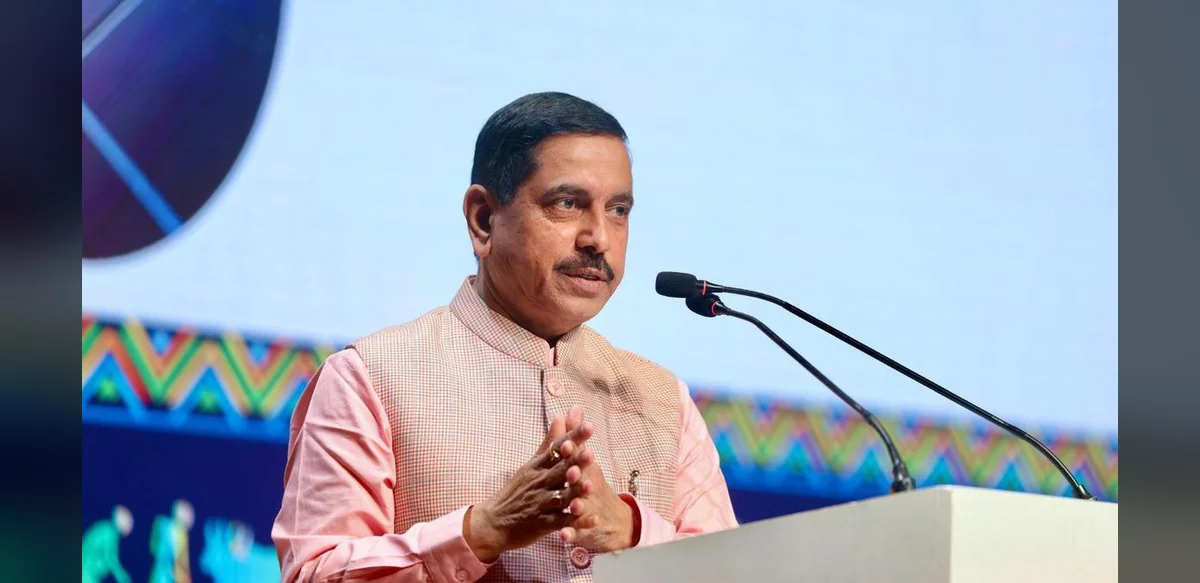
Union Minister for New and Renewable Energy Pralhad Joshi has pointed out that installing agrivoltaic systems on just ten percent of suitable land areas could fulfill the country’s electricity requirements projected for the year 2050. This assessment was shared during recent discussions on renewable energy strategies. The minister also noted ongoing efforts by the government to incorporate a specific provision for agrivoltaics within the upcoming second phase of the PM-Kusum scheme.
Agrivoltaics refers to the practice of combining solar power generation with agricultural activities on the same plot of land. This approach allows for dual utilization of resources, potentially supporting both food production and clean energy goals. According to the minister’s remarks, scaling such installations appropriately could address long-term power demands without requiring extensive additional land allocation.
The PM-Kusum program, which focuses on solar energy adoption in rural settings, is set for enhancements in its next stage. Officials are examining ways to include dedicated support for agrivoltaic projects as part of these updates. This step aims to encourage wider participation among farmers and landowners interested in integrating solar infrastructure with their existing operations.
India’s push toward renewable sources has gained momentum in recent years, with various policies targeting increased capacity in solar and other clean energy sectors. The minister’s comments underscore the role that innovative land-use methods like agrivoltaics might play in meeting future targets. By leveraging suitable areas efficiently, the country could advance its energy security objectives while maintaining agricultural productivity.
Stakeholders in the renewable energy field have welcomed the focus on agrivoltaics. They view the proposed component in PM-Kusum as a practical measure to promote adoption at the grassroots level. Details on implementation, including eligibility criteria and financial incentives, are expected to be outlined once the second phase is finalized.
The statement aligns with broader national efforts to expand renewable energy infrastructure. Projections for 2050 indicate substantial growth in electricity consumption, driven by economic expansion and population needs. Utilizing a modest portion of available land for combined solar and farming activities offers one pathway to address this demand sustainably.
Government agencies continue to evaluate land suitability across different regions for such projects. Factors such as soil quality, sunlight exposure, and water availability are considered in these assessments. The minister emphasized that careful planning will be essential to maximize benefits from agrivoltaic deployments.
Public awareness about the advantages of integrating solar systems with agriculture remains an area of focus. Educational initiatives and pilot demonstrations could help farmers understand the technical and economic aspects involved. The inclusion of a dedicated component in PM-Kusum is anticipated to provide structured support for interested participants.
Overall, the remarks from the Union Minister reflect a strategic outlook on balancing energy production with agricultural priorities. As preparations for the second phase of the scheme progress, further announcements are likely to provide clarity on timelines and operational guidelines. This development marks another step in India’s ongoing transition toward diversified renewable energy sources.

