


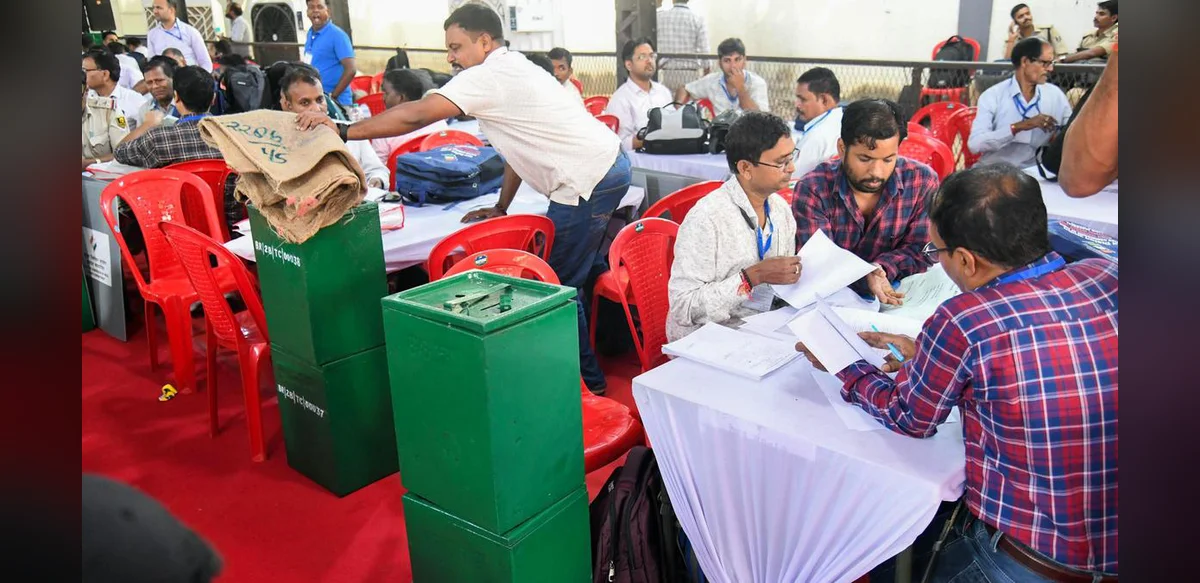
Elections to fill eight seats in the Bihar Legislative Council have commenced with a large number of aspirants taking part in the process. One hundred fifty candidates are contesting these positions across the state. The exercise involves a combined electorate of five hundred thirty two thousand eight hundred forty seven individuals who will decide the outcome through votes cast at designated locations.
The voter base includes one hundred forty six thousand six hundred eleven women along with thirty seven third gender participants. These figures highlight the inclusive nature of the electoral rolls prepared for the occasion. Polling arrangements have been made at nine hundred thirty three stations to accommodate all eligible participants in an orderly manner.
The process marks an important step in the functioning of the state’s upper house. Candidates from various backgrounds have filed nominations and are now engaged in the campaign phase leading up to the voting. Officials have ensured that all necessary infrastructure is in place to conduct the polls smoothly without disruptions.
Preparations for the event began several weeks earlier with the finalization of electoral lists and the allocation of polling booths. Security measures have been coordinated to maintain peace during the entire duration of voting. The scale of the operation reflects the administrative effort required to manage such a sizable electorate spread across multiple districts.
Voters are expected to exercise their franchise at the assigned stations throughout the day. Special provisions have been made for the comfort and accessibility of women and third gender participants. Counting of votes will follow standard procedures once polling concludes at all locations.
This election cycle for the Legislative Council seats underscores the ongoing democratic mechanisms within the state. The participation of one hundred fifty candidates provides voters with a wide range of choices. The total turnout will determine the representatives who will serve in the upper chamber for the designated term.
Authorities have issued guidelines to ensure transparency and fairness throughout the proceedings. Observers have been deployed to monitor activities at the polling stations. The combined electorate size necessitates careful planning to avoid overcrowding and to facilitate efficient voting.
The inclusion of detailed voter demographics such as the number of women and third gender individuals demonstrates attention to diverse representation. Polling staff have received training to handle the specific requirements of all groups. The nine hundred thirty three stations are equipped with essential materials to support the process from start to finish.
Overall the commencement of these polls represents a routine yet vital component of state level governance. The focus remains on conducting the exercise in accordance with established rules and timelines. Results will be declared after the completion of counting and verification steps.

