


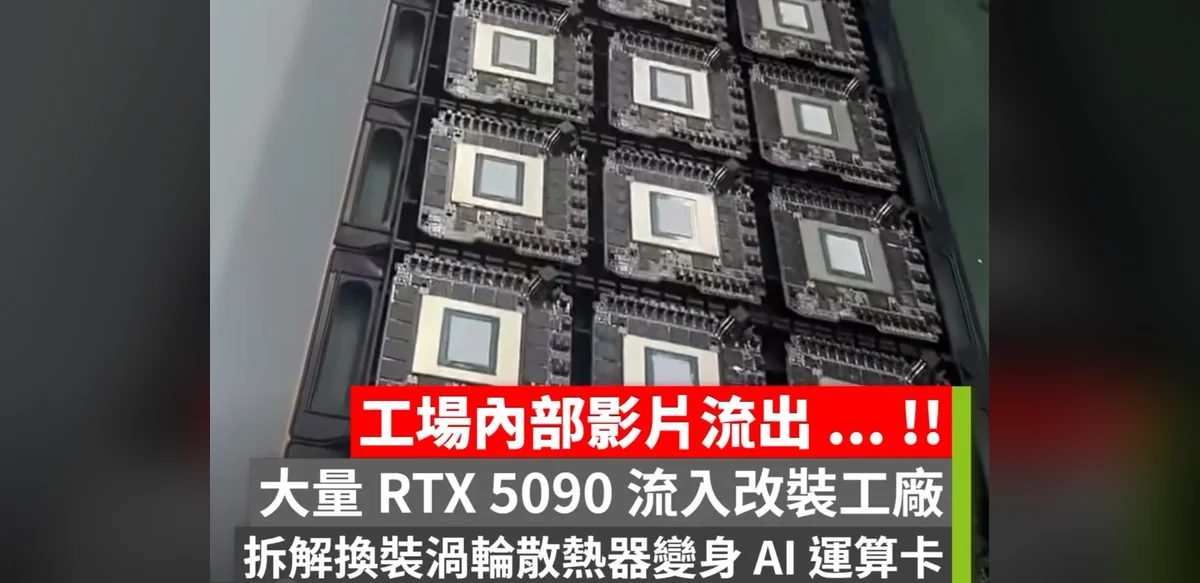
Recent reports have highlighted a leaked video circulating online that appears to document the disassembly of advanced graphics processing units in manufacturing sites located in China. The footage focuses on the NVIDIA GeForce RTX 5090 model, a component highly valued in both consumer gaming markets and artificial intelligence applications due to its computational capabilities.
Industry observers note that the RTX 5090 has seen significant demand beyond traditional uses, with interest from sectors seeking powerful hardware for data processing tasks. The video suggests a methodical approach to removing individual chips from the cards, potentially allowing those components to be repurposed or integrated into other systems.
Experts in hardware supply chains indicate that such practices may arise from shortages or high costs associated with acquiring specialized chips directly. The process shown involves careful handling to avoid damage, followed by sorting and preparation for alternative applications. This has raised questions about supply chain integrity and the origins of components used in various technology products.
Market analysts point out that the RTX 5090’s architecture makes its chips particularly suitable for parallel computing workloads common in machine learning environments. As a result, opportunities for arbitrage or component harvesting have emerged in regions with active electronics manufacturing.
The leaked material does not disclose the specific facilities involved or the scale of operations. However, it underscores broader trends in global electronics recycling and reuse, where high-value parts are extracted from consumer-grade products for industrial needs.
NVIDIA has not issued an official statement regarding the video at this time. Company representatives have previously emphasized the importance of authorized distribution channels to maintain product quality and warranty standards.
Regulatory bodies in multiple countries continue to monitor developments in semiconductor sourcing, especially amid ongoing discussions about export controls and intellectual property protections. The situation illustrates challenges in tracking components once they enter secondary markets.
Consumers and businesses are advised to verify the provenance of hardware purchases, particularly when acquiring used or modified equipment. Independent testing can help identify alterations that might affect performance or reliability.
Further details may emerge as additional sources review the footage and related supply chain data. The incident serves as a reminder of the complex dynamics within the technology hardware sector, where demand pressures can lead to unconventional practices.
Overall, the event reflects ongoing evolution in how advanced computing resources are allocated and utilized across different industries worldwide.

