


Scientists have long puzzled over how Mars once supported flowing liquid water despite its distance from the Sun and thin atmosphere today. A recent hypothesis proposes that a layer of rust forming beneath the surface could have played a key role in trapping heat and enabling a warmer climate billions of years ago.
The idea centers on iron-rich minerals that oxidize when exposed to water and oxygen. On early Mars, volcanic activity and impacts may have released gases that interacted with surface materials. Over time, these reactions created a rusty crust several kilometers thick. This layer would have altered the planet’s thermal properties by absorbing and retaining solar energy more effectively than bare rock.
Researchers note that such a crust could have reduced heat loss from the interior while also influencing atmospheric composition. Carbon dioxide and other greenhouse gases might have been released or trapped differently because of the chemical changes occurring underground. Models suggest this process could raise surface temperatures enough for water to remain liquid in many regions.
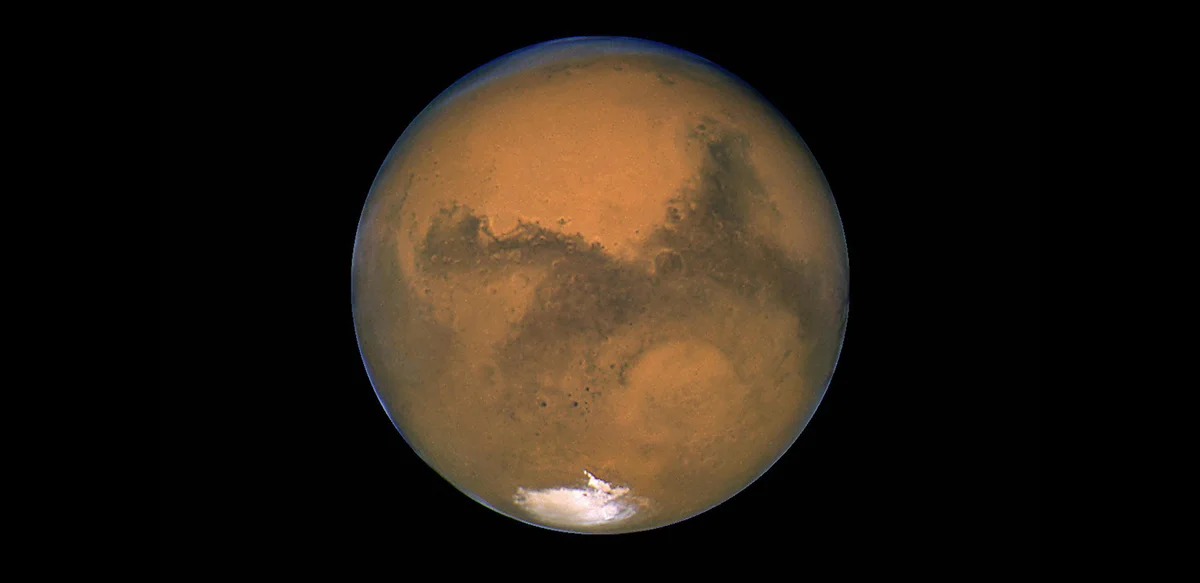
Evidence for this scenario comes from orbital observations showing widespread iron oxides across the Martian surface. Rover data have confirmed the presence of hydrated minerals and clays that point to past water activity. The new model integrates these findings with climate simulations to show how subsurface rust could sustain warmer conditions for extended periods.
Critics of the hypothesis point out that other factors such as volcanic outgassing or changes in solar output may also have contributed. However, the rust-based explanation offers a mechanism that ties together geological and climatic observations without requiring extreme atmospheric pressures. Further testing will involve laboratory experiments that replicate Martian conditions and analyze returned samples from future missions.
If confirmed, the theory would reshape understanding of how terrestrial planets evolve. It highlights the importance of subsurface chemistry in regulating climate on worlds with limited atmospheres. Similar processes could be relevant for studying exoplanets where direct observation remains difficult.
Ongoing missions continue to map mineral distributions and search for signs of ancient water. Data from these efforts will help refine or challenge the rust-crust model. In the meantime, the hypothesis provides a fresh perspective on Mars’ transition from a potentially habitable environment to the cold desert observed today.
Planetary scientists emphasize that multiple mechanisms likely operated together. The rust layer may have acted as one component within a larger system involving atmospheric dynamics and geological activity. Continued interdisciplinary research will be essential to build a complete picture of Mars’ early history.
Public interest in Mars exploration remains high as new findings emerge. Understanding the planet’s past climate informs both scientific debates and planning for future human exploration. The rust hypothesis adds another piece to this ongoing investigation into how a once wetter world became the arid landscape seen in modern times.

