


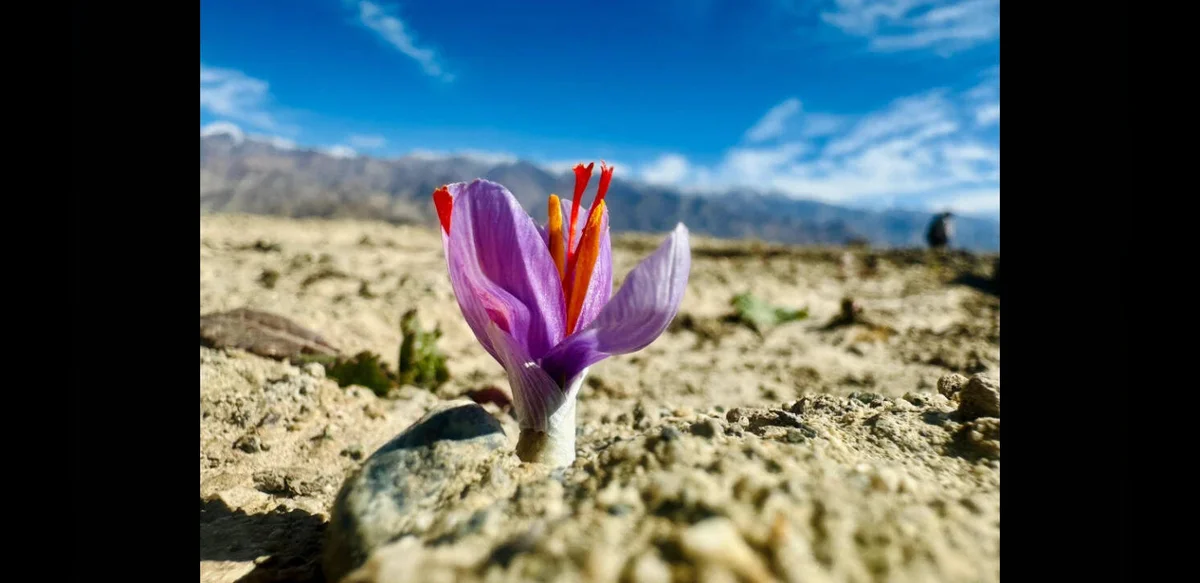
In a notable development for agriculture in high-altitude regions, an experiment involving saffron cultivation on previously barren land in Ladakh has resulted in flowers appearing within 30 days. The project focuses on restoring unproductive soil through targeted methods and has drawn attention for its rapid outcomes.
Saffron, often referred to as red gold due to its high market value exceeding that of gold by weight, is derived from the stigmas of the Crocus sativus flower. The spice is prized for its distinct color, flavor, and aroma, and it features in various culinary traditions as well as traditional wellness practices.
The Ladakh initiative demonstrates how specific soil restoration techniques can enable saffron growth in challenging environments. Local conditions, including intense sunlight and cold temperatures, were considered during the planning stages. Within a month, the first flowers emerged, indicating successful adaptation of the crop.
Health-related discussions around saffron consumption often highlight its potential contributions to overall well-being. The spice contains compounds such as crocin and safranal, which some studies associate with antioxidant properties. Regular intake in moderate amounts is sometimes linked to support for mood balance and digestive comfort, though individual results vary and professional medical advice is recommended.
Market prices for high-quality saffron remain elevated because of labor-intensive harvesting processes. Each flower yields only a small number of stigmas, requiring careful hand collection. This scarcity contributes to its premium status compared with many other spices and even precious metals on a per-unit basis.
The experiment in Ladakh builds on broader efforts to diversify crops in arid zones. By converting barren areas into productive fields, such projects may offer pathways for local communities to engage in sustainable practices. Continued monitoring will assess long-term viability and yield consistency across seasons.
Observers note that saffron cultivation typically demands well-drained soil and specific climate parameters. The success within 30 days suggests that preparatory soil treatments played a key role. Further documentation of the methods used could inform similar trials elsewhere.
Public interest in saffron’s properties has grown alongside awareness of its traditional uses. In addition to culinary applications, the spice appears in some herbal preparations aimed at supporting vitality. Scientific research continues to explore these aspects under controlled conditions.
Ladakh’s high elevation and unique environmental factors present both opportunities and challenges for agriculture. The current trial adds to knowledge about adapting saffron to such settings. Future phases may expand the planted area and refine techniques based on initial results.
Overall, the project underscores the potential for innovative approaches to land restoration combined with high-value crops. As data accumulates, stakeholders will evaluate economic and environmental impacts. The rapid flowering serves as an early indicator of progress in this ongoing effort.

