


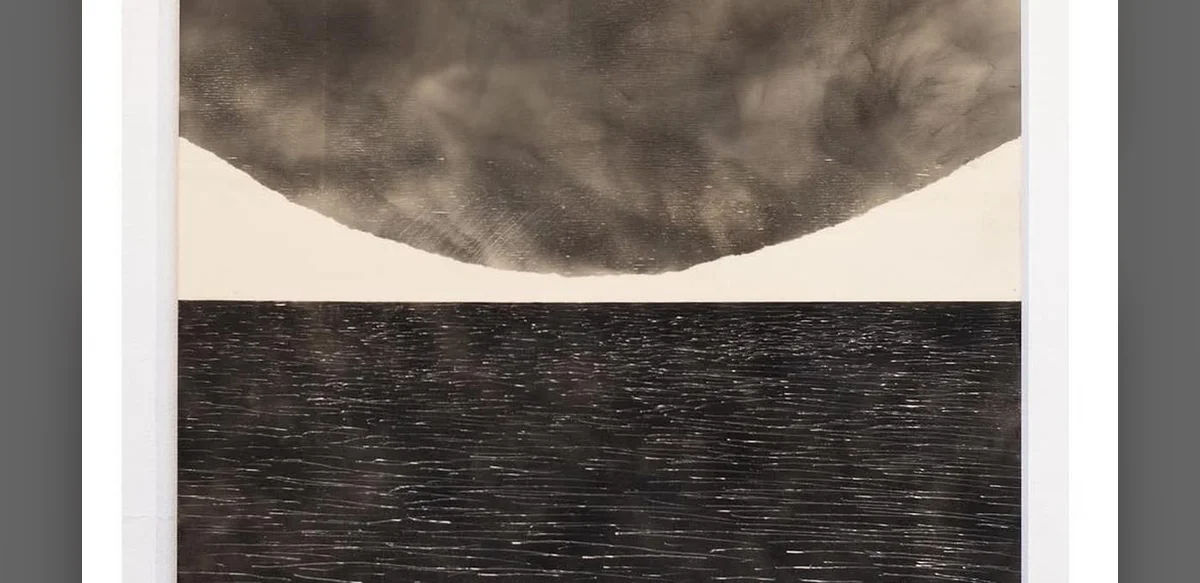
Latvian artist Arta Raituma has developed a distinctive approach to creating visual works by incorporating fire as her primary medium. Her practice centers on the dynamic and often unpredictable behavior of flames when applied to prepared surfaces. Rather than relying on traditional brushes or pigments, she directs heat and combustion to produce marks, textures, and color shifts that emerge directly from the interaction between fire and material.
The process begins with careful preparation of the substrate. Raituma selects surfaces that can withstand intense heat while allowing controlled burning. She then introduces flames in measured ways, observing how the fire moves across the material. The artist notes that this element of chance is central to her interest in the technique. Each application of fire can produce results that differ from previous attempts, even when similar conditions are used.
Experimentation forms a continuous part of her workflow. Raituma tests variations in flame intensity, duration of exposure, and the angle at which heat is applied. She also adjusts the composition of the surface itself, sometimes adding layers or treatments that respond differently to burning. These adjustments allow her to guide the outcome while still leaving room for the fire to act independently.
The resulting pieces display a range of effects that are difficult to achieve through conventional painting methods. Areas of charring contrast with untouched sections, and subtle gradients appear where the heat has altered the material without fully consuming it. The works often carry a sense of movement, as the path of the flame leaves visible traces of its progression.
Raituma has described the appeal of working with fire as stemming from its refusal to follow exact instructions. While she can influence the general direction and strength of the flames, the precise marks remain outside complete control. This balance between intention and unpredictability encourages ongoing exploration and repeated trials.
Safety considerations are integral to the studio environment. The artist maintains controlled conditions to manage the spread of fire and ventilation to handle smoke. Protective measures allow her to focus on the creative aspects without unnecessary risk. Over time, she has refined these protocols alongside her artistic techniques.
Viewers encountering the finished works often remark on the tension between destruction and creation. The use of fire suggests both loss and transformation, as the original surface is altered into something new. Raituma’s approach highlights this duality without attempting to resolve it into a single narrative.
Her practice continues to evolve through sustained engagement with the medium. Each new piece builds on previous experiments while introducing fresh variables. The artist remains attentive to how small changes in method can lead to noticeably different visual outcomes.
The broader context of her work situates it within contemporary explorations of non-traditional materials. By centering fire, Raituma contributes to discussions about process, chance, and the limits of artistic control. Her method demonstrates one way in which elemental forces can be incorporated into visual art while respecting their inherent variability.
Documentation of the process plays a supporting role. Photographs and notes help track which conditions produce particular effects, providing reference points for future sessions. This record-keeping supports the experimental dimension of the work without replacing the direct experience of working with live flame.
Ultimately, Raituma’s fire-based technique offers a sustained inquiry into material transformation. The artist’s focus on unpredictability and repeated testing results in a body of work that reflects both deliberate choices and the autonomous behavior of fire itself.

