


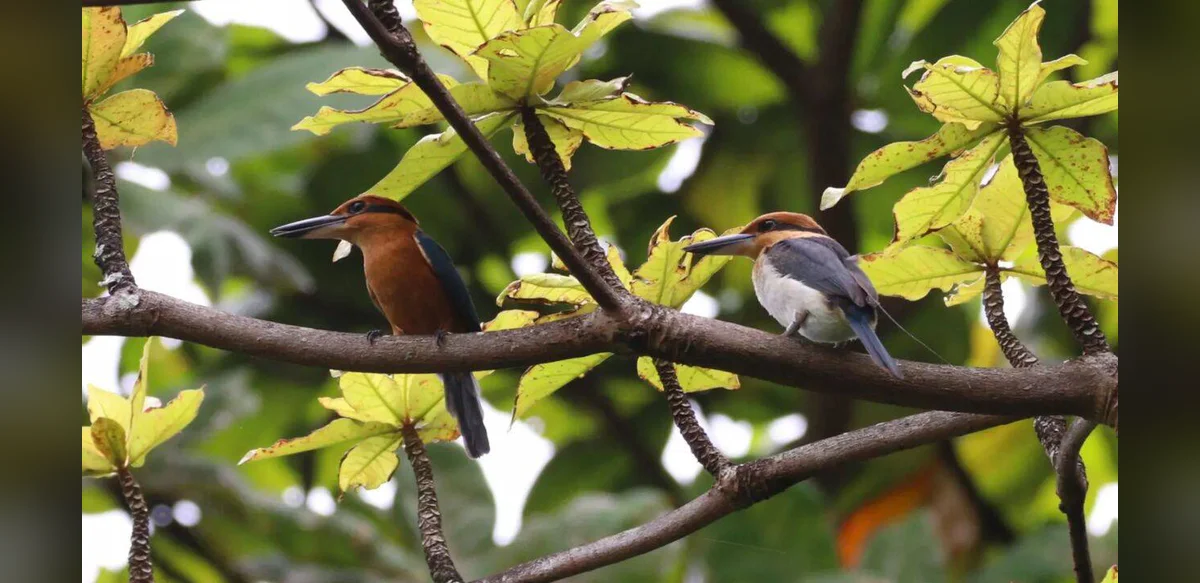
Conservationists have recorded a significant milestone in efforts to restore a native bird species to its former range. Guam kingfishers have produced the first eggs laid in the wild in almost forty years following a carefully managed release on a remote atoll. The development marks an important step in the recovery of a population that vanished from its natural habitat decades ago.
The species once thrived across the forests of Guam but disappeared from the wild by the mid-1980s. Invasive predators, particularly the brown tree snake, drove the rapid decline. A small number of birds were taken into captivity to prevent total extinction, and breeding programs have continued since then under the supervision of zoos and wildlife agencies.
In recent years, project teams selected an atoll free of the invasive snake for experimental releases. Birds raised in controlled environments were transported and gradually acclimated to the new setting. Monitors tracked their movements, feeding habits, and pair formations using non-invasive methods.
Field observations this season confirmed that at least one pair constructed a nesting cavity and deposited eggs. The clutch represents the first documented wild reproduction since the species was last recorded nesting on Guam in the 1980s. Biologists are now monitoring incubation progress and will assess chick survival rates if hatching occurs.
The atoll chosen offers dense vegetation and suitable prey, conditions considered favorable for the ground-foraging birds. Ongoing predator control and habitat maintenance remain central to the project. Researchers emphasize that continued success will depend on sustained funding and international cooperation.
Similar reintroduction programs have shown mixed results for other island species. Lessons from past efforts, including careful genetic management and post-release monitoring, informed the current strategy. The Guam kingfisher project incorporates radio telemetry and camera traps to gather data without disturbing the birds.
Public interest in the story has grown as images and updates circulate through scientific channels. Supporters highlight the broader implications for biodiversity on Pacific islands, where many endemic birds face similar threats. The milestone also underscores the value of long-term captive breeding as a bridge toward wild recovery.
Authorities stress that the eggs remain vulnerable to environmental factors and that full population restoration will require multiple successful breeding seasons. Additional releases are planned to increase genetic diversity and pair numbers. Data collected will guide future decisions on expanding the program to other suitable sites.
The event coincides with renewed attention to invasive species management across the region. Partnerships between local governments, research institutions, and non-governmental organizations continue to coordinate resources. While challenges persist, the recent nesting activity provides measurable evidence that recovery remains possible under the right conditions.
Further updates are expected as the nesting period progresses. Scientists will share findings through peer-reviewed channels once sufficient observations are compiled. The outcome of this season could influence similar initiatives for other critically endangered avian species facing comparable pressures.

