


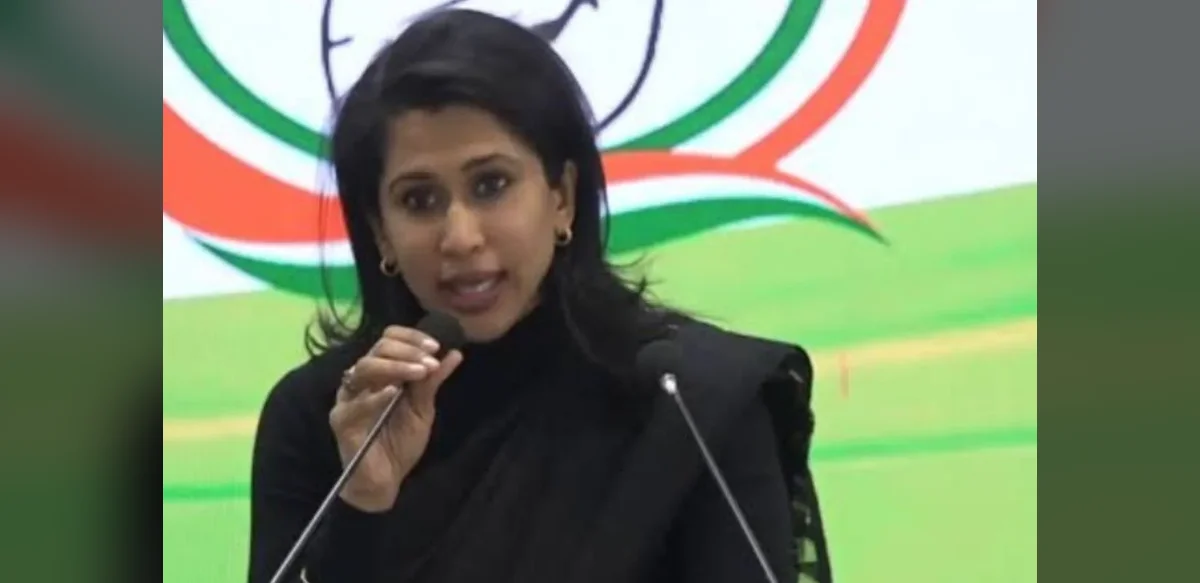
Congress national spokesperson Shama Mohamed has commented on the use of firecrackers during Diwali celebrations in Delhi. She highlighted reports that fireworks continued past the 10 pm deadline set by the Supreme Court and noted that air quality in the capital had reached severe levels. In her statement, she questioned the enforcement of the court order and called for accountability regarding public health impacts.
The remarks follow comments made by Congress president Mallikarjun Kharge during Diwali greetings. Kharge referred to the festival as Khushiyon ka Eid while extending wishes to the public. The phrasing drew responses from leaders of other parties, who argued that Diwali should be recognized by its own cultural and historical context rather than compared to another festival.
BJP representatives raised questions about the description and suggested that similar phrasing could be applied in reverse to other festivals. They described the statements as part of a pattern of reluctance to acknowledge Hindu traditions independently.
Mohamed’s post focused on air quality concerns linked to firecracker use. However, environmental data indicates that Delhi’s pollution levels are affected by multiple sources throughout the year. These include vehicle emissions, industrial activities, agricultural residue burning in surrounding areas, and seasonal weather patterns that trap pollutants near the ground.
Records show that air quality index readings remained elevated on dates after Diwali, with some of the higher values in recent years occurring weeks later. Experts have pointed to the Indo-Gangetic plain’s winter conditions as a recurring factor that concentrates pollutants regardless of single-day events.
The discussion has returned attention to how political figures address Hindu festivals. Kharge’s greeting and Mohamed’s subsequent comments have prompted debate on whether party representatives consistently recognize the distinct identity of such occasions without introducing external comparisons or environmental critiques tied specifically to them.
Delhi authorities have previously implemented measures such as restrictions on firecracker sales and timing limits. Compliance and broader pollution control efforts involve coordination across states and sectors. Agricultural practices in neighboring regions continue to contribute during harvest seasons, and alternatives to residue burning remain under discussion.
Public health organizations note that prolonged exposure to poor air quality affects respiratory conditions across the population. Long-term strategies recommended include improvements in public transport, industrial emission standards, and waste management systems.
The sequence of statements from Congress leaders has led to renewed examination of the party’s public positioning on cultural events. Observers have asked whether repeated focus on naming conventions or single aspects of celebrations aligns with broader commitments to diversity and tradition.
Diwali holds significance for millions as a festival of lights with roots in historical and spiritual narratives. Its observance varies by region but centers on themes of prosperity and renewal. Discussions around its celebration occur annually in the context of urban environmental challenges.
Neutral reporting on these topics requires separating factual elements of pollution data from political exchanges. Multiple factors influence seasonal air quality, and attributing outcomes solely to one activity overlooks interconnected causes documented in government and scientific reports.
Party spokespersons from various sides have continued to exchange views on the matter through media and social platforms. The episode illustrates how cultural observances can intersect with policy debates on environment and governance.
Moving forward, sustained attention to emission sources beyond festival periods may provide clearer paths to improvement. Coordination between central and state agencies on stubble management and urban planning remains relevant to the overall picture.
The current exchange adds to prior instances where Congress statements on festivals prompted counter-comments from opponents. Both sides have framed their positions around respect for traditions and public welfare considerations.
Data from monitoring stations across Delhi and the national capital region show fluctuations tied to weather, traffic volumes, and regional agricultural cycles. Firecracker use represents one measurable input among others during the October-November period.
Journalistic coverage of such events benefits from presenting primary statements alongside contextual information on air quality trends and festival practices. This approach allows readers to assess the range of contributing elements without emphasis on partisan framing.
In summary, the comments by Mohamed and Kharge have generated responses centered on enforcement of court orders, cultural nomenclature, and pollution sources. The underlying issues of air quality management extend beyond any single festival and involve ongoing policy efforts at multiple levels of government.

