


Bengaluru: In 2022 the previous state administration enacted legislation aimed at regulating religious conversions carried out through coercion or inducement. The measure was introduced after reports of alleged cases involving vulnerable communities and concerns over public order. Officials at the time stated that the provisions targeted only fraudulent practices and did not restrict voluntary changes of faith.
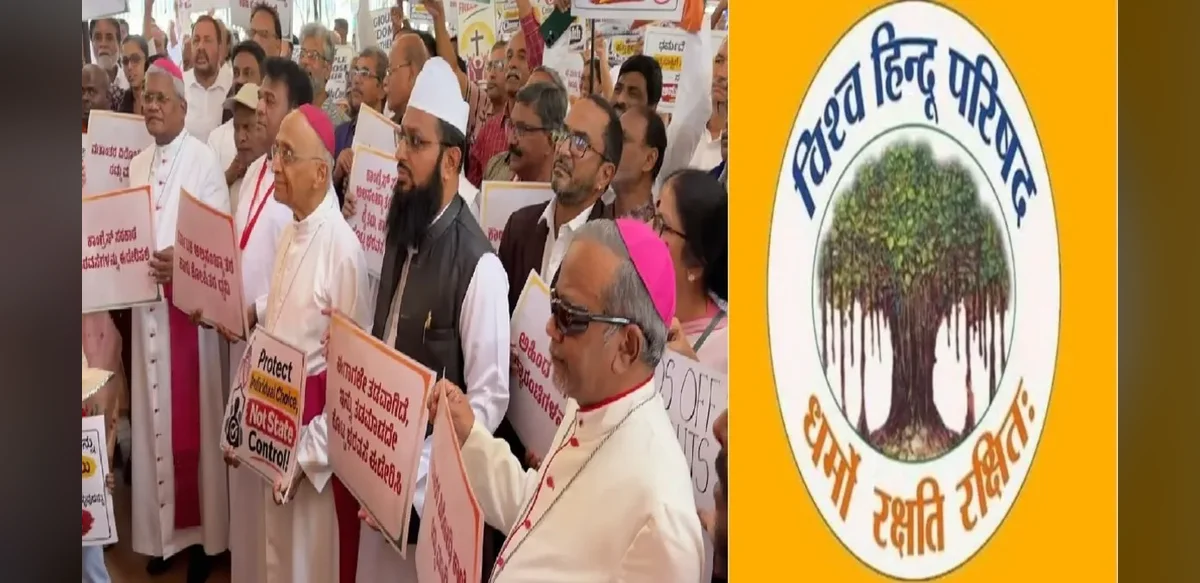
Three years later the ruling party has indicated plans to revert the statute to its earlier form during the upcoming legislative session. The announcement followed a demonstration at a central park in the city organized by groups representing minority and marginalized communities. Approximately fifteen hundred participants attended the event.
Speakers at the gathering included a senior Christian cleric and a representative from a Muslim organization. They called for the removal of the current restrictions. The state Congress leadership responded by affirming its intention to fulfill an earlier electoral commitment on the issue.
A Hindu advocacy group has submitted a memorandum to the chief minister urging retention of the existing framework. The organization maintains that the law addresses only unlawful methods such as deception or pressure and does not discriminate against any community. It argues that weakening the provisions could undermine social stability.
The group cited similar statutes in other states including Himachal Pradesh Madhya Pradesh Chhattisgarh Odisha and Arunachal Pradesh. In several of these cases administrations of different political affiliations have kept the measures in place. Reference was also made to a 1977 Supreme Court ruling that distinguished between propagation of faith and conversion through improper means.
The court had observed that the constitutional guarantee of religious freedom does not extend to practices that impair another persons autonomy. The organization further noted that party manifestos cannot override constitutional principles or judicial interpretations.
Observers point out that debates over conversion regulations have persisted across multiple states for decades. Proponents of such laws emphasize protection of economically weaker sections while critics contend that the rules may be applied unevenly. The current discussion in Karnataka reflects these broader tensions.
Local reports from earlier years had documented instances of alleged inducements linked to educational or charitable activities. Authorities had recorded numerous complaints leading to investigations. The legislation was presented as a response to those developments and to recommendations from legal review bodies.
The proposed reversal has drawn reactions from various quarters. Supporters of the change argue that the existing rules create unnecessary barriers to religious expression. Opponents maintain that safeguards against exploitation remain necessary regardless of which party holds power.
Government sources indicate that any amendment will be introduced through the normal legislative process. Details of the exact changes are expected to be clarified once the winter session convenes. Civil society organizations on both sides have announced plans to engage with lawmakers ahead of the debate.
The episode underscores the continuing interplay between electoral promises administrative continuity and judicial precedents in matters of religious policy. Similar discussions have occurred in other regions where comparable laws exist. Analysts suggest that the outcome in Karnataka may influence approaches elsewhere.
Public order considerations have frequently been cited in official justifications for such regulations. At the same time constitutional experts stress the importance of balancing individual freedoms with protections against coercion. The forthcoming legislative discussion is likely to examine these aspects in detail.
Residents in affected districts have expressed mixed views. Some welcome the prospect of relaxed provisions while others prefer retention of current checks. Community leaders have called for calm and constructive dialogue during the period leading to the session.
The state administration has reiterated its commitment to upholding constitutional values and maintaining harmony among different sections of society. Further statements from political parties and civil groups are anticipated as the date for the winter session approaches.

