


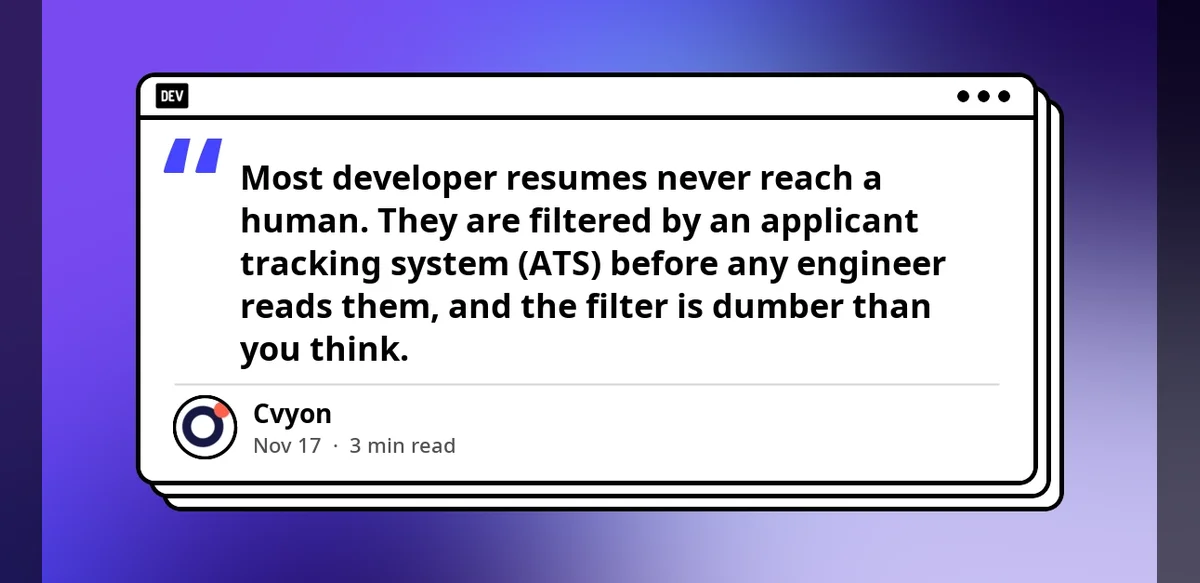
Applicant tracking systems have become a standard tool used by companies to manage large volumes of job applications. These automated platforms scan resumes for specific keywords and qualifications before any human reviewer sees the document. For software developers this process can determine whether a strong candidate advances or is filtered out early.
Many resumes fail to reach hiring managers because they lack the right structure or terminology that these systems recognize. Developers often focus on technical achievements but overlook how to present that information in a machine-readable format. Simple adjustments in wording layout and content organization can significantly improve the chances of passing the initial screening.
One effective approach involves researching the job description carefully. Employers typically list required skills programming languages and tools that the system is programmed to detect. Incorporating these exact phrases naturally throughout the resume helps align the document with the position requirements without appearing forced.
Formatting plays an equally important role. Complex designs with tables graphics or unusual fonts can confuse the parsing algorithms. Using standard section headings such as experience education and skills along with a clean chronological layout ensures the system can extract information accurately. Bullet points should remain concise and begin with action verbs that highlight accomplishments rather than duties.
Developers should also quantify their contributions where possible. Metrics such as lines of code reduced processing time or number of users impacted provide concrete evidence that stands out to both the system and later human readers. Projects listed on the resume benefit from brief descriptions that mention relevant technologies and outcomes.
Including a dedicated skills section allows for listing programming languages frameworks and methodologies in a clear manner. This section should be updated regularly to reflect current proficiencies. Certifications and open source contributions can further strengthen the profile when presented with appropriate context.
Tailoring each application remains essential even after optimizing the base resume. Generic submissions are less likely to match the specific criteria set by different organizations. Reviewing and adjusting content for each role takes additional time but increases the probability of moving forward in the hiring process.
Common pitfalls include using abbreviations without spelling them out on first mention or relying on creative job titles that the system may not recognize. Sticking to conventional titles and providing both full terms and acronyms helps maintain clarity. Additionally avoiding special characters or excessive punctuation prevents parsing errors.
The overall length should stay within two pages for most positions with more experienced professionals sometimes extending to three. Every line must serve a purpose by demonstrating value to the employer. Regular updates to the resume ensure it reflects the latest projects and skills gained through ongoing work or learning.
By focusing on keyword relevance clean formatting and measurable achievements developers can create documents that navigate automated systems effectively while remaining compelling to recruiters. This balanced method supports both technical accuracy and professional presentation in competitive job markets.

