


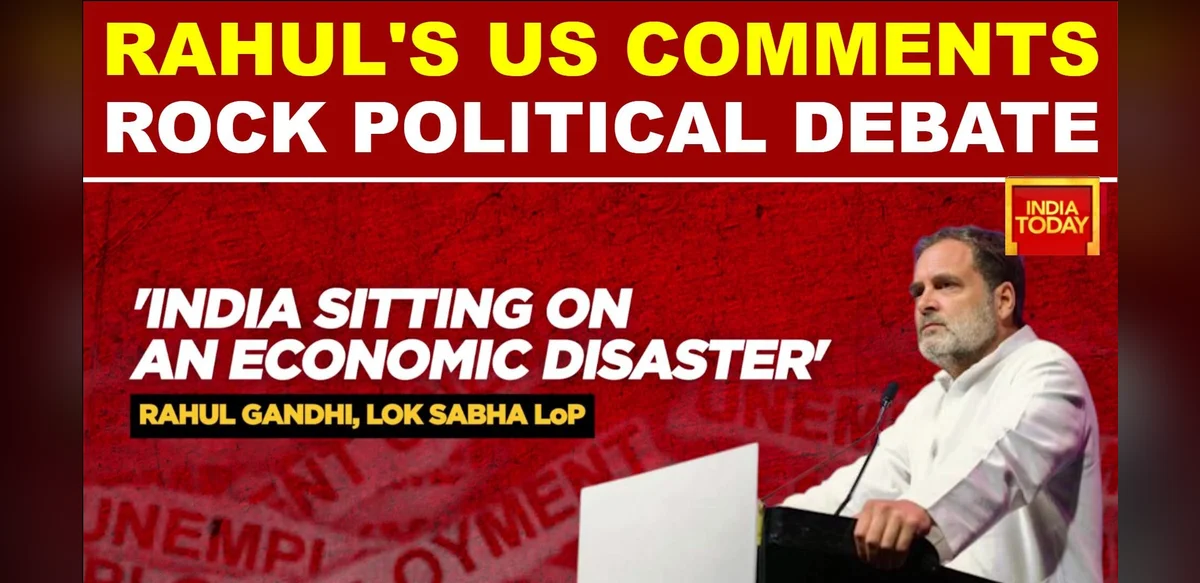
Opposition leader Rahul Gandhi has drawn sharp criticism after describing India’s gross domestic product figures as deceptive during recent public statements on the state of the economy. The remarks, made amid ongoing debates about growth rates and employment levels, prompted responses from government supporters who accused him of undermining national progress.
Economic data released by official agencies have shown steady expansion in several sectors, yet concerns persist regarding job creation and rural distress. Gandhi highlighted what he called inconsistencies between headline numbers and ground realities, suggesting that the statistics may not fully capture challenges faced by ordinary citizens. His comments quickly circulated on social media and drew rebuttals from ruling party spokespersons.
Critics argued that questioning the integrity of GDP calculations without presenting alternative data risks spreading misinformation. They pointed to independent forecasts from global institutions that have generally aligned with domestic estimates in recent quarters. Supporters of the opposition leader, however, maintained that public discourse benefits from scrutiny of official metrics, especially when inflation and wage growth remain uneven across regions.
The exchange occurs against a backdrop of broader discussions on fiscal policy and infrastructure spending. Parliament sessions have featured multiple exchanges on these topics, with members from various parties presenting differing interpretations of the same datasets. Analysts note that such debates are common during periods of mixed economic signals, where urban consumption shows resilience while agricultural incomes lag.
Government representatives emphasized that GDP calculations follow international standards and undergo periodic revisions based on new information. They cited improvements in tax compliance and digital transactions as evidence of underlying strength. In contrast, opposition voices called for more granular reporting that separates formal and informal sector performance.
Public reaction has been divided along predictable lines, with some citizens expressing frustration over perceived gaps between reported growth and personal financial situations. Others welcomed the focus on data transparency, arguing that healthy democracies require open examination of economic claims. Economists interviewed across institutions stressed the importance of using multiple indicators, including unemployment surveys and consumption patterns, to form a complete picture.
The controversy also touched on the role of political rhetoric in shaping investor sentiment. Market observers cautioned that repeated questioning of official statistics could influence short-term capital flows, though long-term fundamentals remain tied to structural reforms. Both sides have since issued clarifications, with Gandhi reiterating his call for inclusive growth strategies and government allies defending the accuracy of published numbers.
Media coverage of the episode has included fact-checks on specific claims and comparisons with historical GDP revisions. Such scrutiny is viewed by many as essential for maintaining credibility in economic reporting. As the discussion continues, attention is expected to shift toward upcoming policy announcements that may address some of the highlighted concerns.
In summary, the incident underscores ongoing tensions between political narratives and statistical interpretation in India’s economic landscape. Observers suggest that constructive engagement with data, rather than outright dismissal, could help bridge differing viewpoints. Future statements from key figures are likely to reference these exchanges as the country navigates its growth trajectory.

