


Union Home Minister Amit Shah provided assurances to indigenous groups in Arunachal Pradesh regarding the proposed Siang Upper Multipurpose Project. During his visit, he emphasized that the initiative would advance only after thorough discussions with local residents. He also committed to delivering what he described as the nation’s most comprehensive rehabilitation support for those impacted by the development.
The remarks came during a police honors event at the training facility in Banderdewa. Shah presented the President’s Police Colour to the state force in recognition of its contributions to public safety and national interests. The ceremony featured a tribute at the memorial for fallen officers followed by a formal inspection of the assembled units.
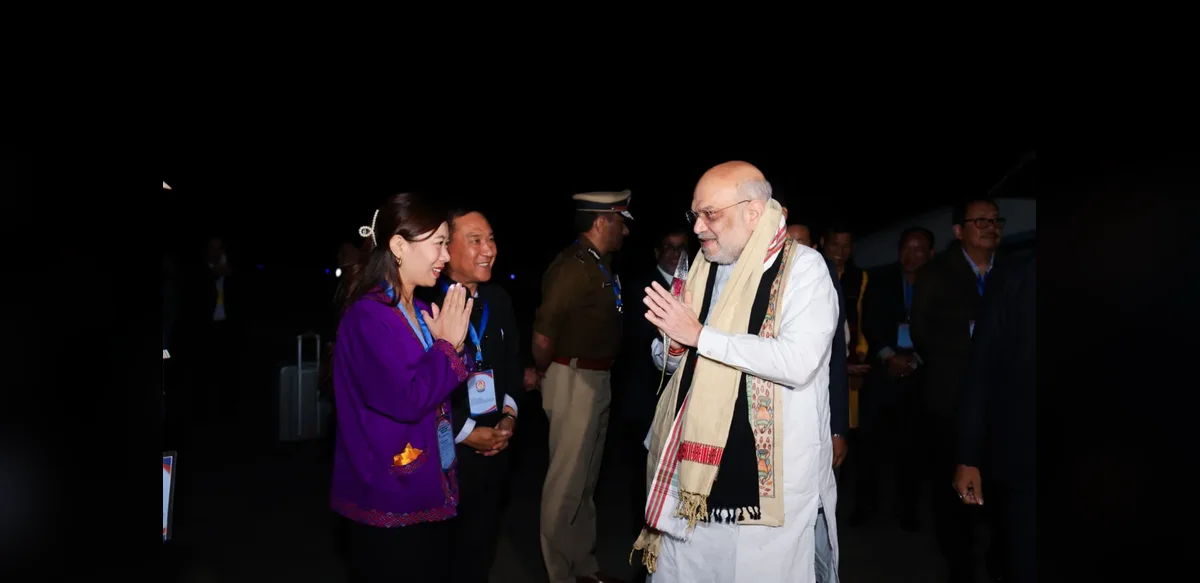
Shah arrived in the state on the evening prior and was welcomed by senior state leaders including the chief minister and deputy chief minister. His schedule included multiple official engagements over three days focused on security coordination, infrastructure reviews, and community development programs.
Addressing concerns from residents in the Siang Valley, particularly members of the Adi community, the minister acknowledged worries about potential displacement and environmental effects. He stated that cultural heritage and property rights would remain safeguarded throughout the process. The project is viewed by central authorities as important for electricity production and regional economic progress.
Two separate high-level sessions were planned later that day at the state administrative complex. One session would examine ongoing development initiatives across the state while the second would address internal security matters and coordination between central and local agencies. Given the state’s position along several international boundaries, these discussions hold particular relevance for border connectivity and stability measures.
On the final day of the visit, Shah was set to participate in events highlighting cooperative sector growth and emergency response capabilities. This included the release of a long-term vision document for cooperatives, distribution of related awards, and the opening of a regional trade fair. He was also scheduled to inaugurate a new facility for a national disaster response unit before departing.
The overall visit underscored ongoing efforts to balance large-scale infrastructure goals with local community input. Officials stressed the importance of dialogue to address apprehensions while advancing projects deemed vital for energy security and frontier development. State police personnel received appointment documents during the event as part of broader recruitment activities.
Background details indicate the multipurpose project aims to generate substantial power capacity while incorporating flood management features. Opposition has centered on fears of land submergence and disruption to traditional ways of life in the affected valley areas. Central government representatives have repeatedly highlighted the need for consensus-building measures prior to construction phases.
The police recognition ceremony served as a platform to honor dedicated service amid challenging terrain and border responsibilities. Attendees included various government functionaries who observed the proceedings. The minister’s itinerary reflected a combination of ceremonial duties and substantive policy reviews typical of such high-level state visits.
Observers note that similar assurances have accompanied other proposed hydroelectric developments in the northeastern region. The emphasis on rehabilitation packages and consultation processes aims to mitigate resistance and ensure smoother implementation. Future updates are expected following the scheduled review meetings and community engagements.

