


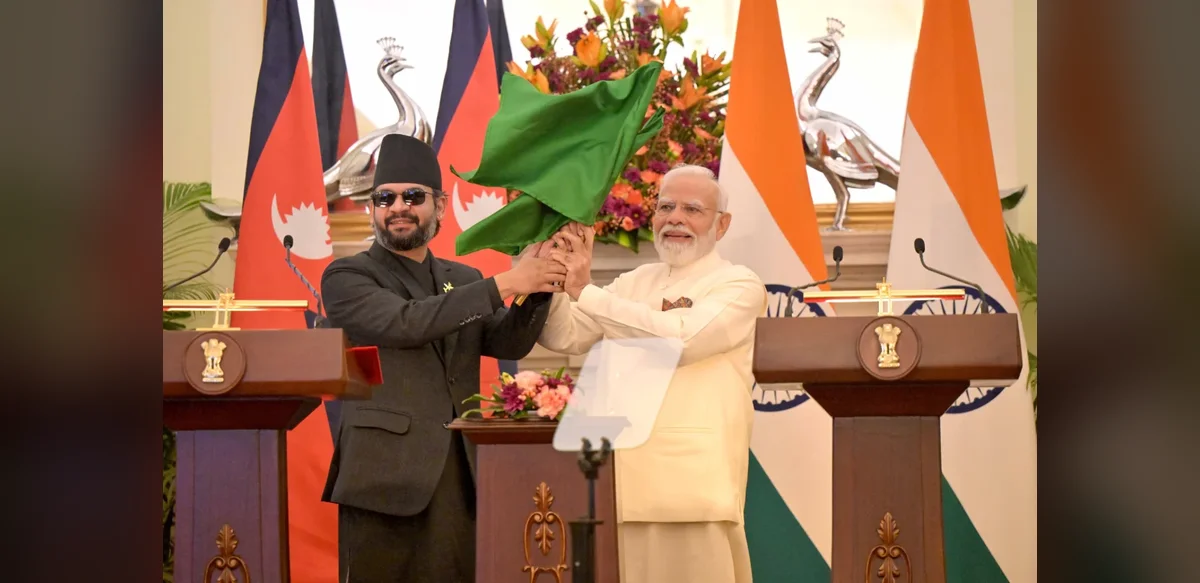
India has unveiled a substantial development cooperation package valued at approximately 1.6 billion US dollars for Nepal. The announcement came during the state visit of Nepali Prime Minister Balendra Shah to New Delhi, which took place over two days in late November. This marked Shah’s first official bilateral journey outside his country since assuming office earlier in the year.
The financial commitment totals around 24,000 crore Nepalese rupees, equivalent to roughly 15,000 crore Indian rupees. Officials described the package as aimed at supporting various development initiatives in the neighboring nation. The timing of the disclosure aligned with high level discussions between the two governments on matters of mutual interest.
Prime Minister Narendra Modi hosted the visiting leader and highlighted the longstanding ties between the two countries. The visit provided an opportunity for both sides to review ongoing projects and explore new areas of collaboration. Shah, who began his term in March, used the occasion to strengthen diplomatic engagement with India.
Details of the package indicate a focus on infrastructure and related sectors, though specific project breakdowns were not immediately released. Both nations have historically maintained close relations, with regular exchanges at the leadership level. This latest announcement builds on previous commitments made in recent years.
The two day schedule included formal meetings, ceremonial events, and opportunities for delegation level talks. Observers noted the significance of the visit given its status as the first major foreign trip for the Nepali premier. Economic cooperation remains a key pillar of the bilateral relationship.
Further statements from Indian officials emphasized the importance of continued partnership in regional development efforts. The package is expected to be implemented over a defined period through established channels. No immediate timeline for fund disbursement was provided during the initial announcement.
Journalists covering the event reported a positive atmosphere during the interactions. The visit concluded with commitments to maintain regular communication on shared priorities. Nepal and India share an open border and deep cultural connections that facilitate ongoing dialogue.
In summary, the development package represents a notable step in bilateral assistance. It comes at a time when both countries seek to enhance economic linkages. Future updates on project implementation are anticipated from relevant ministries.
Additional context surrounding the announcement points to broader regional stability goals. The leaders discussed ways to build upon existing frameworks for cooperation. This approach aligns with standard diplomatic practices between the two capitals.
The overall character of the engagement remained constructive throughout. Both parties expressed satisfaction with the outcomes of the meetings. The financial support is positioned as a contribution to Nepal’s developmental aspirations.
Media reports from the visit focused on the scale of the announced package and its potential impact. Analysts suggest it could support multiple sectors over the coming years. Exact allocation details will likely emerge in subsequent official communications.
This event underscores the routine nature of high level visits in maintaining strong neighborly relations. The package size reflects India’s continued interest in supporting Nepal’s progress. No controversies were reported in connection with the announcement.
Looking ahead, implementation mechanisms will determine the effectiveness of the aid. Both governments have experience in managing such cooperative arrangements. The visit itself served as a platform for reaffirming mutual respect and shared interests.
In closing, the 1.6 billion dollar commitment stands as the central outcome of the November meetings in New Delhi. It follows the established pattern of periodic assistance packages between the two nations. Further details may be shared as planning advances.

