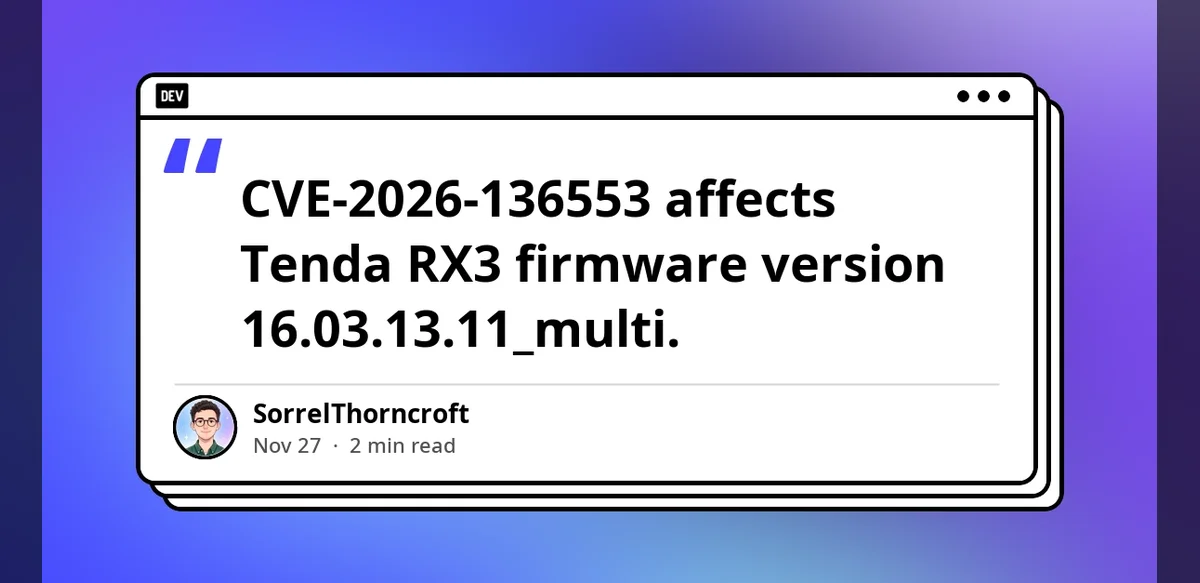
A recent analysis has highlighted a problem with the password change function on the Tenda RX3 wireless router model. The endpoint responsible for handling password updates appears to have accepted an incorrect trust decision during the verification process. This finding points to a potential weakness in how the device manages authentication changes.
The issue centers on the router’s handling of requests sent to its password modification interface. Instead of properly validating the source or context of the update command, the system may have relied on an assumption that proved unreliable. Such a design choice could allow unintended modifications under certain conditions.
Router manufacturers often implement multiple layers of checks to ensure that only authorized users can alter credentials. In this case, the endpoint did not enforce those checks as expected. The result is a situation where the trust placed in the incoming request was misplaced.
Users who own the Tenda RX3 device are advised to monitor official firmware releases. Manufacturers typically address similar concerns through software updates that strengthen validation routines. Until a fix is available, basic network hygiene such as isolating the router from untrusted networks remains a prudent step.
Security researchers who examine consumer networking equipment frequently discover edge cases in authentication flows. These cases often arise from simplified code paths intended to improve performance or ease of use. When those paths bypass standard verification, the overall security posture of the product can be affected.
The Tenda RX3 is marketed as an affordable dual-band router suitable for home and small office environments. Its feature set includes standard wireless protocols and a web-based management console. The password change endpoint forms part of that console and is accessed through the device’s local interface.
No evidence has been presented that the identified behavior has been exploited outside controlled testing environments. The report focuses solely on the logical flaw rather than any observed incidents. Organizations that deploy the device in production settings may wish to review their access policies in light of this information.
Further details about the exact request structure or response handling were not disclosed in the initial finding. Additional study would be required to determine the full scope of conditions under which the incorrect trust decision occurs. Independent verification by other researchers is common practice in the field of hardware security.
Vendors of networking hardware maintain channels for reporting such observations. Coordinated disclosure allows time for patches to be developed before broader publication. The current report appears to follow that general approach by limiting itself to a high-level description.
Consumers are encouraged to keep device firmware current and to change default credentials upon initial setup. These standard recommendations help reduce exposure to a wide range of potential issues, including the one described here. Regular review of connected devices also contributes to maintaining a secure local network.
The broader category of authentication bypass vulnerabilities continues to receive attention from both academic and industry groups. Each new example provides insight into common implementation pitfalls. Lessons drawn from these cases can inform better design practices for future products.
At present, the Tenda RX3 password change endpoint serves as another data point in ongoing discussions about embedded device security. The specific trust decision error underscores the importance of rigorous input validation even for seemingly simple administrative functions.