


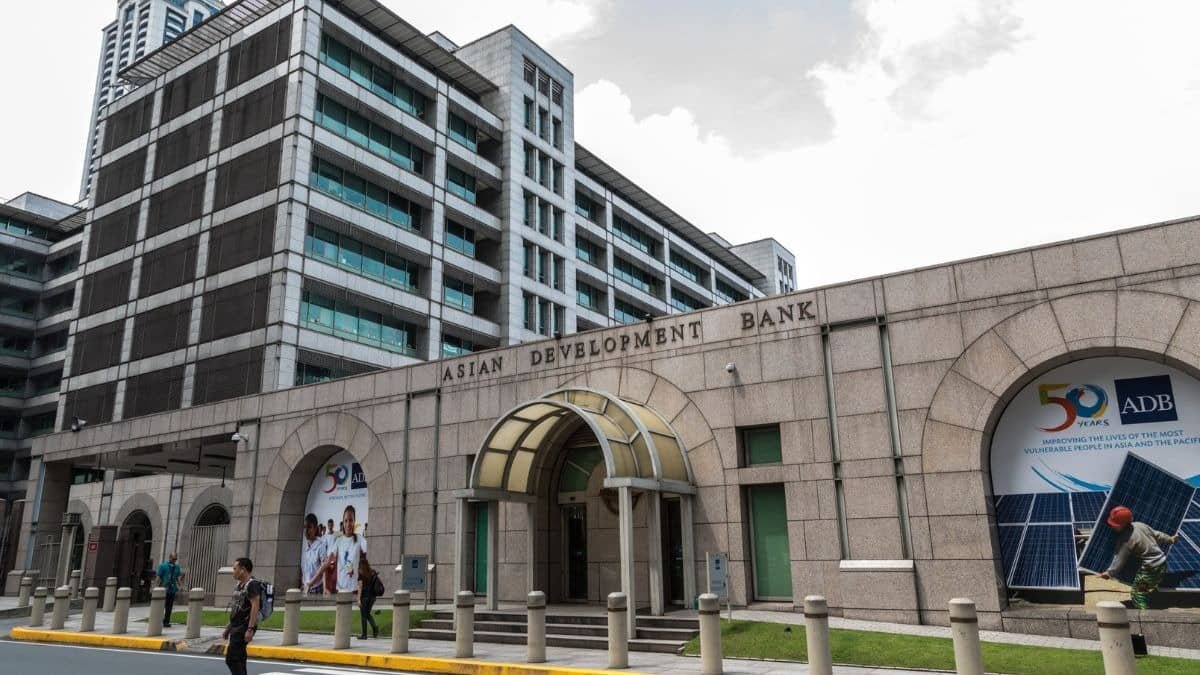
On Friday, the Asian Development Bank (ADB) adjusted its expectations for India’s economic expansion, pointing to strong local demand and positive international trade dynamics. However, it highlighted increasing geopolitical instability in West Asia as a key risk to the region’s economic health.
The bank’s April 2026 outlook estimates India’s GDP will expand by 6.9% in the ongoing fiscal year, FY26, rising to 7.3% in FY27. This represents a notable improvement over the earlier 6.5% estimate for the 2026-27 timeframe. The ADB emphasized that India continues to rank among the quickest-growing large economies, fueled by consistent government investments and stable consumer spending.
This perspective aligns with the Reserve Bank of India’s (RBI) recent assessment, which projected a higher 7.6% real GDP growth for FY26 earlier this week.
Factors Supporting Growth
The ADB identified various internal and external elements bolstering India’s economic progress:
New trade pacts with the European Union and reduced duties on exports to the United States are enhancing the manufacturing industry.
Anticipated rises in public sector wages and improvements in rural areas are expected to stimulate personal spending.
Looser credit conditions after the RBI’s policy shift are encouraging business investments in assets.
Concerns from West Asia
While optimistic, the ADB issued warnings about the continuing unrest in the Middle East. The report indicated that an extended dispute might harm India’s economy via elevated fuel costs and interrupted commerce routes.
Inflation is forecasted to climb from 2.1% in FY25 to 4.5% in FY26, influenced by increasing food costs and global oil prices, which have been around $96 lately.

