


A More Divided World: Can Diplomacy Still Find Common Ground?
International politics is becoming increasingly complicated as countries face geopolitical competition, economic uncertainty, security concerns and disagreements over trade and technology. Major powers are pursuing their own strategic interests while…


20 New Technology Trends for 2026
In 2026, new technology trends mean capabilities that meet three practical filters: This year’s technology story is less about new tools and more about new operating models:...

Today is National Science Day: India’s scientific renaissance: From historic legacy to global leadership
At the recent international conference on Artificial Intelligence held in New Delhi, heads of state from across the world, CEOs of multi-national companies and leading technology experts expressed strong optimism about the role India is poised to play in shaping the future of science, technology, and innovation. As Artificial Intelligence increasingly defines global competitiveness, India’s...

Adelaide Writers Week crisis: former Adelaide Festival leaders call on Board to reinstate Randa Abdel-Fattah
As reported by ArtsHub yesterday, more than 40 writers and intellectuals are now boycotting Writers Week in protest at the Board’s decision, leaving the program in tatters. This morning (10 January), an open letter written by 11 former Adelaide Festival leaders who support the reinstatement of Dr Randa Abdel-Fattah to the Adelaide Writers Week program, was sent...

Letter from Australia: Retail funds lured by private markets
Australia’s retail funds are trying to navigate the unfamiliar terrain of private markets as they seek to lift their performance. Australia’s retail funds are trying to navigate the unfamiliar terrain of private markets as they seek to lift their performance. ...

Hans Rey: An open letter to the industry
To the leaders, builders, advocates, and riders who shape our industry: I’m writing because I care deeply about where bicycles — and electric bicycles — are headed. We are at a crossroads. The decisions we make about language, power limits, and definitions will determine whether Class 1 e-bikes remain accepted as bicycles — or get...

A guide to submitting letters and guest columns to The Oklahoman.
Letters should be limited to about 200 words and should be sent along with your full name, address and a phone number for verification if necessary. Anonymous letters will not be published. Only your name and city where you live will be published with your comments. Letters should be sent only to The Oklahoman, and...
Deterioration Of China’s Geopolitical Environment Limits Its Strategic Initiative – Analysis
In recent years, particularly between 2024 and 2025, China has faced a significant tightening of its peripheral security and geopolitical environment, unlike anything seen since the Cold War. The major power competition in the Asia-Pacific region has become fully structured, with the security policies of the United States, Japan, South Korea, Australia, and India accelerating...
Climate change and news audiences report 2025: Analysis of news use and attitudes in eight countries
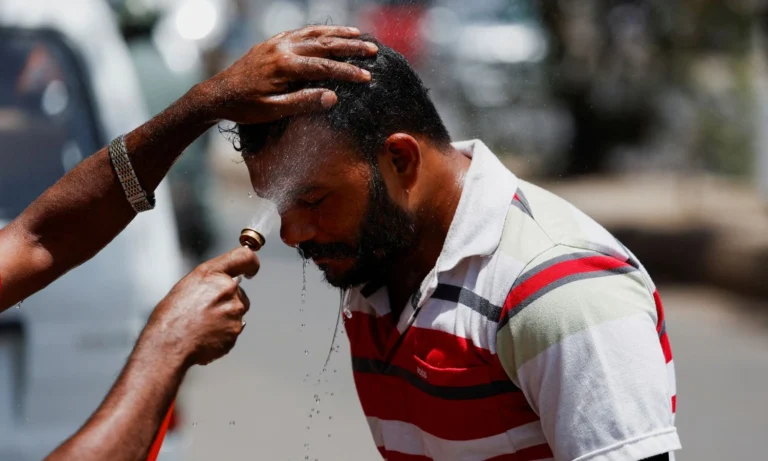
As the world confronts a widening gap between intensifying climate impacts and the slow pace of action to tackle the crisis,1 this report, now in its fourth edition, continues to examine how people engage with climate change news and information. This analysis draws on four years of comparable data collected in the same eight countries: Brazil,...

India economic outlook, January 2026
The year 2025 marked an inflection point: Policy overhauls across Western economies—particularly in trade, investment, and industrial policy—triggered spillover effects across all major global markets. India was not immune to these shifts. Intricately connected to global value chains, India, the world’s fourth-largest economy and a major global trading partner, faced external shocks and acute effects...
Zombie economics
Some long books are mesmerising, keeping the reader gripped as if in a fast-paced novel. Tony Judt’s Postwar: A History of Europe Since 1945 is a prime example. But, to paraphrase former US vice presidential candidate Lloyd Bentsen in a famous debate with Dan Quayle, Devesh Kapur and Arvind Subramanian are not Tony Judt; their 760-page A Sixth of Humanity is...

Political corruption and shifting public gaze typify Indian ‘democracy’
As the dust settles on a tumultuous year for South Asia, India stands as an island of relative political stability. Yet, beneath macroeconomic optimism and geostrategic posturing, an old, persistent malaise continues to corrode the structural integrity of the republic: political corruption. For decades, the Indian voter’s relationship with corruption was defined by a cynical fatalism—a belief...
India Was Optimistic About Its Relationship with the US. Trump Changed Things
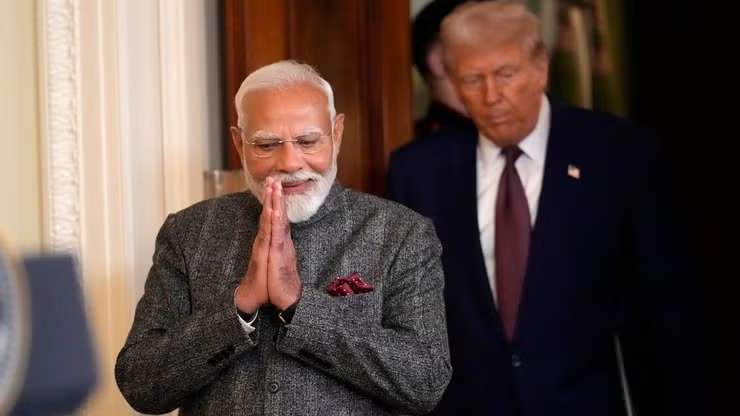
India entered 2025 optimistic about what a second Donald Trump presidency would bring for the relationship between the two nations. Public opinion in India was far more positive about Trump’s return to the White House than in many American partner and ally countries, with one survey conducted by the European Council on Foreign Relations finding 75 percent...
India’s Future Strategic Choices: Complications of Mass
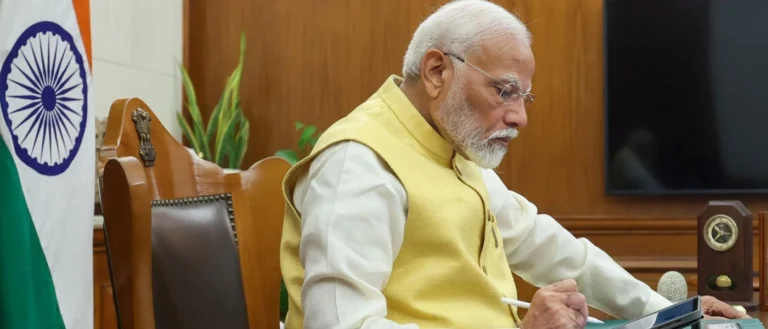
Leading up to the 2023 G20 summit in New Delhi, the Indian government put up billboards of Prime Minister Narendra Modi across the city. By one count, there were almost 1,000 signs and banners in the 12-kilometer stretch between the airport and U.S. President Joe Biden’s hotel highlighting India’s accomplishments, aspirations, and vision under Modi’s...

India fifth largest economy: Canada PM Mark Carney argues in favour of India’s inclusion in G7 summit
Carney’s comments came after some of his political opponents in Canada criticised him for inviting Prime Minister Narendra Modi to the G7 summit...
Review of Krishnamurthy Subramanian’s India@100 — Envisioning Tomorrow’s Economic Powerhouse: Dreams, with a catch
A former chief economic adviser explores how India can become a $55 trillion economy, but does not go far enough...
A $5 trillion economy, but for whom?
While India is set to become the third largest economy in the world in 2028, 80 crore Indians will still be receiving free foodgrains to stave off hunger...
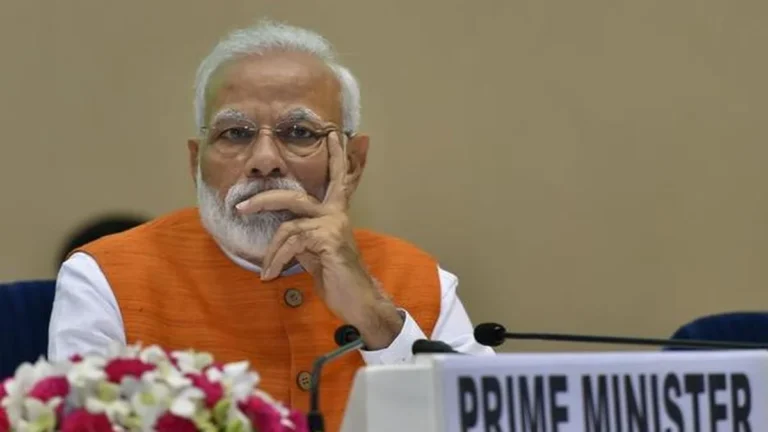
Amid dismal economic scenario, PM Modi meets CEOs for feedback
Amid consistently dismal news on the economic front, Prime Minister Narendra Modi has been, since the last week of December, engaged in a series of meetings with business leaders, entrepreneurs and tech czars on how to address sector specific and macro economic issues. According to top sources in the Prime Minister’s Office (PMO), the idea...
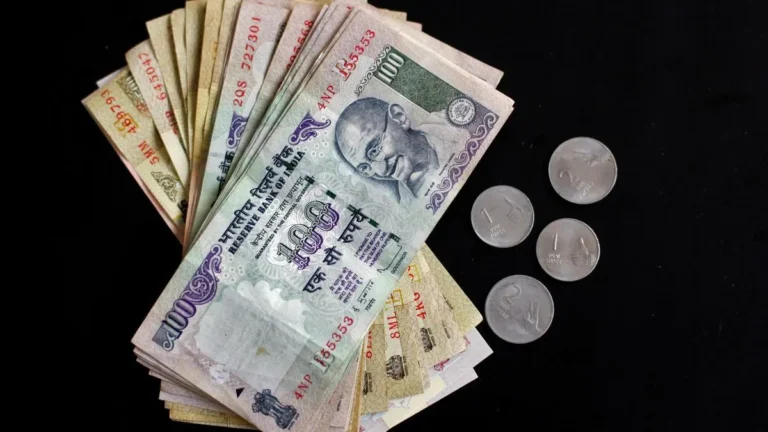
Kerala economy records ‘strong’ 6.19% real growth in 2024-25, says Economic Review
Economic Review 2025 tabled in Kerala Assembly highlights the need for ‘resilient, innovative and forward-looking financial strategies’ to tackle prevailing fiscal challenges...

Why Sustainable Cities Are the Future of Urban India
India’s cities are expanding at an unprecedented rate. This rapid growth brings opportunities, but it also places immense pressure on our resources and environment. The traditional model of urban expansion is no longer viable. A new approach is necessary for a healthy and prosperous future. Sustainable living in India is this new approach. It is not just...
India’s Digital Growth Needs Strong Data Privacy Laws
India is rapidly becoming a digital-first economy, but the pace of data protection policies has not kept up. While millions rely on online platforms for banking, shopping, and communication, concerns around data misuse continue to grow. Stronger enforcement and transparency from tech companies are essential to build long-term trust....
Exiled Iranian writer Shahrnush Parsipur on her International Booker Prize-nominated novella
In writing Women Without Men (Zanan bedun-e Mardan), Shahrnush Parsipur gave her female characters a freedom that cost her her own. Set against the CIA-backed 1953 coup in Iran, the novella follows five women — a sex worker, a schoolteacher, a menopausal housewife, and two unmarried women — all seeking escape from the religious diktats...
Voices & Opinion
A More Divided World: Can Diplomacy Still Find Common Ground?
International politics is becoming increasingly complicated as countries face geopolitical competition, economic uncertainty, security concerns and disagreements over trade and technology. Major powers are pursuing their own strategic interests while…
India’s Changing Global Role: Why Strategic Independence Matters More Than Ever
India’s growing influence in global affairs raises an important question: how should the country balance relationships with major powers while protecting its own strategic interests? India increasingly works with the…
India’s research retraction surge sparks call for reform
In the expansion of India’s scientific footprint lies an uncomfortable truth: the country now ranks third globally for life science research papers retracted from the record, according to a comprehensive…
Indian Science and Technology landscape: a leap for a better future
India produces a large quantity of scientific research, ranking 4th globally in terms of total research publications in 2020 according to Elsevier SciVal and having the 9th largest number of…
