


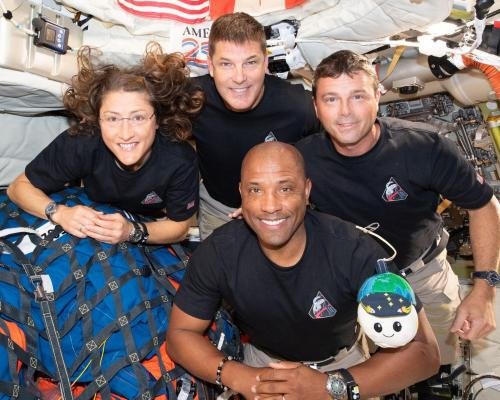
On Friday evening, the count of individuals who have journeyed to the moon and safely returned to Earth will rise to 28. NASA’s Orion spacecraft, carrying four Artemis II astronauts, is set to touch down softly in the Pacific Ocean under three large parachutes. The planned landing at 5:07 p.m. PT (1:07 a.m. BST on Saturday) near San Diego will wrap up a 10-day trip around the moon. This mission featured three U.S. astronauts and one from Canada, making them the first humans to venture past low Earth orbit since the Apollo program’s last flight in December 1972.
This achievement represents a fresh start for NASA and its global collaborators after a triumphant test flight that orbited the moon’s far side and seemingly achieved all goals. The agency has shown it can transport people securely to and from the region between Earth and the moon, using the insights gained to advance the Artemis initiative toward a crewed lunar landing targeted for 2028, over five decades after the previous one.
Meanwhile, people worldwide shared in a brief period of collective inspiration through captivating videos and detailed photos of the moon’s terrain and distant views of Earth, along with moving reflections from the typically reserved astronauts. NASA astronaut Christina Koch described her initial view during the closest lunar pass on Monday, at 4,067 miles (6,545 km) above the surface: ‘I felt deeply touched gazing at the moon. It was fleeting, but it immersed me in the lunar environment, making it feel tangible. The moon stands as a distinct entity in the cosmos. Contrasting it with our planet highlights our shared dependencies—Earth supplies all we require, which is remarkable in itself.’
Koch set a milestone as the first woman to complete a round trip to the moon. Jeremy Hansen from the Canadian Space Agency became the first non-U.S. citizen to do so. Pilot Victor Glover was the first person of color on such a journey. Together with commander Reid Wiseman, the group reached a record distance of 252,756 miles from Earth, surpassing the Apollo 13 mark from April 1970 by more than 4,000 miles.
The 695,000-mile expedition had its challenges. The spacecraft’s compact size, comparable to a small recreational vehicle, led to issues with the sanitation system, requiring temporary fixes and repairs by Koch acting as an impromptu technician. Lighter moments included an Easter activity where the crew searched for hidden packs of freeze-dried eggs. The mission’s stuffed mascot, Rise, created by a young California student named Lucas Ye, featured in video updates.
A poignant highlight occurred on Monday when the team suggested naming an unmarked lunar crater after Carroll Taylor Wiseman, the commander’s late wife and mother of their two daughters, who passed away from cancer in 2020. The moment brought visible emotion and support among the crew.
Professionally, the astronauts assessed the capsule’s environmental controls, radiation monitoring equipment, advanced protective gear, and other functions vital for upcoming deep-space endeavors and NASA’s broader Artemis objectives, such as establishing a $20 billion lunar outpost within the next 10 years.
This splashdown, the first for a moon-returning crew in over 50 years, is a key milestone. Though less dramatic than the April 1 launch from Kennedy Space Center in Florida, it demanded precise coordination. Modifications to the heat shield, based on findings from the unmanned Artemis I flight in November 2022, ensured the craft could endure re-entry heat of up to 5,000°F (2,760°C) at 25,000 mph. Officials chose a direct descent path to minimize thermal strain.
A series of parachute releases at different heights will reduce the capsule’s speed from 325 mph to 130 mph, then to 17 mph upon final deployment of the main chutes, spanning a total of 80 yards (73 meters). Recovery teams from the Coast Guard and NASA are ready across a 550-mile-wide area. Post-landing, the crew will undergo health evaluations after the hatch is opened.

