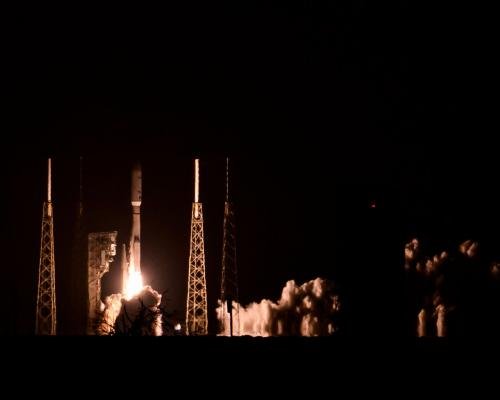
Amazon has announced that its satellite-based internet service, designed to compete with SpaceX’s Starlink, is set to become operational in mid-2026. In a shareholder letter, CEO Andy Jassy stated that the company is preparing to introduce Amazon Leo and has obtained revenue agreements from businesses and public sector entities. Initially developed as Project Kuiper in 2019 and rebranded last year, Leo currently operates with 200 satellites in low Earth orbit, and Jassy indicated that thousands more will be added over time. This positions Leo as the second major commercial satellite network, though it trails far behind Starlink, which boasts nearly 10,000 satellites and targets up to 42,000 in the long term. Jassy highlighted that Leo will integrate with Amazon Web Services cloud platform, allowing organizations and governments to transfer data for storage, analysis, and artificial intelligence applications. He also noted that Delta Air Lines has selected Leo for in-flight Wi-Fi, planning to implement it on 500 aircraft starting in 2028. Delta joins other clients including JetBlue, AT&T, Vodafone, DIRECTV Latin America, Australia’s national broadband provider, NASA, and additional partners. Amazon’s entry into this market lags behind competitors like Starlink and OneWeb, and has faced challenges due to dependence on rival launch providers. However, from 2027, Jeff Bezos-owned Blue Origin is slated to handle most Leo satellite deployments. The competition between Amazon and SpaceX, driven by their respective founders, is likely to influence the future of commercial space activities, including orbital data centers and routine space tourism, where Blue Origin holds an advantage. It is unclear if Leo will succeed like Amazon’s ventures such as Alexa, Audible, and Kindle, or falter like the Fire Phone, discontinued shortly after its 2014 release, and Amazon Fresh, which shut down its physical stores in the UK and US between 2025 and 2026.