


In February 2023, researchers identified a highly elusive subatomic particle colliding with an underwater detector in the Mediterranean Sea. This neutrino possessed energy levels 100,000 times greater than those produced by the Large Hadron Collider, the planet’s most advanced particle accelerator. No established astronomical event could account for such immense power. Experts from the University of Massachusetts Amherst suggest a groundbreaking explanation that might transform our knowledge of the universe.
A Remnant from the Universe’s Birth as the Source of the Mysterious Particle
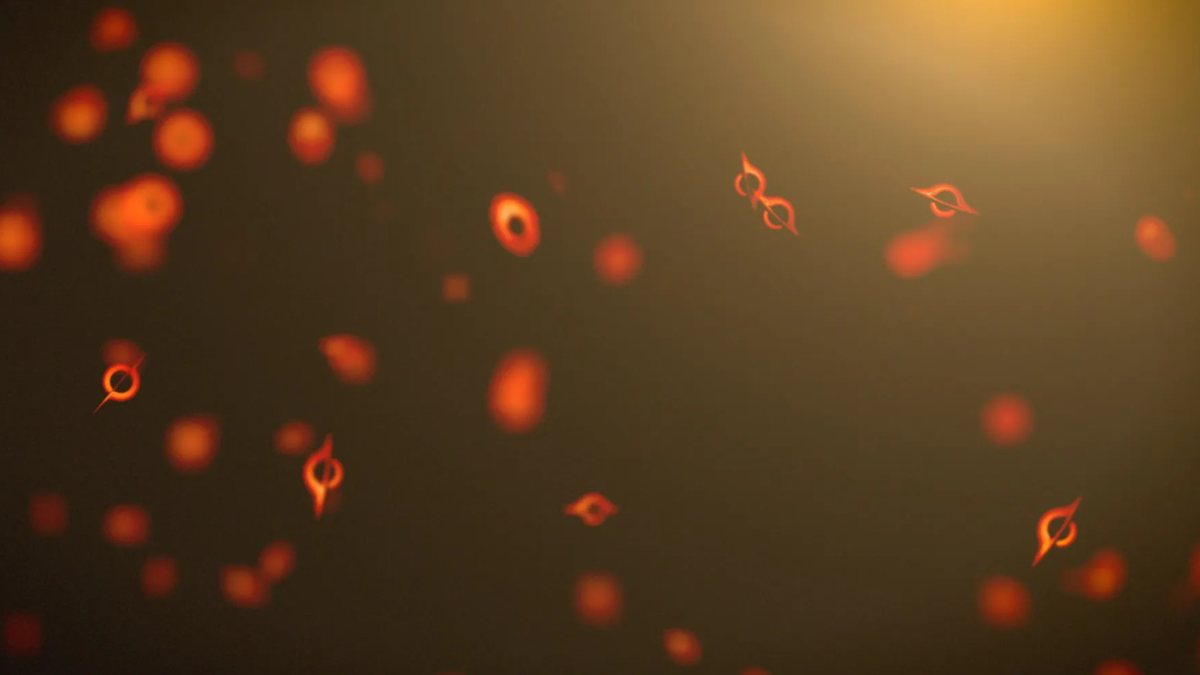
A new study in Physical Review Letters, authored by a team from UMass Amherst, proposes that the neutrino emerged from the detonation of a primordial black hole—a structure thought to have arisen shortly after the Big Bang. These primordial black holes differ from those created by dying stars, being much smaller and less massive. The theory explains that as these black holes lose mass through Hawking radiation, their temperature rises, resulting in an explosive release of particles.
The ‘Dark Charge’ Concept That Explains the Mystery
A key issue was the absence of similar detections in the major IceCube experiment, which has never recorded a particle with comparable energy. The researchers suggest that primordial black holes carrying a dark charge—interacting through a hypothetical dark electron—would suppress particle emissions at energies detectable by IceCube, while allowing releases at much higher energies, such as the one observed by the KM3NeT detector.

