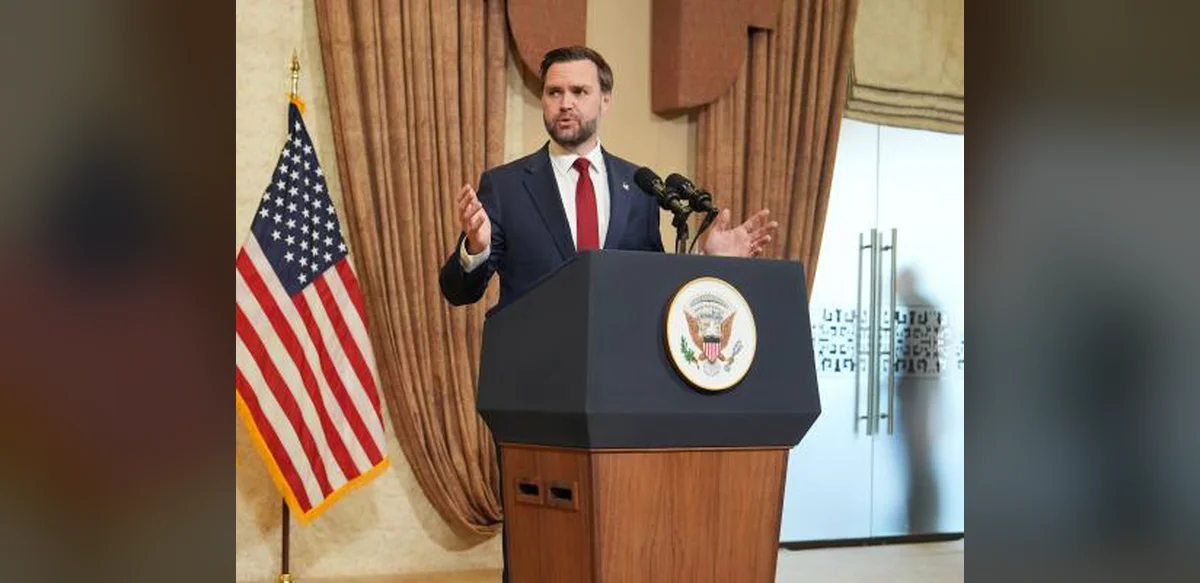
The breakdown of extended discussions between the United States and Iran has raised alarms in financial markets about potential further increases in oil and gas prices. Numerous oil vessels remain immobilized in the Gulf region. US Vice President JD Vance attributed the impasse to Iran’s unwillingness to dismantle its nuclear program, while sources from Iran criticized what they called unreasonable requirements from the US. Vance departed from Islamabad on Sunday after 21 hours of meetings with Iranian representatives in Pakistan’s capital. He emphasized that his delegation had firmly outlined non-negotiable positions as prospects dimmed for a rapid resolution to the conflict, which erupted on February 28 with airstrikes by the US and Israel on Tehran. Authorities worldwide are increasingly worried about the enduring effects of escalating inflation driven by surging energy costs. Central banks have suggested that earlier plans for reducing interest rates may require revision. In Ireland, public demonstrations erupted in Dublin last week and over the weekend, protesting the escalating expenses of daily life. Mohamed El-Erian, an advisor to German insurer Allianz and former president of Queens’ College at the University of Cambridge, noted that uncertainty would persist in evaluations of the war’s economic consequences. He stated that although both sides acknowledged a rapid accord was unrealistic due to the complexities, neither outlined future actions—a matter of global attention, particularly amid ongoing Israeli strikes in Lebanon over the weekend. El-Erian further commented that without prompt renewal of talks, financial markets at the start of the trading week would likely drive up oil prices and borrowing rates. The degree of stock market declines, where optimism has outpaced other sectors, would hinge on perceptions of diplomatic progress. For the UK, this equates to additional pressure on living costs and reduced options for fiscal and monetary adjustments. Over the weekend, Israel persisted with assaults on southern Lebanon, following widespread criticism of its Thursday strikes on Beirut that resulted in hundreds of civilian deaths and numerous injuries. The week opened with a dire warning from Donald Trump to Iran about devastating the nation’s infrastructure, including power facilities and bridges. However, he stepped back on Wednesday after a two-week ceasefire was quickly arranged with Tehran through Pakistani mediation, which included restoring access to the Strait of Hormuz. Oil prices experienced sharp swings, dipping below $100 per barrel on Wednesday due to the truce announcement. By week’s end, Brent crude stood at $94.26 per barrel, down from a wartime high of $119.45 and pre-conflict levels around $72. West Texas Intermediate closed at $95.63 per barrel. International equity markets recovered following the interim halt in hostilities. The S&P 500, tracking leading US firms, neared its pre-attack value and remained unchanged for the year. Saudi Arabia moved to mitigate potential price spikes by confirming the repair of its east-west pipeline and other sites after Iranian strikes on Gulf infrastructure. According to an energy ministry update reported by the official Saudi Press Agency, the incidents caused a daily loss of about 700,000 barrels in pipeline capacity, with efforts ongoing to fully reactivate the Khurais oilfield. Wei Yao, an economist at Societe Generale, observed that even if the truce weakens, the probable short-term scenario involves inconsistent adherence and minor reprisals rather than full-scale resumption of conflict. For the world economy, this implies ongoing interruptions, with oil and liquefied natural gas supplies recovering gradually. The conflict’s repercussions on global finances will be a key focus at the spring gatherings of the International Monetary Fund and World Bank in Washington, beginning Monday. IMF Managing Director Kristalina Georgieva has signaled that the organization will outline three projections this week, each forecasting reduced growth and elevated inflation. The IMF is also anticipated to emphasize effects on at-risk economies.