


Diplomatic efforts have stalled temporarily. Following unsuccessful talks led by US Vice President JD Vance with Iranian officials on Saturday, President Donald Trump opted for a more aggressive approach.
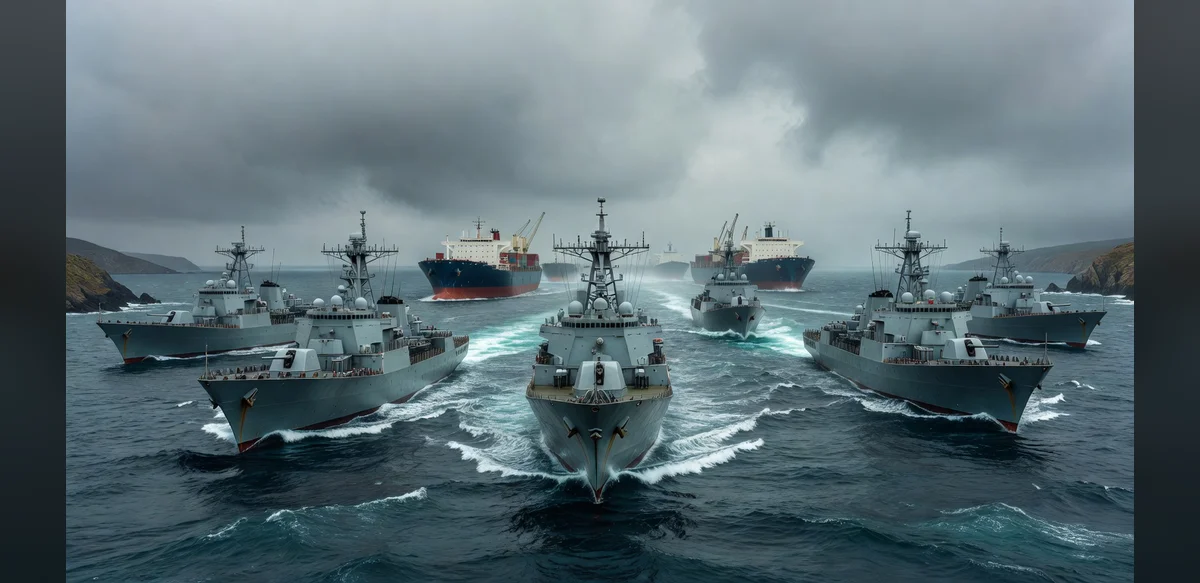
He acted swiftly. Through messages on Truth Social on Sunday, Trump announced that the US would enforce a naval blockade on ships moving in or out of the Strait of Hormuz. He stated that no vessel paying unauthorized fees would receive safe transit. The measure was set to begin at 10 a.m. Eastern Time, which is 7:30 p.m. in India.
Fox News reported confirmation that the US Navy has started blocking Iranian ports in the strait at the specified time.
Trump had previously indicated that American forces would persist with efforts to remove mines from the strait to ensure safe passage for friendly ships, while emphasizing that the military was fully prepared for additional steps when needed.
This action comes after the breakdown of extended discussions in Islamabad, overseen by Vance. Although Trump noted some advancements, he pointed out that Iran’s refusal to abandon its nuclear program remained the primary obstacle.
Nevertheless, representatives from Pakistan, Egypt, and Turkey are quietly attempting to restart negotiations. A source in the region informed Axios that the situation is not entirely stalled, describing ongoing exchanges as active bargaining with potential for progress.
The disputes extend past nuclear matters, including Iran’s dominance of the strait, its backing of organizations such as Hezbollah in Lebanon and the Houthis in Yemen, limits on uranium processing, management of current stockpiles, and the extent of economic sanction reductions for Tehran. These issues have hindered agreement.
The blockade’s effects are evident. Crude oil costs have exceeded $100 per barrel once more, and international financial markets are experiencing volatility due to concerns over shipping in the vital passage. Traffic through the strait has been severely restricted since hostilities intensified in February.
For the US, this step involves significant strategic and domestic challenges. A CBS survey shows 59% of Americans view the situation unfavorably. Trump, however, expressed confidence in a Fox News interview, predicting that Iran would ultimately meet all US demands and that the domestic economy could handle short-term energy disruptions.
Iran’s Revolutionary Guards asserted continued authority over the strait, cautioning that any misstep by US or partner forces might lead to severe repercussions. They described potential errors as leading to entrapment in hazardous conditions within the waterway.
Iranian officials have derided the economic consequences of US moves. The parliament speaker, Mohammad Bagher Ghalibaf, highlighted fuel costs near the White House, suggesting that current prices might soon appear low and that Americans could miss the days of $4 to $5 per gallon if the crisis worsens.
The US faces an ongoing challenge: while the blockade may pressure Iran, it could also destabilize worldwide markets and entangle America in a prolonged engagement, as Iran shows no inclination to yield on nuclear activities or strait oversight.
With contributions from news agencies.
Published by: Devika Bhattacharya
Published on: April 13, 2026, 19:40 IST

