


Efforts to extract carbon dioxide from the air by burning plant material and storing the emissions have been promoted as a major climate solution, yet a leading initiative appears unlikely to proceed.
Projections often depict declining CO2 concentrations and temperatures later this century, relying on harvesting vegetation, combusting it for power, and sequestering the resulting gas.
However, this method, called bioenergy with carbon capture and storage (BECCS), has proven highly problematic. It has not expanded to the necessary extent, due to exorbitant costs, severe impacts on ecosystems if scaled up, and crucially, its failure to reduce emissions effectively within critical timeframes. In reality, it may elevate CO2 levels initially.
As detailed by Leo Hickman at CarbonBrief, BECCS originated in 2001 from Swedish researchers exploring carbon credits for paper mills. By 2005, modelers adopted it to support pathways where temperatures exceed 1.5°C before declining. The 2014 IPCC report emphasized models incorporating large-scale BECCS, elevating a conceptual technology to a central strategy.
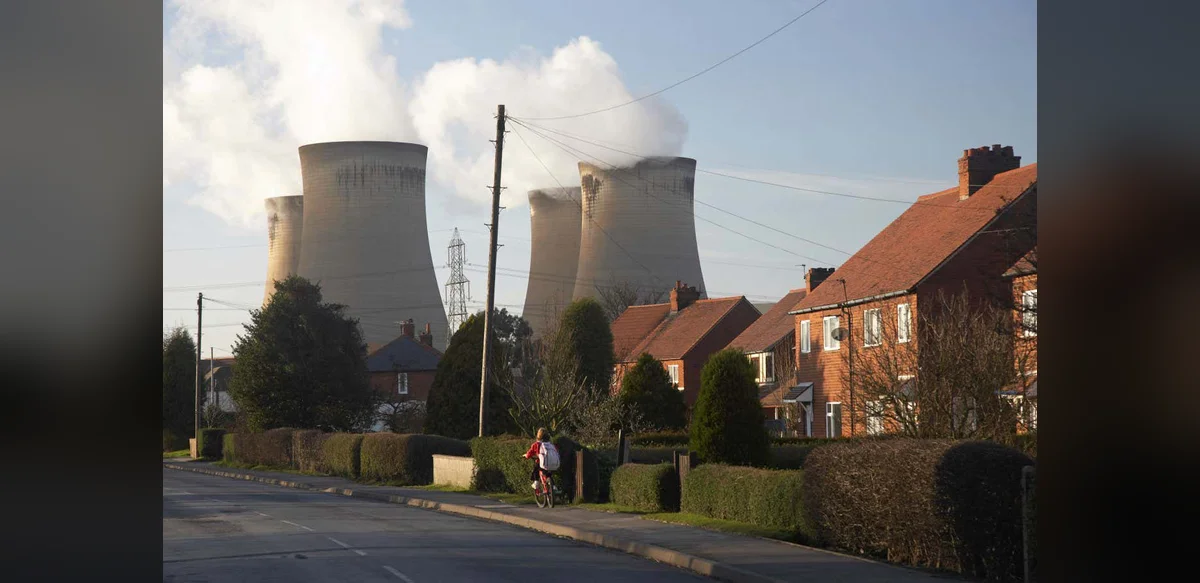
In 2015, a UK energy firm planned to repurpose a major coal facility to use wood pellets with carbon sequestration. Now, after a decade, the site processes wood but captures no emissions. Recent reports indicate the company has abandoned these plans, though a representative noted it remains a distant possibility.
Other minor projects exist globally, but BECCS has not advanced as anticipated. Governments hesitate due to the enormous financial support needed, described as extremely costly by Princeton University’s Tim Searchinger.
While the lack of deployment might appear negative, it is advantageous because the approach underperforms on urgent schedules. Searchinger explains that limited negative emissions might occur in ideal cases, but benefits emerge only after decades.
To inform decision-makers, Searchinger’s team is launching a simulation tool for analyzing carbon dynamics, allowing users to test variables. It indicates BECCS might require 150 years to yield net removals, initially outperforming worse than uncaptured natural gas, while also tripling energy prices.
Fundamentally, BECCS converts forest-stored carbon into forms suitable for underground storage, but inefficiencies release much of it into the air. Harvesting leaves roots and debris to decompose, emitting gases. Wood combustion yields double the carbon per energy unit compared to gas, with lower efficiency in electricity generation. Capturing emissions demands additional fuel, capturing only about 85%.
Another issue arises with assumptions of sustainable forestry; projections count on forests absorbing more carbon via CO2 fertilization. Harvesting disrupts this expected sink.
These concerns apply to mature trees, though some plans involve rapid-growth crops like grasses, which might provide slight advantages if ample unused land were available.

