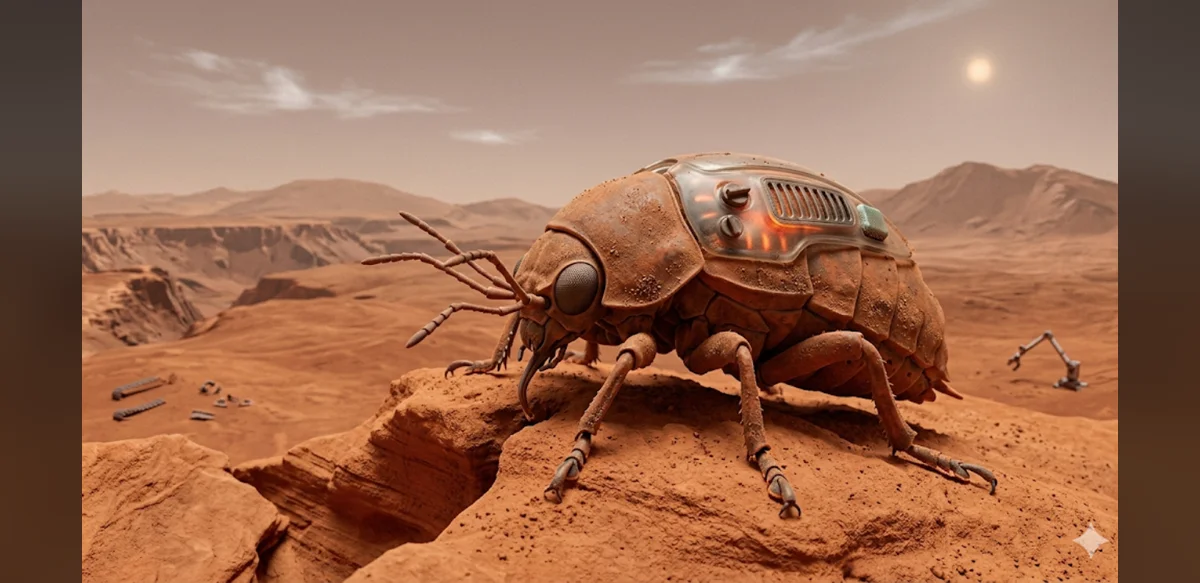
Recent claims suggest that images from NASA’s Mars rovers depict winged insects and predator-like creatures on the planet’s surface. These ideas have sparked interest and debate among scientists and the public. Entomologist William Romoser examined publicly available photos from the Curiosity rover and identified shapes that he believes resemble insects with wings, flexible structures, and legs, as well as reptile-like forms. In his paper ‘Evidence of Extant Insect-Like Organisms on Mars’ and related materials, he argued that these indicate ongoing life on Mars. He presented his findings at an Entomological Society of America meeting, noting that some shapes appear to move or interact with the environment. The claims have gained renewed attention with the release of more high-resolution images for public analysis. However, the broader scientific community largely dismisses these interpretations. Experts attribute the perceived forms to pareidolia, a psychological phenomenon where people see familiar patterns, like animals or faces, in random stimuli. They explain that these shapes are likely rocks sculpted by wind, dust, and erosion over millions of years, not evidence of life. In planetary science, pareidolia complicates the analysis of surface images. NASA missions have found no signs of insect or animal life on Mars. Current explorations focus on potential ancient microbial life. For instance, the Perseverance rover identified a rock formation called Cheyava Falls, which may indicate past chemical reactions suitable for microbes billions of years ago, though other explanations are possible. Rovers have also detected organic compounds and water-related geological features essential for life. Despite these discoveries, no evidence confirms current life on Mars. Scientists emphasize that suggestive shapes in photos do not prove biological activity. While the notion of insects on Mars is captivating, research must rely on verifiable evidence rather than subjective views. These theories reflect human hope for extraterrestrial life, with Mars seen as a prime candidate for primitive microbes that could reshape our understanding of the universe. For now, Mars holds its secrets, and scientific validation is essential to uncover the truth.