


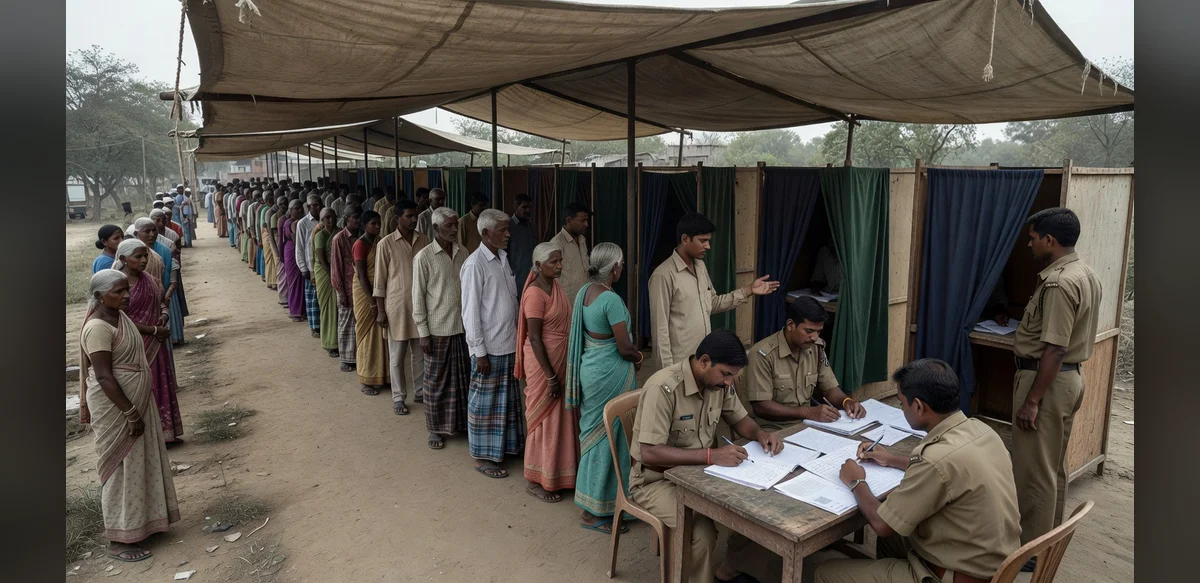
The initial phase of West Bengal’s assembly elections recorded a voter turnout of 92.89%, marking an increase of 10.5 percentage points from 2021. This high participation rate underscores the strength of democratic engagement in the world’s largest democracy.
However, this statistic does not capture the full context. The elections have faced scrutiny due to the Election Commission’s mandated Special Intensive Revision of the electoral rolls, aimed at removing deceased, duplicate, and ineligible entries, including those of individuals who have relocated.
This revision process drew strong opposition from the ruling Trinamool Congress and civil society groups, persisting into the campaign period, though it received Supreme Court approval. As a result, approximately 90.8 lakh voters—about 12% of the electorate—were removed shortly before polling, reducing the total voter base to around 6.75 crore. This adjustment has sparked discussions on whether the altered denominator inflated the turnout percentage and how it might influence results.
Breaking down the numbers: After the revision, the voter base for the first phase stood at 3.61 crore, with 3.35 crore votes cast, yielding the 92.8% turnout.
The Election Commission and the opposition Bharatiya Janata Party, anticipated to challenge the incumbents strongly, have praised this figure. The Trinamool Congress has also highlighted it positively, as both sides seek to interpret the data favorably ahead of the second phase.
Union Home Minister Amit Shah referenced the idea that elevated turnout often signals a desire for change, posting on social media that the era of alleged corruption and disorder under the Trinamool has ended. He further criticized the party for supposedly depending on votes from unauthorized immigrants.
In response, Chief Minister Mamata Banerjee contended that the revision targeted potential supporters of her party, asserting that the high turnout reflected public defense of their rights against the BJP.
Both parties expect similar participation in the upcoming phase on April 29.
The revision reduced the voter base by about 37 lakh compared to 2021 across the 152 constituencies in the first phase. Critics argue that excising these names artificially boosts percentages, potentially masking actual voting levels and not necessarily indicating opposition to the government.
Among the removed entries are roughly 27 lakh individuals with pending appeals who were barred from voting despite prior participation.
To assess the impact, consider adding back the removed voters: With an estimated pre-revision base of four crore and the same votes cast, turnout would drop notably, showing only a slight increase of about 1.85% over 2021.
This matters because the deletions exceed the Trinamool’s 2021 victory margin of 9.87% over the BJP. The cuts affected 82.7% of seats won by the party last time, including narrow victories in areas like West Burdwan and South Dinajpur.
Deletions often impacted Muslim communities in districts such as Murshidabad, where they form a significant portion of the population and are seen as leaning toward the Trinamool. Four districts with large Muslim populations—Murshidabad (66%), Malda (51%), North 24 Parganas (26%), and South 24 Parganas (36%)—saw about 12.2 lakh removals. In 2021, the Trinamool secured most seats in these areas, including 20 of 22 in Murshidabad and eight of 12 in Malda.

