


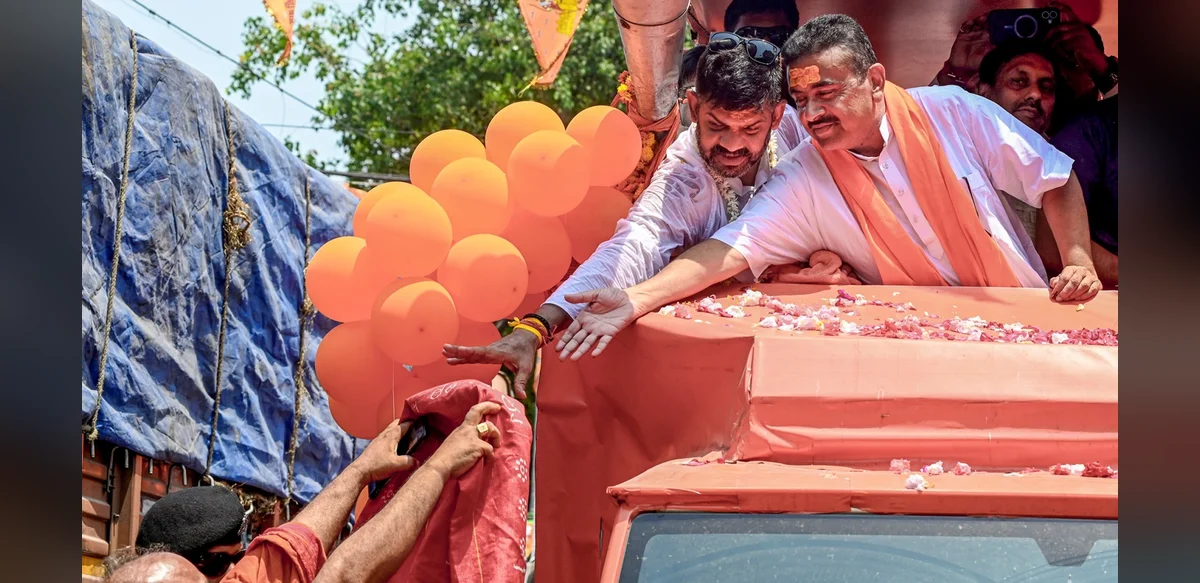
As temperatures climb in West Bengal, political tensions are also intensifying. The second phase of the state assembly elections is set for April 29, drawing attention to Kolkata and its nearby urban areas, which form a key stronghold for the governing Trinamool Congress (TMC).
Moving away from its earlier emphasis on rural concerns like border security and cultural identity, the main opposition Bharatiya Janata Party (BJP) is now tailoring its urban outreach in Kolkata to address local infrastructure problems.
The party’s social media accounts have consistently pointed out issues with public transportation. One post noted that Kolkata’s buses are outdated and in poor condition, calling for modernization of the road system to improve daily life, with changes promised after the vote count on May 4.
Another message criticized the TMC for allowing syndicates to undermine the city’s transport network, which once led in urban innovation with India’s inaugural metro but now faces traffic jams and outdated facilities.
The Calcutta Tram Users Association, which promotes eco-friendly transit options, encouraged the BJP to revive and update the tram system, including dedicated lanes, increased service, and better connections, viewing trams as vital for future sustainable urban planning.
In its messaging, the BJP has described Kolkata as India’s most traffic-choked city, with average speeds of just 17.4 km per hour, portraying the TMC’s rule as a period of little progress. The party argues that old buses, neglected roads, and the absence of comprehensive planning require urgent upgrades, achievable only through aligned state and central governments.
Historically, the broader Kolkata area has been a solid base for TMC leader and Chief Minister Mamata Banerjee. The BJP has yet to secure any assembly seats there. In the 2021 elections, it lost all 14 constituencies in Kolkata’s north and south districts, plus those in Howrah and South 24 Parganas.
Recent surveys, however, indicate potential shifts in TMC support in these urban zones for the current election.
Results from the 2024 national elections showed the BJP gaining ground in several assembly segments, including 11 in Nadia district and eight in North 24 Parganas, along with advances in Kolkata’s Jorasanko and Shyampukur areas.
Although Kolkata South, Howrah, and South 24 Parganas stayed with the TMC in 2024, the BJP hopes its focus on development will alter outcomes in 2026.
A closely followed race is in Kolkata Port, where BJP contender Rakesh Singh, who campaigned with symbolic gestures on Bengali New Year, faces off against prominent TMC figure and city mayor Firhad Hakim.
In Kashipur-Belgachhia, BJP candidate Ritesh Tiwari has criticized the ruling party’s efforts on urban improvement, pointing to widespread potholes, disappearing public buses, and superficial changes like painting schemes. He also referenced the tragic incident at R G Kar Hospital in August 2024 as an extreme failure.
The TMC has brushed off the BJP’s approach as a last-minute tactic. Spokesperson Arup Chakraborty ridiculed the opposition’s pivot from earlier claims about unauthorized migrants, which lacked evidence, to now discussing progress in the urban phase. He highlighted an instance where a Uttar Pradesh leader used an image of a Bengal flyover to promote his state’s achievements.
Chakraborty countered by accusing the central government of blocking funds to West Bengal, depriving residents of essentials. He emphasized that the TMC consistently delivers for the people and that voters will support local development initiatives over shifting opposition stories.

