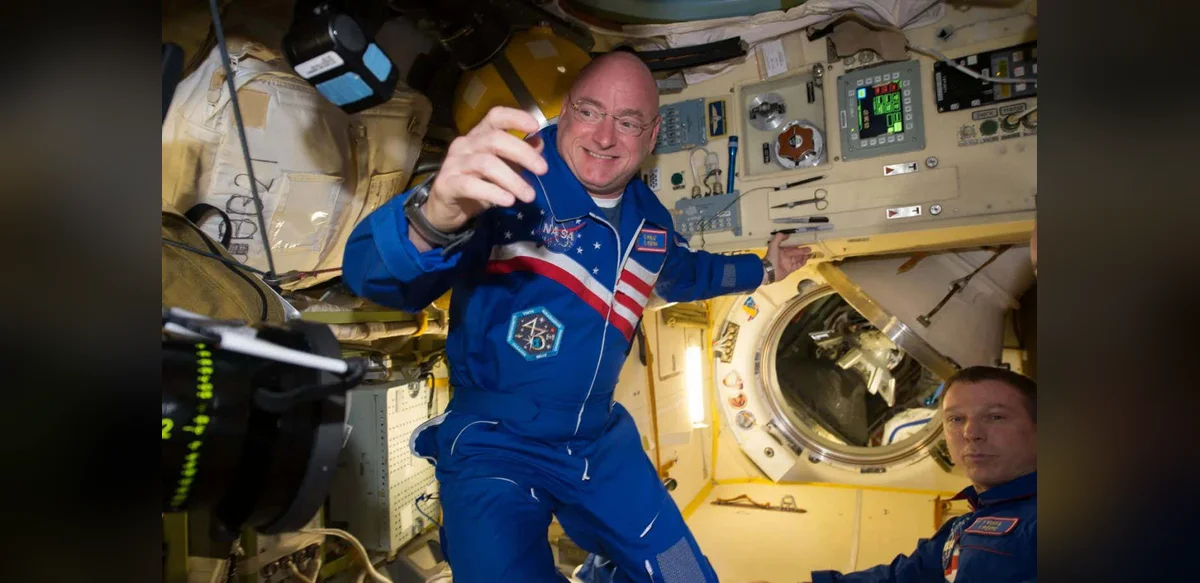
Research on astronauts shows that prolonged time in orbit speeds up certain aging processes, offering insights that could help address similar effects from inactive lifestyles, irregular sleep patterns and isolation on Earth. The famous twin paradox thought experiment illustrates time dilation, but real spaceflight produces the opposite outcome: travelers age faster by some biological measures. A six-month mission can advance aging markers roughly 40 times faster than for someone remaining on the ground. NASA has studied these effects extensively, including through the twin study involving astronauts Scott and Mark Kelly. Scott spent nearly a year on the International Space Station while his brother stayed on Earth. Comparisons of blood, urine and other samples revealed increased inflammation, mitochondrial issues and other changes linked to accelerated aging. Additional studies have identified further hallmarks such as genomic instability, microbiome shifts and endocrine disruption. Physical consequences include reduced cardiovascular fitness, muscle and bone loss, cognitive changes and weaker immune response. One measure of artery stiffness indicated the equivalent of 20 years of cardiovascular aging in just six months. Key contributing factors in space include microgravity, which causes muscle and bone atrophy; rapid day-night cycles that disrupt circadian rhythms; and high radiation exposure. These findings may inform strategies to protect both future long-duration space crews and people experiencing comparable conditions on Earth.