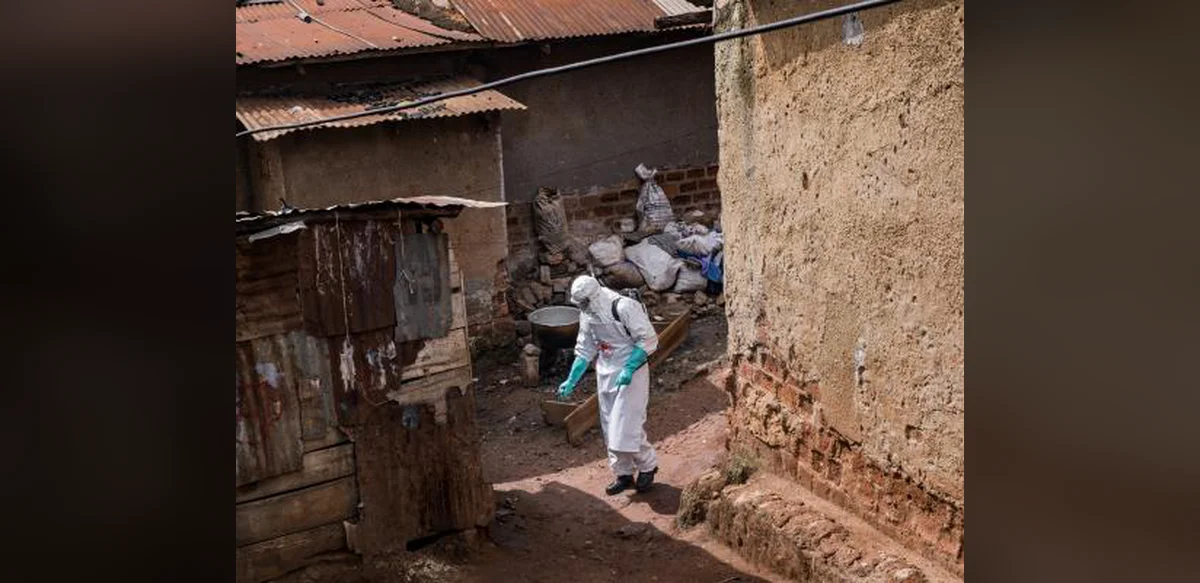
Ebola is spreading quickly in parts of east Africa. The disease, which kills roughly half of those infected, is believed to have caused at least 240 deaths since the outbreak started in Ituri province of the Democratic Republic of the Congo earlier this month. Health officials are working to contain the virus in a difficult setting. Ituri province serves as a mining center where many people work closely together daily and remains a conflict zone with fighting between armed groups. Medical resources are limited, and displaced populations are moving into crowded camps, increasing transmission risks. The virus has reached other areas of eastern DRC and the Ugandan capital Kampala. This marks the first major Ebola outbreak since the US, UK and other Western nations reduced humanitarian funding, starting with cuts to USAID. Response systems built during earlier outbreaks have been reduced, limiting their effectiveness and hindering life-saving work, according to experts. In an interview, Dr Papys Lame, Ebola response coordinator in Ituri for NGO Alima, and Selena Victor of Mercy Corps discussed containment efforts. Headlines include UK economic risks from rising youth unemployment, a draft peace plan circulated by Donald Trump regarding Iran, shifts in UK immigration policy debates, a Russian drone incident in Romania, and warnings against abandoning net zero targets. There is currently no vaccine for Ebola. The virus, transmitted from animals to humans via bodily fluids, was identified in 1976 and occurs mainly in African rainforest areas. The 2014-2016 outbreak killed over 11,000 people in three West African countries. Workers aim to avoid a similar outcome in DRC and Uganda. Lame noted the virus likely circulated undetected near Bunia before the official declaration on 15 May. Symptoms resemble malaria or typhoid, and limited testing capacity complicates tracking. Many suspected cases exceed official counts. Early treatment improves survival chances, while delays raise fatality rates. Fear among patients and staff remains high after multiple healthcare worker deaths. Preventive steps are in place, though bravery is required in this setting. Community distrust, including beliefs that the virus was introduced by aid groups, has led to attacks on facilities and resistance to hospital care and burial rules.