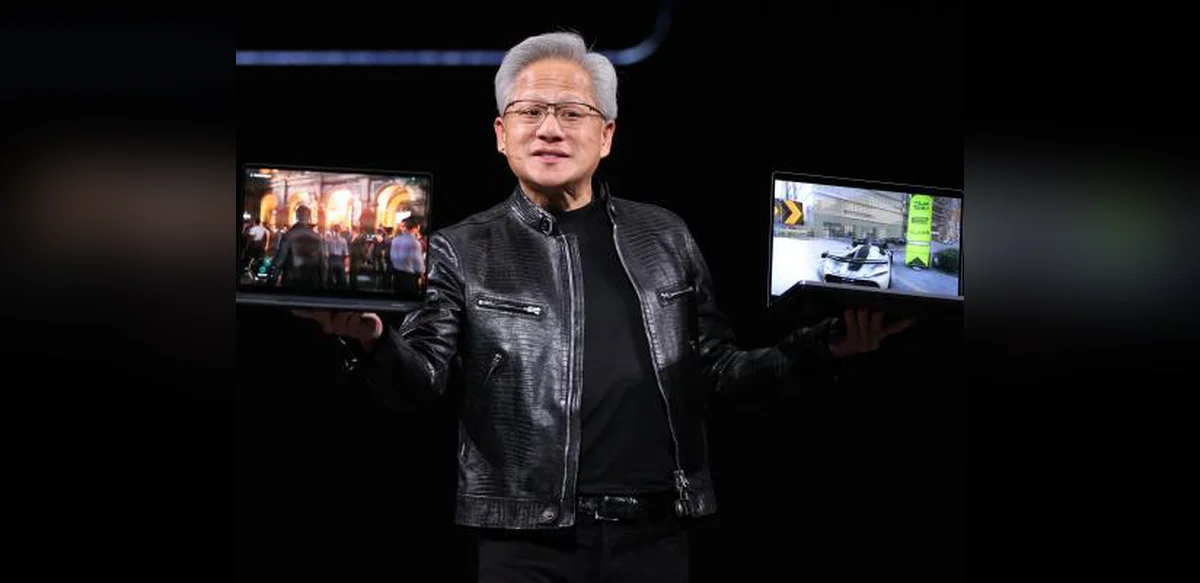
A new front has opened in the contest for leadership in AI chips. Nvidia announced that its latest product could change how people interact with computers by replacing the mouse and keyboard. The American semiconductor firm, valued at five trillion dollars, introduced a superchip that adds AI functions to laptops and desktop PCs. This step will place it in competition with Intel, Apple, Qualcomm and AMD. The RTX Spark chip is scheduled for release this year and will be adopted by manufacturers such as Dell, Lenovo, Asus and HP, working with Microsoft Windows software, according to Nvidia chief executive Jensen Huang. At the Computex conference in Taiwan, Huang stated the chip would transform the PC for the AI age following three years of joint work with Microsoft. Combining a microprocessor and graphics processor developed with Taiwan’s MediaTek, the device runs AI agents on the local machine instead of depending on cloud services. It enables agents to move through PCs independently, removing the need for traditional mouse and keyboard actions. The company noted that the chip’s power allows computers to remain slim and light. Huang described Nvidia as reimagining the PC for the first time in forty years. The move into consumer PCs will create a new revenue stream, though analysts said results will appear gradually. Nvidia, already dominant in the expanding AI chip market, is extending beyond graphics cards into full computer processors. Neil Shah of Counterpoint Research likened the RTX Spark launch to the arrival of the iPhone, ChatGPT and DeepSeek. He said it aims to shift PCs from app-focused devices to practical AI-driven personal computers that could reach most homes as private edge AI agents gain importance. The new chip and Nvidia’s Vera CPU reflect greater emphasis on PC and processor products. The Vera CPU targets AI agents and early users including OpenAI, Anthropic and SpaceX. Susannah Streeter of Wealth Club observed that Nvidia’s entry into AI personal computers represents an effort to broaden its reach from data centres into daily consumer use. She added that the RTX Spark chip supports Huang’s view of PCs becoming intelligent digital assistants, though investors may see it as a longer-term prospect rather than an immediate earnings boost. For the present, Nvidia’s performance remains tied mainly to demand for AI infrastructure and data-centre power. As competition intensifies, Intel plans to ship an AI chip later this year that uses lower-cost memory and cooling than Nvidia and AMD. Intel revealed a new graphics processor, Xe3P, codenamed Crescent Island, built specifically for the coming generation of AI agents, according to vice-president Anil Nanduri. Addressing concerns that AI will eliminate many jobs, Huang called it complete nonsense that the technology would cut demand for software engineers. He argued instead that it would raise hiring by boosting productivity. He said this is the promise of AI and that the number of software engineers is actually growing. Separately, Arm chief executive Rene Haas stands to receive a pay package that could make him a billionaire if targets are met to turn the microchip company into the UK’s first trillion-dollar firm. Arm, listed in New York with headquarters in Cambridge, has proposed a compensation plan with large share awards worth more than one billion dollars by 2031 if Haas achieves exceptional growth metrics.