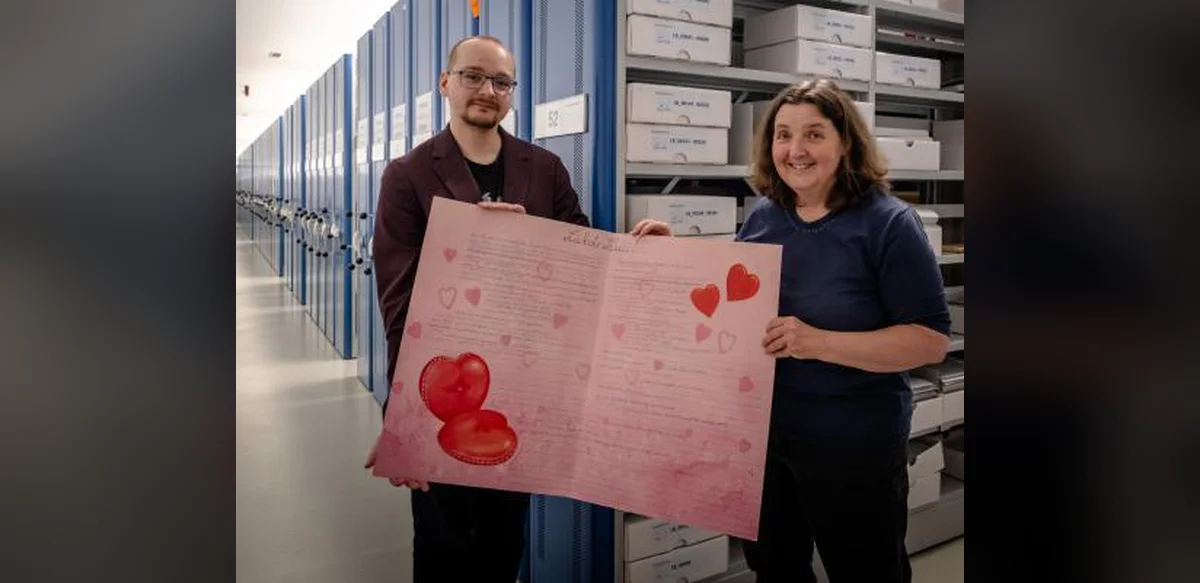
After four decades together, Tatiana and Steffen Missbach continue exchanging personal letters. Tatiana, 66, a retired personnel manager, notes that effective letters include specific details like wishing luck at music practice. Steffen, 68, a car appraiser, views them as tangible reminders during absences. The couple participates in a citizen science project at the University of Koblenz in western Germany. The initiative processes one of Europe’s largest love letter archives, containing over 60,000 items from the 1700s onward. Founded by linguist Eva Wyss, the collection grows through private donations and captures both personal stories and broader historical and linguistic shifts. Many letters show yellowed paper, drawings, pressed flowers, wax seals or lipstick marks. Researchers at Koblenz and the Technical University of Darmstadt are digitizing the materials for preservation and searchability. Volunteers help sort and transcribe the handwritten texts, which remain difficult for current AI tools. Participants attend monthly gatherings to review letters from particular periods. At a recent session focused on correspondence from communist East Germany, the Missbachs joined others in discussing anonymized examples. The group examined social pressures, possible self-censorship and hints of surveillance. Wyss began the project in Zurich in 1997 after a public appeal yielded thousands of letters quickly. She aimed to broaden academic study beyond idealized male-authored examples from earlier centuries, highlighting everyday expressions of care often written by women. The archive holds inventive language alongside common endearments, including elaborate 1930s and 1990s examples. Staff continue cataloging extensive exchanges, such as nearly 3,000 letters between a Berlin inmate and his partner spanning three decades.