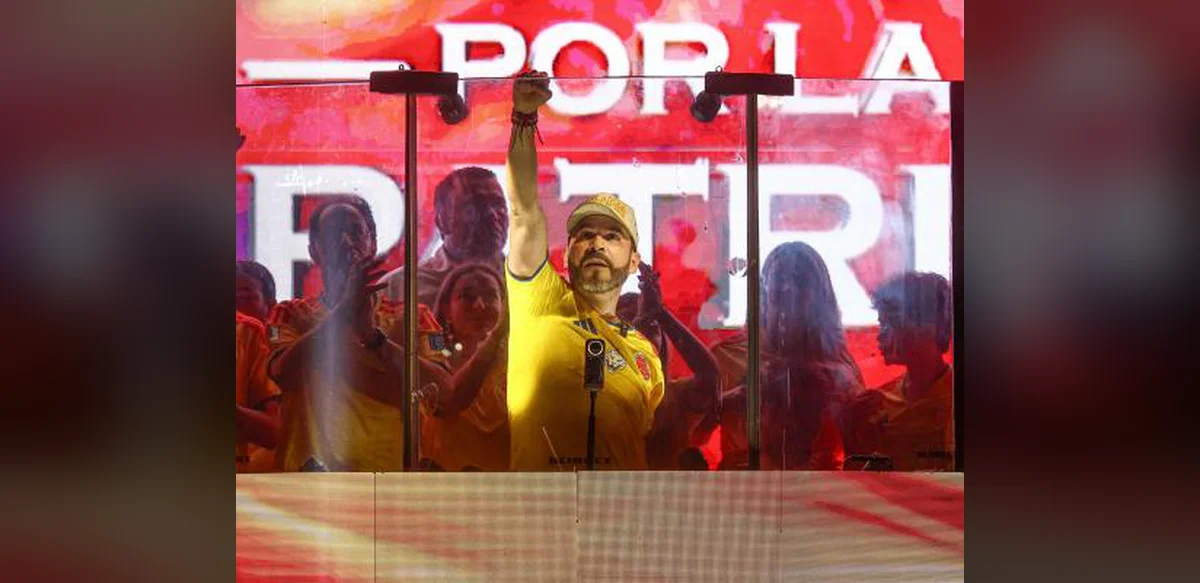
Abelardo de la Espriella, a far-right attorney topping polls before Colombia’s presidential runoff, has promoted his rum, wine, menswear lines and creative works under the “De la Espriella Style” brand. His recent change to casual shirts, caps and a neat beard appears modeled on El Salvador’s populist leader Nayib Bukele. The parallels extend beyond style. Like other regional far-right figures, De la Espriella pledges to copy Bukele’s tough anti-crime tactics that have jailed roughly two percent of El Salvador’s adults. He vows to resolve Colombia’s long-running armed conflict within ninety days by constructing large private prisons and eliminating criminals. On June 21 he will confront left-wing senator Iván Cepeda. Cepeda, supported by President Gustavo Petro, backs continuation of the “total peace” negotiations with armed groups that have not yet reduced violence. De la Espriella, a wealthy criminal lawyer without prior elected office, performs military salutes despite no service record and has sued journalists more than one hundred times. Observers view his polling strength as another case of Bukele and Donald Trump admirers succeeding across Latin America. While Bukele comparisons stand out, De la Espriella draws from several neighbors. He echoes Trump, who recently offered full endorsement, by speaking behind bulletproof screens and threatening to sink suspected drug boats. Like Argentina’s Javier Milei he proposes sharp spending cuts except for the military. Following Ecuador’s Daniel Noboa he plans emergency powers against gangs. Inspired by Brazil’s Bolsonaro family he has adopted the national soccer jersey as a political emblem. Analyst Tiziano Breda of the Armed Conflict Location and Event Data project says De la Espriella clearly emulates Bukele yet lacks the legislative control Bukele enjoys. De la Espriella’s small party holds only four Senate seats and one lower-house seat. Breda warns the candidate shows limited respect for institutional checks and human rights, raising fears that security operations could grow more deadly with limited effect on armed groups but greater risks to civilians. Breda links the polling lead less to ideology than to an anti-incumbent trend removing left-wing presidents elected several years ago. He also notes widespread distrust of established parties that favors outsider candidates and growing U.S. influence offering benefits for alignment with Washington. Colombia remains among the few Latin American nations still led by the left, together with Mexico, Uruguay and Brazil. Peru holds its runoff Sunday between far-right Keiko Fujimori and left-wing Roberto Sánchez. Brazil votes in October, pitting incumbent Luiz Inácio Lula da Silva against far-right senator Flávio Bolsonaro.