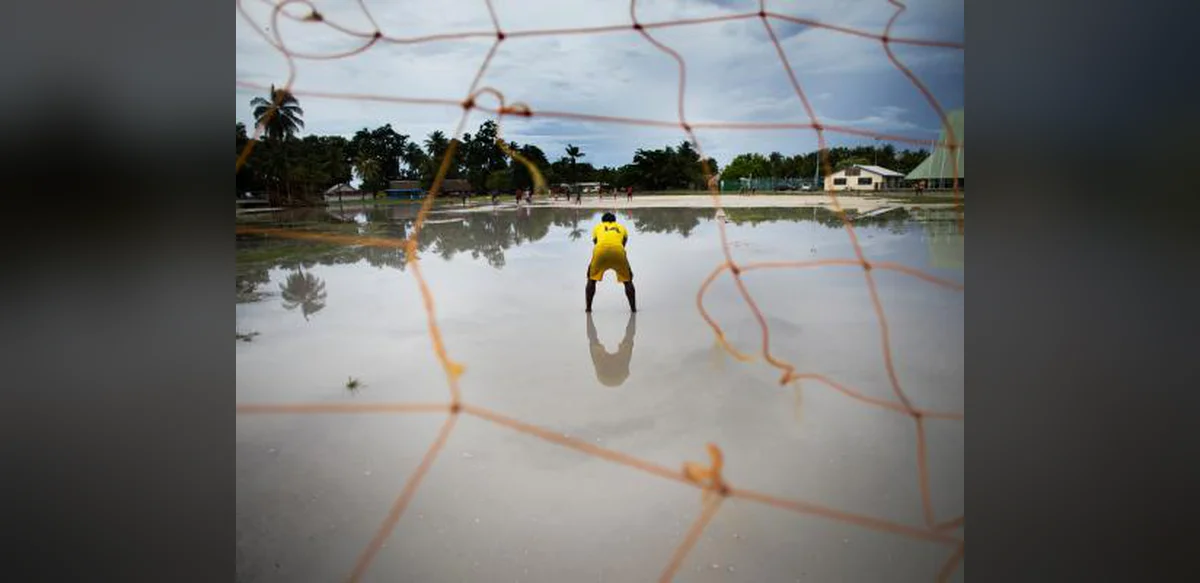
Eriati Reebo, president of Kiribati football, says the effort goes beyond the game itself. The aim is to create a lasting legacy that draws global attention. Kiribati, a Pacific island nation of 138,000 people south of Hawaii, wants to enter World Cup qualifying for the 2030 tournament. Recognition as an international side would highlight the country, which lies in all four hemispheres and faces rapid loss of land to rising seas. It could become the first nation made uninhabitable by the ocean. Before that occurs, officials seek to professionalise the sport and gain full membership in the Oceania Football Confederation. This step would open competition against stronger teams and help preserve national identity. Reebo notes that football is a core passion and that the country dreams big despite its size. Players grow up with the sport, and joining the World Cup would give Kiribati new visibility. The president attended the recent FIFA congress in Canada to present the case for confederation membership, which would bring funding and better facilities. Current sand pitches may not meet standards, creating a hurdle. Since independence from Britain in 1979, rising waters have forced new plans, including migration policies and land purchase in Fiji for future relocation. Football remains highly popular, drawing the largest crowds at the Te Runga Games held every four years. In 2023 the nation skipped the Pacific Games to focus on the local event. Foreign leagues are followed, and talks continue with FIFA to broadcast the World Cup live. Kiribati is not alone; the Marshall Islands and Tuvalu face similar risks. A UN official stresses that climate threats are now a matter of survival rather than choice. Plans call for bringing the top 24 players to the capital for full-time training.