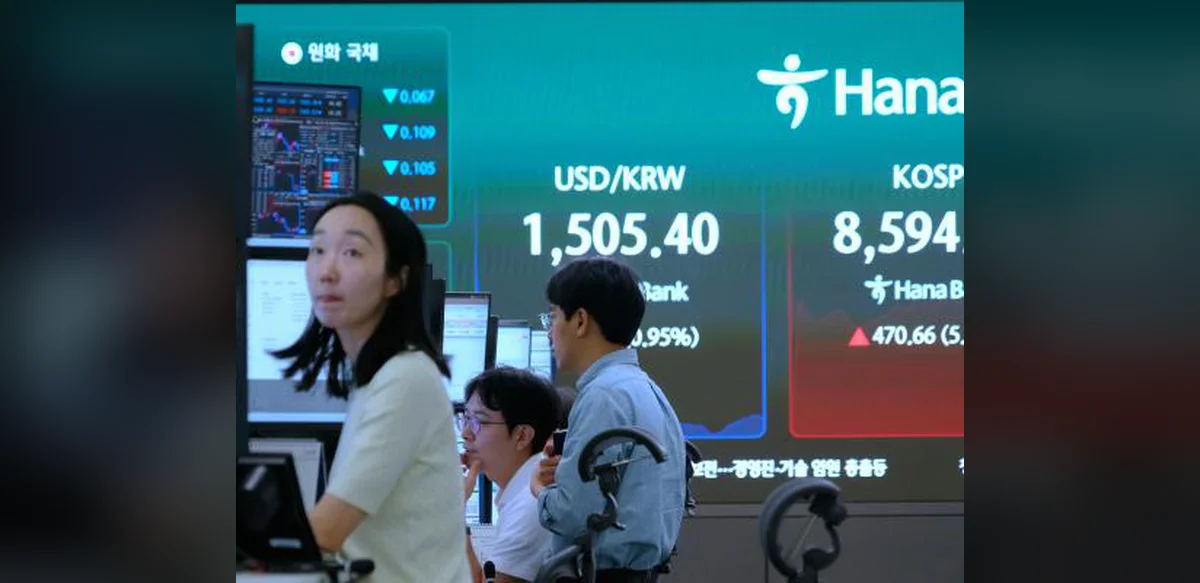
European Central Bank president Christine Lagarde has cautioned that inflation pressures are spreading across the euro area. In an interview with France Culture, she noted that elevated energy costs are beginning to affect other sectors, stating that indirect inflation effects have become visible in multiple areas recently. The US-Iran agreement arrives at a convenient moment for the Bank of England, which will announce UK interest rates on Thursday. Should the Strait of Hormuz reopen and oil supplies approach pre-conflict volumes, inflationary pressures would ease, reducing the urgency for higher rates. The European Central Bank increased rates last week, while the Bank of England, US Federal Reserve and Bank of Japan are scheduled to act this week. Research director Kathleen Brooks at XTB observed that oil prices have dropped more than 20 percent over the past month, returning Brent crude to early March levels. This development should help inflation decline from June onward and may reduce concerns ahead of major central bank decisions. The lower oil price also prompts questions about whether the ECB acted prematurely last week. European stock markets are positioned for gains at the open. Germany’s DAX futures have risen 1.65 percent and the UK’s FTSE 100 is 0.75 percent higher, according to Reuters. The US dollar is weakening as investors move toward higher-risk currencies, lifting the pound to its strongest level in over a week at $1.3438. Asian-Pacific markets are advancing strongly. Japan’s Nikkei index has surged 5 percent, South Korea’s KOSPI has gained 5 percent and China’s CSI300 is up 1.9 percent. Deutsche Bank strategist Jim Reid noted that while the agreement benefits markets, difficult negotiations remain during the 60-day period to ensure lasting peace, including Senate approval for any broad sanctions relief. Markets have nevertheless responded positively following Friday’s strong US session. The peace deal between Iran and the US has brought relief to financial markets. Oil prices have fallen 4 percent and Asia-Pacific equities have risen as investors anticipate the reopening of the Strait of Hormuz. Although details remain unclear, expectations that oil flows will resume are reducing energy prices, easing burdens on businesses, consumers and policymakers. Brent crude touched $83.04, its lowest since 10 March, after Pakistan’s prime minister announced the signing of a memorandum of understanding in Switzerland on Friday. The price remains above the pre-conflict level of $72.48. Reopening of the strait depends on the Friday signing. Iranian state media reported that the memorandum calls for reopening within 30 days under Iranian arrangements. IG analyst Chris Weston highlighted remaining challenges, including mine clearance and repairs to damaged facilities, before shipping volumes can return to pre-conflict levels of 120 to 140 vessels daily. Scheduled data releases include the eurozone trade balance at 10am BST and the NY Empire State Manufacturing Index at 1.30pm BST.