


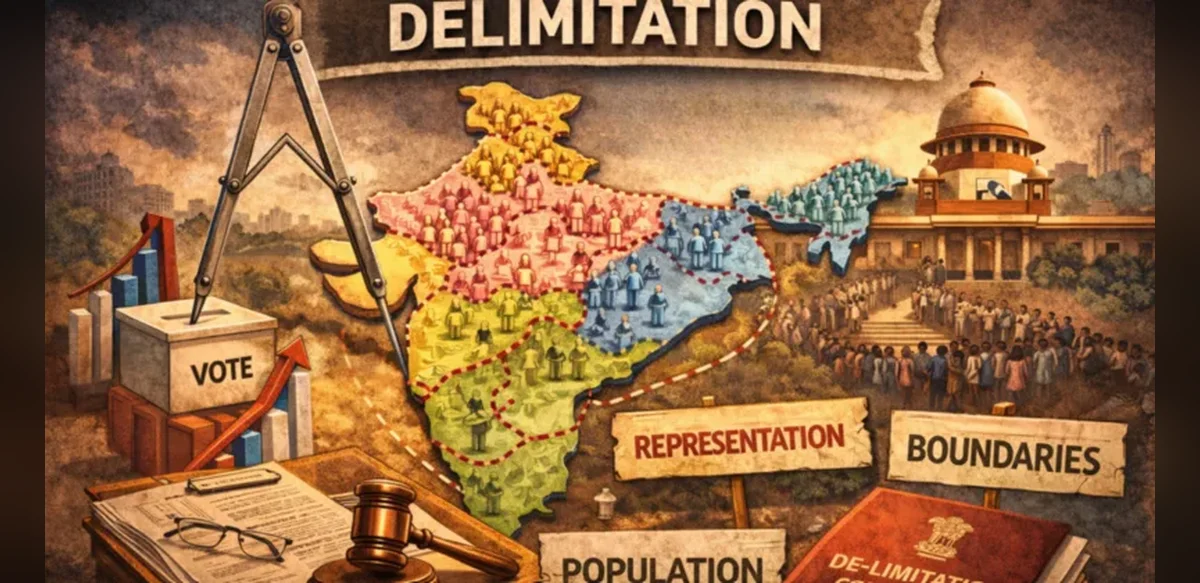
Citizens in an electoral democracy expect fairer conduct from politicians than these awkward efforts on delimitation. For fifty years, the core goal of equal representation has been constrained by political groups that view administrative lines not as paths to progress but as tools to secure their positions.
India’s constitutional framework since 1947 has seen various political changes, exposing ties between democratic representation and ground realities. A common concern is that smaller states would cause disorder and harm national cohesion. Yet large states based on linguistic lines often hide economic gaps and heighten regional strains. This setup allows regional leaders to invent external threats to uphold artificial identities. Creating smaller states, such as splitting West Bengal into areas like Mallabhum, Kamtapur and Gauda, could ease these tensions. Such changes would align with real identities, lower conflicts and improve unity along with administration.
To grasp the current boundary issues, consider the effects of colonial rule and language-based divisions. India’s political map arose from imperial needs and post-independence adjustments rather than planned democracy. British authorities drew provincial lines for control and revenue. After independence, the country used temporary fixes, resulting in linguistic state changes in the 1950s. This reduced some regional worries but promoted the notion of one language per state. The approach went against B.R. Ambedkar’s caution on strong linguistic ties, which he viewed as risking national unity and north-south divides. He favored one state using the main local language, allowing the same language across states. India has ignored this federal view focused on human development, instead applying it for control and limited economic practices.
Halting delimitation in 1976 and 2001 created flaws known as delimitation arbitrage. In a fair system, votes should hold similar value, yet urban and industrial areas have been sidelined to favor rural ones. About 37 percent of India’s people live in cities, but they hold just 16.4 percent of Lok Sabha seats, with larger gaps in assemblies. Tamil Nadu has 54 percent urban residents yet only 17 percent assembly seats, while Maharashtra shows 49 percent urban but 22 percent seats. Bengaluru in Karnataka loses 10-15 points in representation. This gap lets some groups gain advantages while bodies stay inactive.
The imbalance has produced a mismatch between institutions and the economy. Countries face shifts during growth. India saw the first with agricultural groups rising after the Green Revolution, overtaking industrial roles. The 1990s brought a second with landless people gaining from services. A third shift is underway as services slow and new technologies appear. Political maps stay fixed to 1970s farm patterns, leaving parliament led by those from the first shift. Sectors at 18 percent of seats drive over 80 percent of the economy, yet the legislature struggles to handle changes or support those left behind.
Lacking a venue to balance urban and rural interests, politics has turned to patronage and ongoing disputes. Landed groups facing lower farm returns use preserved legislative power to direct funds toward inefficient projects that sustain their networks.

