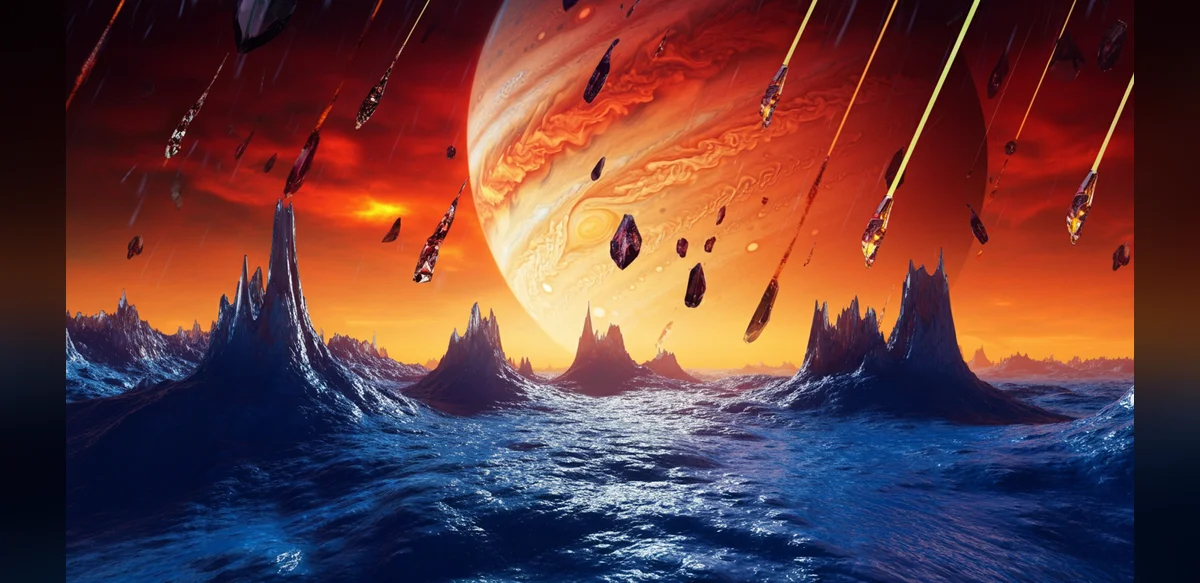
NASA’s James Webb and Hubble telescopes are expanding understanding of planetary diversity. WASP-193b is a gas giant with extremely low density similar to cotton candy. HD 189733b appears deep blue with sideways rain of molten glass particles. 55 Cancri e is a lava-covered world possessing a secondary atmosphere. WASP-121b is an ultra-hot Jupiter where metals and minerals condense into rainfall. Astronomers have identified over five thousand exoplanets, several of which challenge conventional models of planetary formation and behavior. Telescopes including Hubble, James Webb, and ground facilities like Gemini South have revealed these odd worlds, often hot Jupiters or super-Earths orbiting close to their stars with temperatures surpassing 2000 degrees Celsius. Advanced instruments now allow detailed analysis of atmospheric composition and weather patterns on these distant bodies. WASP-193b lies about 1200 light-years away and is much larger than Jupiter but far less massive, resulting in its remarkably low density. HD 189733b, located 63 light-years from Earth, shows strong blue coloration from high-altitude silicate clouds that form glass-like droplets carried by fierce winds. 55 Cancri e, a rocky super-Earth, maintains a molten surface and a carbon-rich atmosphere generated from its magma ocean. WASP-121b exhibits vaporized metals in its atmosphere that cool into precipitation on the cooler nightside.