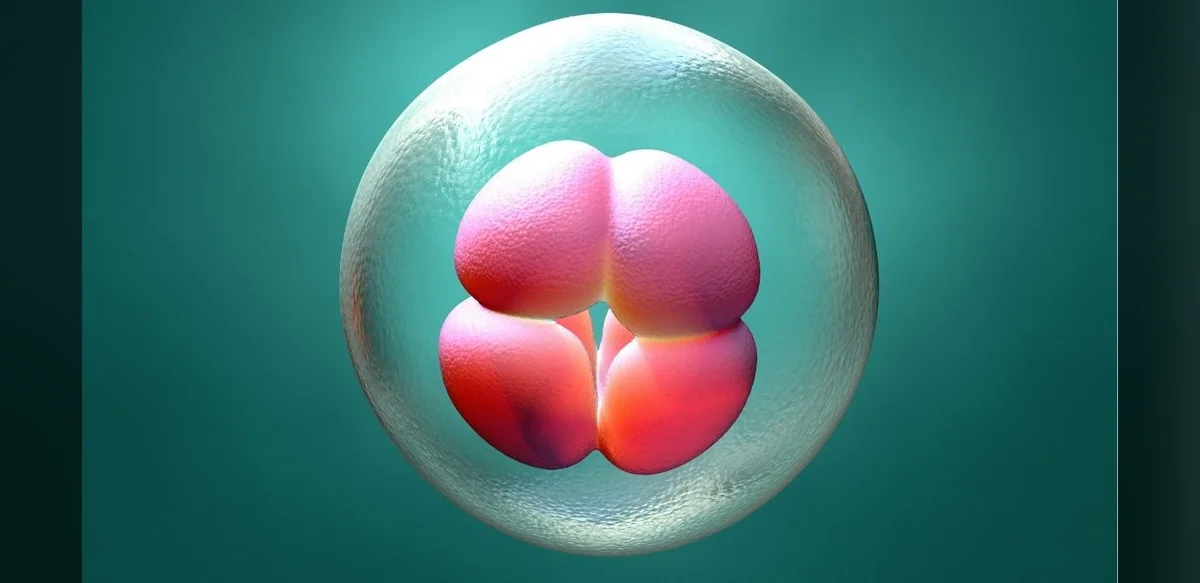
The initial stages of life involve a precise sequence where one cell divides into two then four, guided by genetic signals directing growth. A gene known as NANOG plays a vital role in early embryo formation. Prior work established this in mice, and new evidence confirms the same for humans. Mouse studies showed NANOG supports the first cells destined to become the embryo and aids yolk sac creation, which nourishes those cells. The NANOG protein acts as a transcription factor that controls DNA segments translated into proteins, functioning like a cellular supply manager by activating or deactivating genes as needed. Although mice and humans share traits, differences exist, so animal findings require direct human testing. Ethical rules limit human embryo research more than animal studies. An international team led by Kathy Niakan at the University of Cambridge used base editing on donated normal human embryos to disable NANOG. This confirmed its key role in human development, though differently than in mice. Base editing altered one DNA letter without broader disruptions, unlike CRISPR methods. Without NANOG, epiblast cells failed to become stem cells and instead formed yolk sac or placental cells. Embryos thus prioritized support structures over fetal building blocks. Unlike mice, NANOG proved unnecessary for human yolk sac formation. The work offers mechanistic insights but holds no immediate clinical use for infertility or pregnancy issues, experts note. It also highlights base editing potential while stressing safety limits for any embryo applications.