


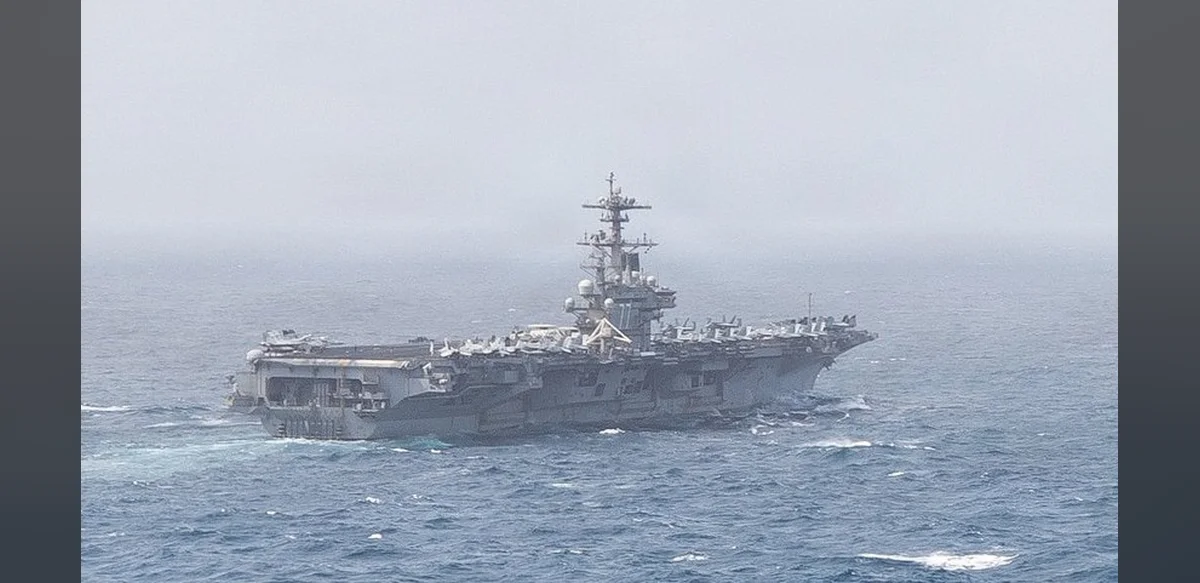
The United States carried out strikes on Iranian targets after accusing Tehran of attacking a commercial cargo ship in the Strait of Hormuz. This marks the first direct American military action since both sides agreed to a fragile understanding in Switzerland.
The operation followed minutes after President Donald Trump suggested a response was imminent. When asked by journalists if retaliation would occur, he said, “You’ll find out.”
Soon after, US Central Command confirmed that American forces had conducted precision strikes inside Iran. The targets included missile and drone storage sites along with coastal radar installations. Officials said the action responded to an alleged Iranian drone attack on the Singapore-flagged vessel M/V Ever Lovely on June 25.
The ship was traveling near the Omani coast while leaving the Strait of Hormuz when the strike occurred, according to the US military.
CENTCOM described the Iranian action as unwarranted aggression that violated the ceasefire and threatened freedom of navigation in a key trade route. The command stated that US forces would remain to ensure compliance with the agreement and would continue protecting commercial shipping through the strait.
Iran’s Islamic Revolutionary Guard Corps reported that its forces had countered the American strikes. It warned that the response would be swift and decisive at a chosen time and location, adding that further provocations would face strong retaliation.
Earlier, Trump had accused Iran of launching multiple one-way drone attacks on vessels in the strait, claiming one hit the deck of a cargo ship and caused limited damage. He called the incident a violation of the ceasefire and indicated consequences would follow.
After the US announcement, Iranian media reported a projectile impact near a pier in the southern port of Sirik. Reports also mentioned warning shots fired at vessels described as violating rules in the waterway.
The escalation highlights the strategic importance of the Strait of Hormuz, which carries about one-fifth of global oil and liquefied natural gas supplies.
Iran has insisted the strait should remain under regional control following the recent understanding with Washington. Tehran warned Gulf states against supporting the United States and rejected a joint statement opposing tolls on transit. Iranian officials stated that safe passage requires arrangements respecting Iran’s coastal role.
Oman reportedly informed partners that vessels may face future transit fees. Iranian state media said Revolutionary Guard forces had warned three foreign tankers attempting unauthorized passage.

