


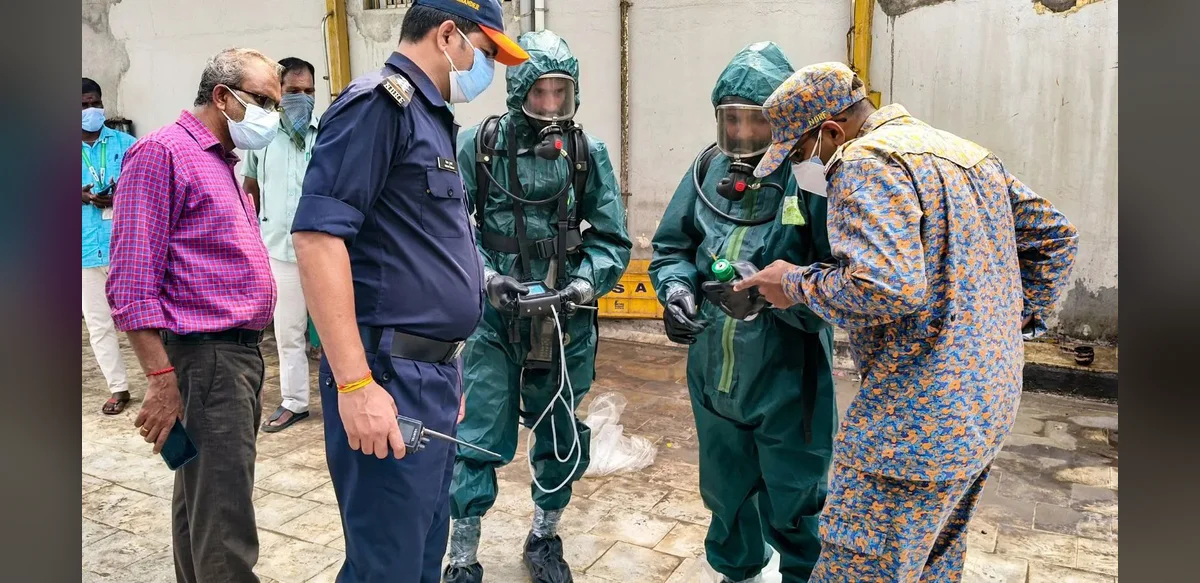
The Tamil Nadu State Commission for Women has launched an inquiry into an ammonia gas leak at a seafood processing plant in Tiruvallur district that killed 16 people, most of them women migrant workers. The incident has drawn renewed attention to the Directorate of Industrial Safety and Health, the agency tasked with enforcing safety standards at factories using hazardous substances. This department appears to be the only one that avoided major leadership changes after the new government took office, even as other departments underwent extensive transfers of senior officials.
Acting on media reports, the Commission instructed the Tiruvallur District Collector to deliver a full report within four weeks. Its involvement has shifted attention beyond the immediate incident at St. Peter & Paul Sea Food Export Private Limited to broader concerns about how a facility employing migrant women near ammonia refrigeration systems was permitted to function and whether state safety oversight failed to identify risks in time.
The Commission noted that most victims were women migrants from Odisha and other states who both worked and lived on the premises. It directed local authorities to check if the factory held necessary permits for handling ammonia and whether it followed labour safety and health regulations. The inquiry will also examine if workers were required to reside inside the facility, if laws were breached, and if management engaged in intimidation.
The leak took place on June 21 in Kannigaipair village. About 80 workers were on the ground floor processing seafood while around 60 women slept on the first floor, which also contained ammonia-based refrigeration equipment. A pipeline reportedly ruptured due to pressure buildup, releasing toxic gas that quickly filled the upper level. Workers described waking to burning eyes and throats, with some seeking shelter in restrooms while others became disoriented. Ground-floor staff attempted rescues but faced severe breathing difficulties from high gas concentrations.
Thirteen of the dead came from Odisha, two from Assam and one from Jharkhand, with many belonging to tribal communities. Investigations later revealed some workers had used forged documents to obtain employment. Police arrested the factory owners, a manager and a labour agent from Odisha.
A state-appointed expert panel has recommended permanent closure of the company and called for inspections of 1,774 factories statewide that handle hazardous chemicals. The disaster has also placed the Directorate of Industrial Safety and Health under increased examination, as the department has traditionally been led by promoted technical officers rather than IAS officers and largely escaped the recent administrative reshuffles.

